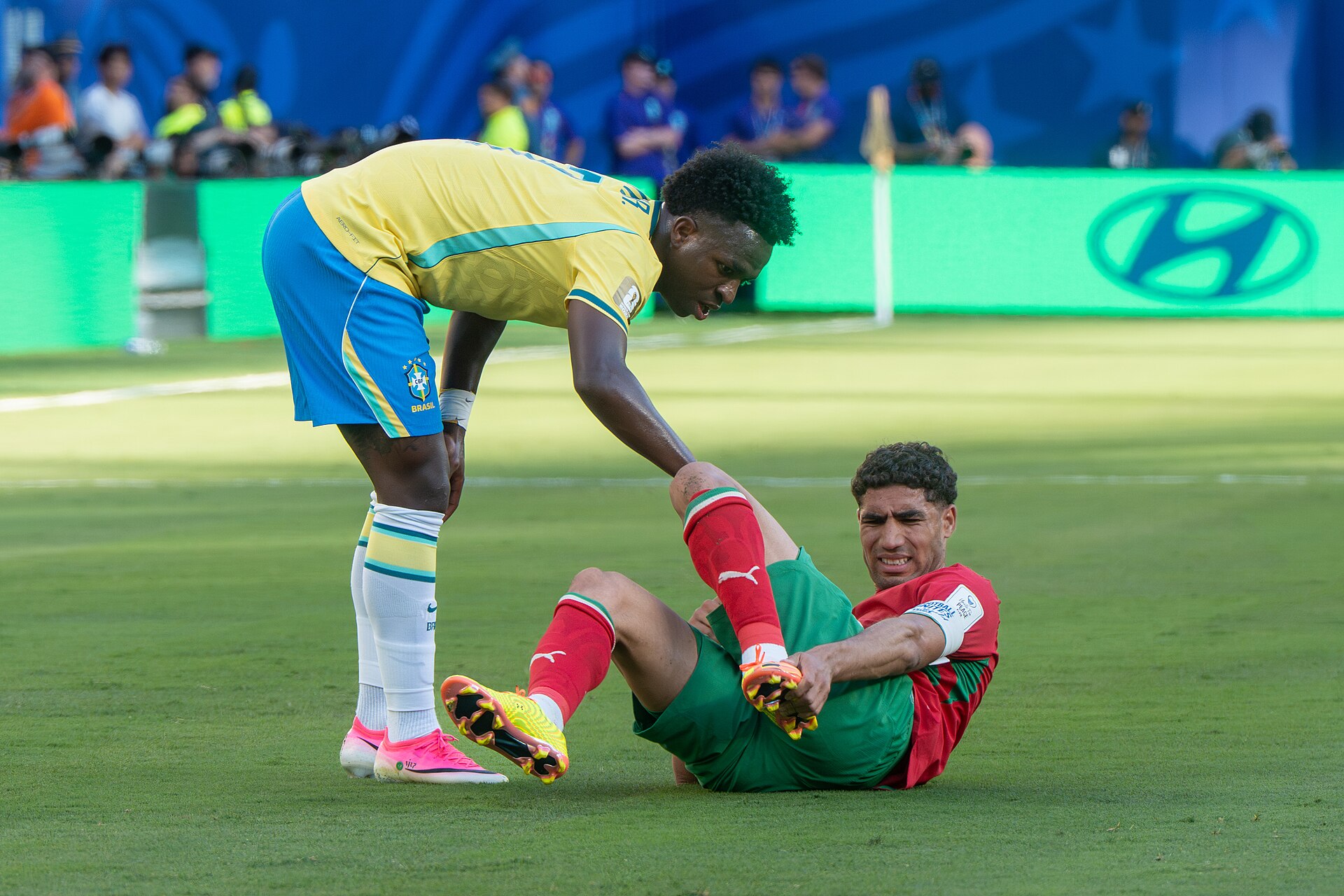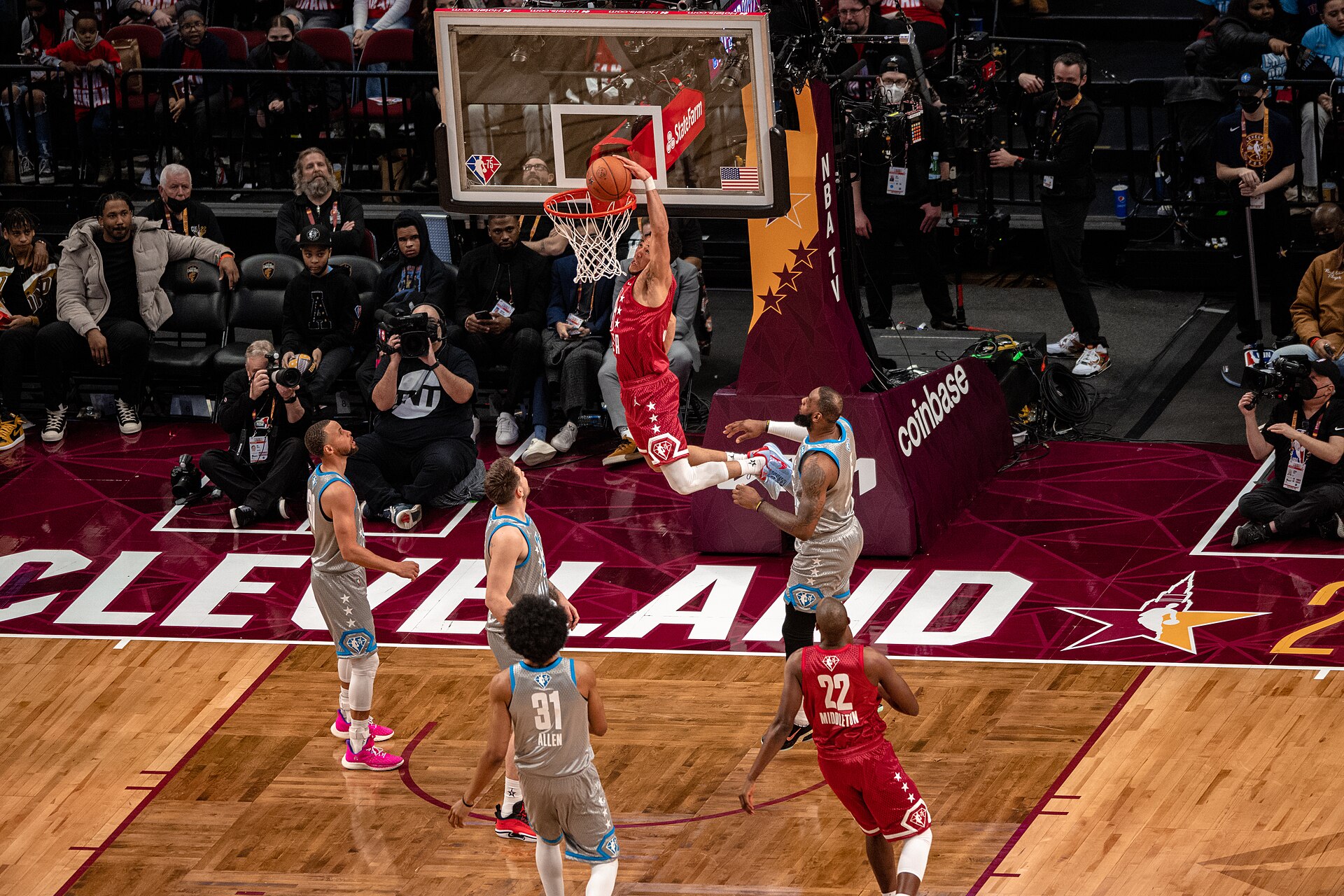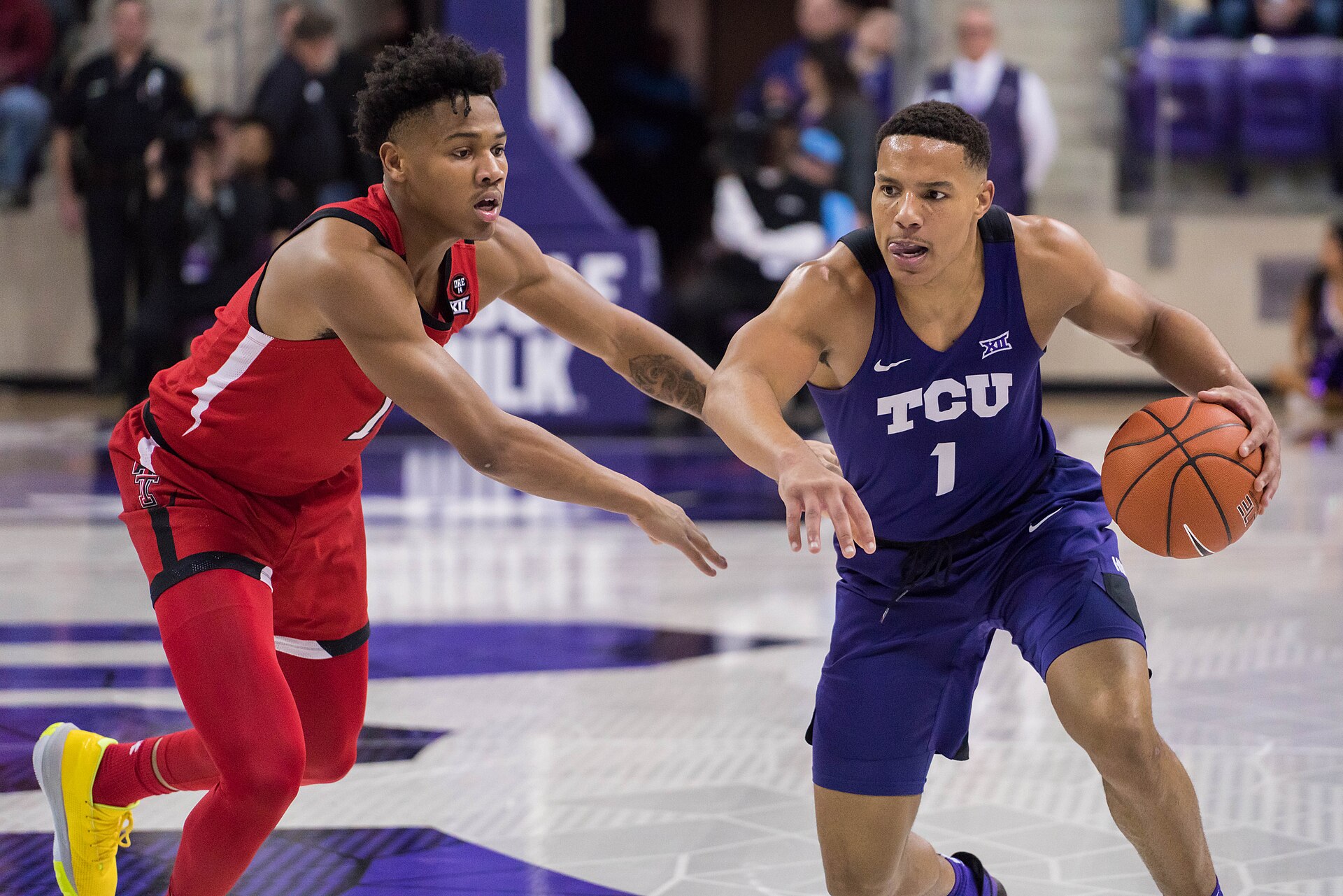
Terrence Shannon Jr., left in red, and Desmond Bane during a Texas Tech–TCU game in January 2020. Archive photograph. Archive photo by Nathan Lowe (CC BY-SA 2.0).
Terrence Shannon Jr. turned a difficult shooting night into a Minnesota win. The reserve guard scored a career-high 34 points as the Timberwolves beat the Portland Trail Blazers 106–98 on Monday at Target Center, supplying the decisive offensive efficiency while several established scorers struggled to find the basket.
Minnesota improved to 10–4 despite shooting only 37.9 percent from the field. Portland shot a slightly better 38.9 percent and made four more field goals, but the Timberwolves’ 30 made free throws to the Blazers’ 12 changed the outcome. Shannon alone made 15 of 16 from the stripe. His ability to finish those chances gave Minnesota a dependable scoring source on a night when much of its offense was unreliable.
The NBA’s game report identifies the performance as Shannon’s career best and notes that Minnesota was again without Anthony Edwards. The official scorer’s report lists Edwards out following right knee arthroscopy. That context matters: the Timberwolves were not simply adding an unexpected bench contribution to their usual scoring hierarchy. They needed someone to shoulder a larger share of the work, and Shannon did so with exceptional efficiency.
Shannon supplied scoring without wasting many attempts
The official box score shows Shannon making eight of 11 field-goal attempts and three of four threes in just over 35 minutes. He added six assists and three rebounds. His 34 points therefore came from a performance that involved both scoring and creation, rather than a long sequence of attempts taken away from everyone else.
The free-throw line accounted for 15 of his points, but describing the night as only a whistle-driven scoring total would overlook his shooting. He converted nearly three-quarters of his field-goal attempts as well. Minnesota received a high return whenever he finished a possession, whether the finish was a jumper, another field goal or a trip to the line.
That reliability was especially important beside the other guard lines. LaMelo Ball scored six points on two-for-13 shooting, while Ayo Dosunmu scored eight on three-for-11. Bones Hyland made two of nine attempts off the bench. Those numbers describe a night when Minnesota could not depend on ordinary levels of perimeter scoring across the rotation. Shannon’s production filled a very specific gap.
Outside Shannon, Minnesota made 25 of 76 field-goal attempts, about 32.9 percent. That calculation makes the size of his contribution clearer. He was not simply the most productive scorer within an otherwise efficient attack; his accuracy stood apart from the rest of the team’s difficult night.
He also led the team in assists with six. A player scoring well can continue looking for his own opportunities, but the ability to find teammates gives the offense another way forward when a defense adjusts. The box score cannot establish the quality of every pass or read. It does show that Shannon’s productive involvement extended beyond the 34 points attached to his name.
There were four turnovers in his line, an imperfection worth preserving in an otherwise outstanding account. A career-high performance does not require every category to be flawless. The more useful evaluation is the balance: an unusually efficient scorer carried a large responsibility and helped organize the offense, with enough productive outcomes to make the mistakes survivable.
The free-throw arithmetic explains an unusual win
Minnesota made 33 field goals to Portland’s 37 and 10 threes to Portland’s 12. Those baskets produced 76 points for the Timberwolves and 86 for the Trail Blazers. At the line, Minnesota scored 30 and Portland 12. The 18-point advantage in free throws overcame the 10-point deficit from field goals, leaving the eight-point final margin.
The comparison is useful because neither team shot well enough to make a broad claim of offensive control through jump shooting. Minnesota went 10-for-34 from three; Portland went 12-for-41. Both finished just below 30 percent. The Timberwolves won by finding a different way to generate a return, rather than by waiting for every cold shooter to recover at the same time.
Shannon’s 16 free-throw attempts were a major part of Minnesota’s 39. Rudy Gobert attempted 14 more, making eight. Together, they accounted for 30 of the team’s attempts and 23 of its makes. Their individual conversion rates were very different, but both drew substantial opportunities. Minnesota had enough scoring at the stripe to offset what it was not receiving from the field.
Portland made 12 of 15 free throws, an 80 percent rate that was better than Minnesota’s 76.9 percent. The Blazers’ problem in this category was therefore not poor accuracy. It was the much smaller number of chances. Keeping volume and percentage separate prevents an incorrect explanation in which Portland supposedly lost because it could not make free throws.
Nor should the final margin be reconstructed by changing one category in isolation. Different foul outcomes can change rotations, defensive choices and later possessions. The actual figures explain where the points came from; they do not prove how an alternate version of the game would have unfolded. The firm conclusion is that Minnesota used the opportunities it received to overcome a substantial field-goal scoring deficit.
Gobert and the supporting forwards gave Minnesota enough around Shannon
Gobert finished with 18 points, 15 rebounds and two blocks. Five of his rebounds were offensive. His work mattered in a game with many missed shots, when controlling the ball after the initial attempt was a recurring task. Minnesota collected 53 player rebounds to Portland’s 49, including a 14–12 advantage on the offensive glass.
The rebounding margin was useful rather than overwhelming. Minnesota did not need an invented domination of every loose ball to explain the result. Gobert supplied a strong individual interior performance, while the team finished modestly ahead overall. That distinction makes the account more accurate and shows how a few advantages can matter when shooting is poor on both sides.
Jaden McDaniels and Jonathan Kuminga each scored 13 points. Kuminga added nine rebounds, while McDaniels had six rebounds, three assists, two steals and two blocks. These contributions helped cover the space between Shannon’s exceptional night and the team’s final total. A player does not have to lead a category to provide a necessary part of a close win.
Trey Lyles contributed nine points in the reserve group, making two of three threes. Shannon’s scoring was the unmistakable bench headline, but Lyles provided another efficient option when Minnesota needed one. His production also helped reduce the burden on starters whose shooting nights were not going well. Finding that support is part of managing a rotation through a prominent absence.
Ball’s two-for-13 line and zero assists made this an unusually difficult individual offensive outing. It should be described as such without turning one game into a verdict on his ability. The more relevant team observation is that Minnesota won despite receiving little conventional scoring or assist production from that position. Shannon and the rest of the rotation supplied enough alternative creation to avoid being trapped by it.
Portland’s promising start could not overcome its own cold spots
Deni Avdija led Portland with 27 points, eight rebounds and four assists. He made 11 of 19 shots and all three of his three-point attempts. That was the Blazers’ clearest efficient scoring line. While several teammates struggled, he produced both volume and accuracy, keeping Portland within a game it ultimately lost by single digits.
Donovan Clingan had 10 points, 10 rebounds and five blocks while making all five of his shots. The defensive production and efficient finishing gave Portland value around the rim. His performance is another reason the loss should not be reduced to a claim that Minnesota controlled every interior matchup. The Blazers had strong individual work in the frontcourt, even as the team fell short in the full scoring balance.
Portland finished with nine blocked shots to Minnesota’s five, with Clingan responsible for more than half its total. The Blazers could therefore identify useful rim protection even in defeat. That strength did not remove the cost of the free-throw disparity or ensure that their own offense would convert enough chances.
Damian Lillard’s night was much more difficult: nine points on two-for-15 shooting, including two makes in eight attempts from three. Because both of his baskets were threes, he went without a made two-point field goal. That lack of conversion limited Portland’s offense in a game where the margin for absorbing missed opportunities was already small.
Toumani Camara made one of 10 shots and missed all seven threes. Scoot Henderson scored 10 points but went zero-for-five from outside. The Blazers therefore received several useful individual contributions without assembling a consistently productive perimeter attack. Avdija’s strong shooting could not make every other difficult line disappear.
Portland dropped to 9–4, a record that still reflects a strong start. Minnesota reached 10–4 through a win that looked very different from a polished offensive performance. The teams were opening a two-game set, adding immediate relevance to the adjustments: Portland has a clear reason to reconsider how it handles Minnesota’s foul pressure, while the Timberwolves will want more reliable shooting around their productive scorers.
The conclusion is that Shannon provided the game’s decisive exception to a general pattern of missed shots. His 34 points, near-perfect free throws and six assists gave Minnesota the offensive response it needed without Edwards. Gobert’s rebounding and the supporting forwards supplied enough around him. Portland made more baskets, but the Timberwolves found more points—and that distinction explains the 106–98 result.