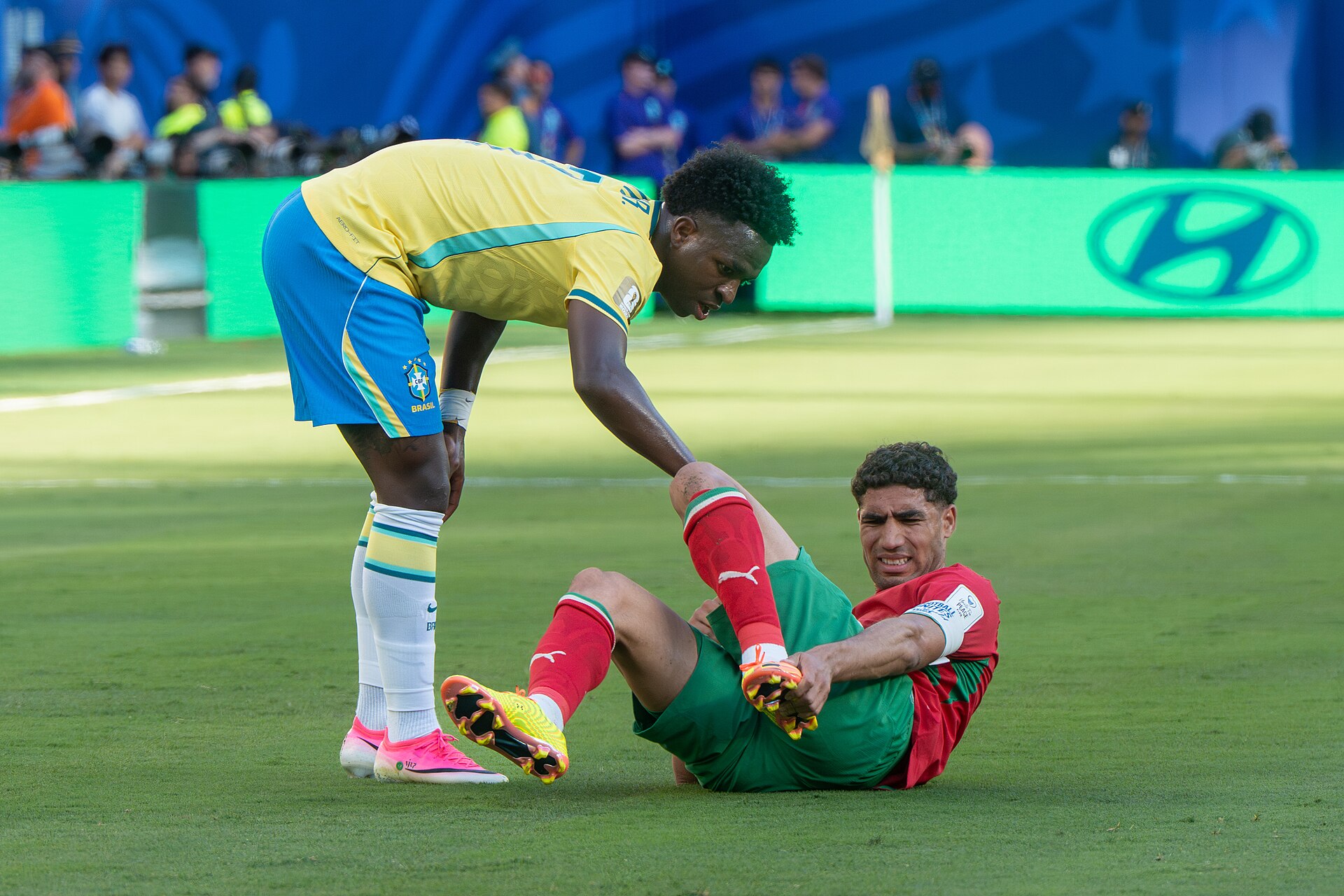
Jonathan David playing for Canada against Qatar on June 18, 2026. Archive photograph. Archive photo by Bryan Berlin (CC BY-SA 4.0).
Canada had to recover from an early setback before its attacking superiority became a decisive result. Tani Oluwaseyi scored twice, Jonathan David converted a penalty and Tajon Buchanan added another goal as Canada beat Guatemala 4–1 at BMO Field on Monday, November 16, completing a 7–3 aggregate victory in the Concacaf Nations League quarterfinals.
The win sends Canada to the competition’s four-team Finals for the third time. It also delivered a much clearer ending than the first leg, when a three-goal Canadian lead in Guatemala City became a narrow 3–2 win. In Toronto, Guatemala again created a moment of genuine pressure, but Canada answered before halftime and added two more goals after the interval.
The Canada Soccer match record names Oluwaseyi player of the match. His two goals were the most visible contribution to a broader attacking performance: Canada outshot Guatemala 26–4 and recorded nine attempts on target. The margin was not merely a late scoreline built after a balanced contest. Canada generated the sustained pressure, then converted enough of it to make the return leg conclusive.
Guatemala’s opening goal briefly changed the tie
Óscar Santis scored in the 34th minute to put Guatemala ahead on the night. Because Canada had won the first leg by one goal, the strike brought the aggregate score level at 3–3. That was an important change in the contest even though Canada had created most of the early attacking activity. Possession and chances did not protect the hosts from the consequence of conceding.
Canada responded through David’s penalty in the 39th minute. Oluwaseyi then scored in first-half stoppage time, giving the home side a 2–1 lead at the break and restoring a two-goal aggregate cushion. The sequence transformed the closing portion of the half. Instead of carrying an unresolved setback into the interval, Canada had turned a trailing score into a lead.
The Concacaf match report records Buchanan’s goal in the 53rd minute and Oluwaseyi’s second in the 62nd. Those strikes moved the match to 4–1 and the aggregate to 7–3. Guatemala would have needed a substantial late response to change the tie, while Canada had enough separation to manage substitutions and the remaining time without chasing another goal.
The timing is central to the result. Canada did not spend most of the second half searching for an equalizer after the surprise opener. It had already recovered before the interval, then increased the advantage early enough to change the demands on both teams. The final score reflects that sustained response rather than a last-minute escape.
There is a useful distinction between remaining calm and remaining passive. The available record does not let an outside observer know exactly what every player felt after Santis scored. It does show what Canada did next: equalized within five minutes, led before halftime and continued scoring afterward. Those actions provide a firmer account of its response than an invented description of the dressing room or touchline mood.
Oluwaseyi and the supporting service turned pressure into goals
Oluwaseyi’s brace gave Canada a decisive return from its forward play. His first goal put the hosts ahead; his second supplied the fourth goal that made the scoreline comfortable. The importance was therefore not only the total of two. The goals arrived at stages that changed the tie’s direction and then its level of uncertainty.
Liam Millar supplied two assists. Concacaf identifies him as the first Canadian to record two assists in one Nations League match since Jonathan Osorio against Cuba in 2019. That is a competition-specific achievement, not a claim that no Canadian has provided two assists in any international during the intervening years. The distinction keeps a useful piece of context accurate.
The service matters alongside the finishing. A striker’s goals are the final actions in moves that require other players to create space and deliver the ball. Millar’s contribution shows that Canada’s attacking success was not confined to the scorer taking advantage of isolated mistakes. Its wide players and supporting runners supplied the opportunities that a forward still had to finish.
Buchanan’s goal added another source of scoring, and Canada Soccer credits Richie Laryea with the assist. David’s penalty gave the attack an established scorer at a critical moment. The result combined a forward’s brace, a wide player’s goal and a converted penalty rather than relying on one repeated route to the net. That variety made the response more complete.
David’s strike took his national-team total to 45, according to Concacaf’s post-match data. His scoring record supplies important context, but it does not diminish Oluwaseyi’s role in this particular win. Canada benefited from an established leading scorer performing his task and another forward delivering the goals that moved the match beyond the initial recovery.
The substitutions also came with a very different game state from a narrow finish. Canada replaced Oluwaseyi, Millar and Nathan-Dylan Saliba in the 64th minute, shortly after the fourth goal. The match record lists Promise David, Jacen Russell-Rowe and Zorhan Bassong entering. The hosts had created the cushion before making those changes, rather than asking the incoming players to repair a deficit.
The shot count explains Canada’s control, with one important warning
A 26–4 shot advantage is a substantial description of attacking volume. Concacaf says Canada’s 26 attempts were its highest total in a single Nations League match. Nine were on target. Those figures support the argument that the 4–1 result grew from sustained chance creation, rather than only a few unusually successful finishes.
They do not mean every attempt was equally dangerous. A shot total groups together opportunities of different quality and difficulty. It cannot replace a full assessment of the chances or establish exactly what the score should have been. The useful conclusion is narrower and strong enough: Canada created far more attempts and enough accurate ones to put Guatemala under repeated pressure.
The warning comes from the opening goal itself. Concacaf’s data shows Canada leading the early shot count 9–0 before Guatemala generated its first attempts and scored. That sequence is a reminder that territorial control does not make a team immune to a setback. An opponent with fewer chances can still punish an opening, making the response after conceding part of the test.
Canada also attempted 26 crosses, its second-highest total in a Nations League match behind 32 against Trinidad and Tobago in 2024. The number helps describe how frequently the attack used wide delivery. It should not be treated as proof that crossing more often always produces a better result. What mattered here was that the service and finishing combined to generate actual goals.
For Guatemala, Santis’ goal was evidence that the team could still create a consequential moment despite spending much of the game under pressure. Concacaf’s post-match data places him among the leading scorers in the current League A campaign. His contribution should remain part of the account even though the larger team performance could not sustain the opening advantage.
The task for Canada’s next opponent will be to reduce both the volume of service and the number of useful finishes it produces. Simply noting the 26 shots does not supply that solution. The match shows a team able to involve multiple attacking players and continue creating after a setback, which is a more demanding problem than containing one isolated scorer.
A different outcome from the teams’ recent Gold Cup meeting
The matchup carried a recent competitive memory. At the 2025 Gold Cup quarterfinal, Guatemala eliminated Canada after a 1–1 draw by winning the penalty shootout 6–5. That result was a major achievement for Guatemala and an example of how a knockout contest can turn on a small set of decisive actions. Monday’s aggregate win came through a different competitive format and a much larger attacking margin.
The comparison should not be reduced to a revenge story. These were different matches, played in different circumstances, with a two-leg aggregate rather than a single knockout game. The useful contrast is about how Canada completed the assignment. It won away, absorbed a return-leg setback and created enough separation that the tie did not depend on another shootout.
There was also a coaching complication. The Canadian Press report carried by Sportsnet says assistant Mauro Biello took charge on the sideline after Jesse Marsch’s red card in the first leg. Canada’s performance therefore came with an adjustment in its matchday leadership. The result does not prove that a coaching change caused the win; it shows the team could carry out the task under those circumstances.
Guatemala can point to moments of competitiveness across the series: its recovery to 3–2 in the first leg and its opening goal in Toronto. Canada can point to the much broader final return. Both parts of the record belong in an objective account. The underdog created pressure, but the Canadian attack ultimately produced a seven-goal aggregate total that settled the tie decisively.
Canada now advances to the Nations League Finals, meaning the four-team concluding stage rather than an automatic place in the championship match itself. That distinction matters for readers following the tournament casually. Winning the quarterfinal secures the opportunity to compete for the title; further knockout work remains before anyone can be called champion.
The strongest conclusion from Toronto is the quality of Canada’s response. Santis made the tie uncomfortable, David restored the immediate footing and Oluwaseyi and Buchanan turned sustained pressure into separation. A 4–1 win and a 7–3 aggregate result reflect an attack that kept producing after the first setback—and a team that completed the quarterfinal with a clear margin instead of another narrow escape.