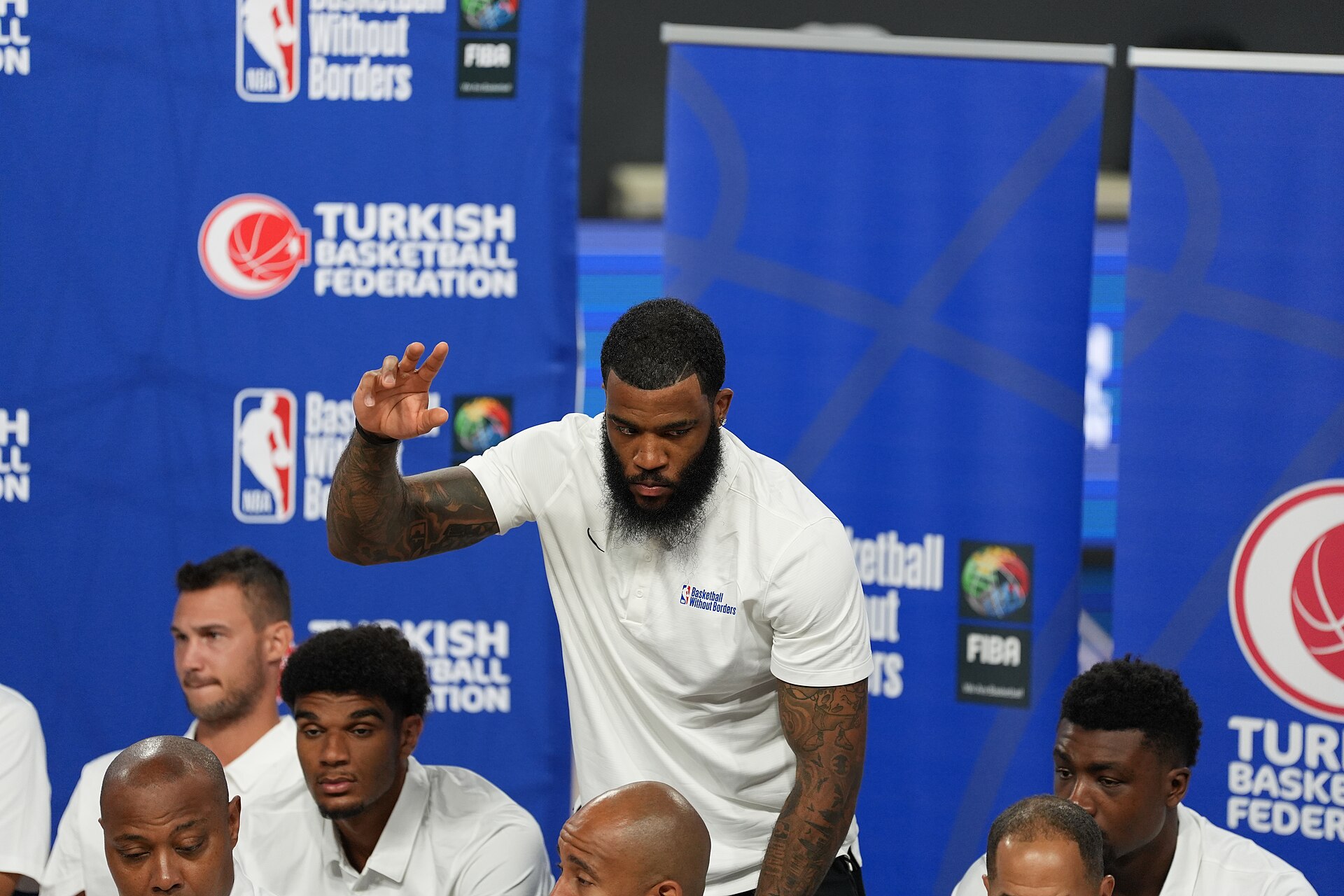
Saddiq Bey at a public appearance in August 2026. Archive photograph. Archive photo by Zafer (CC BY-SA 4.0).
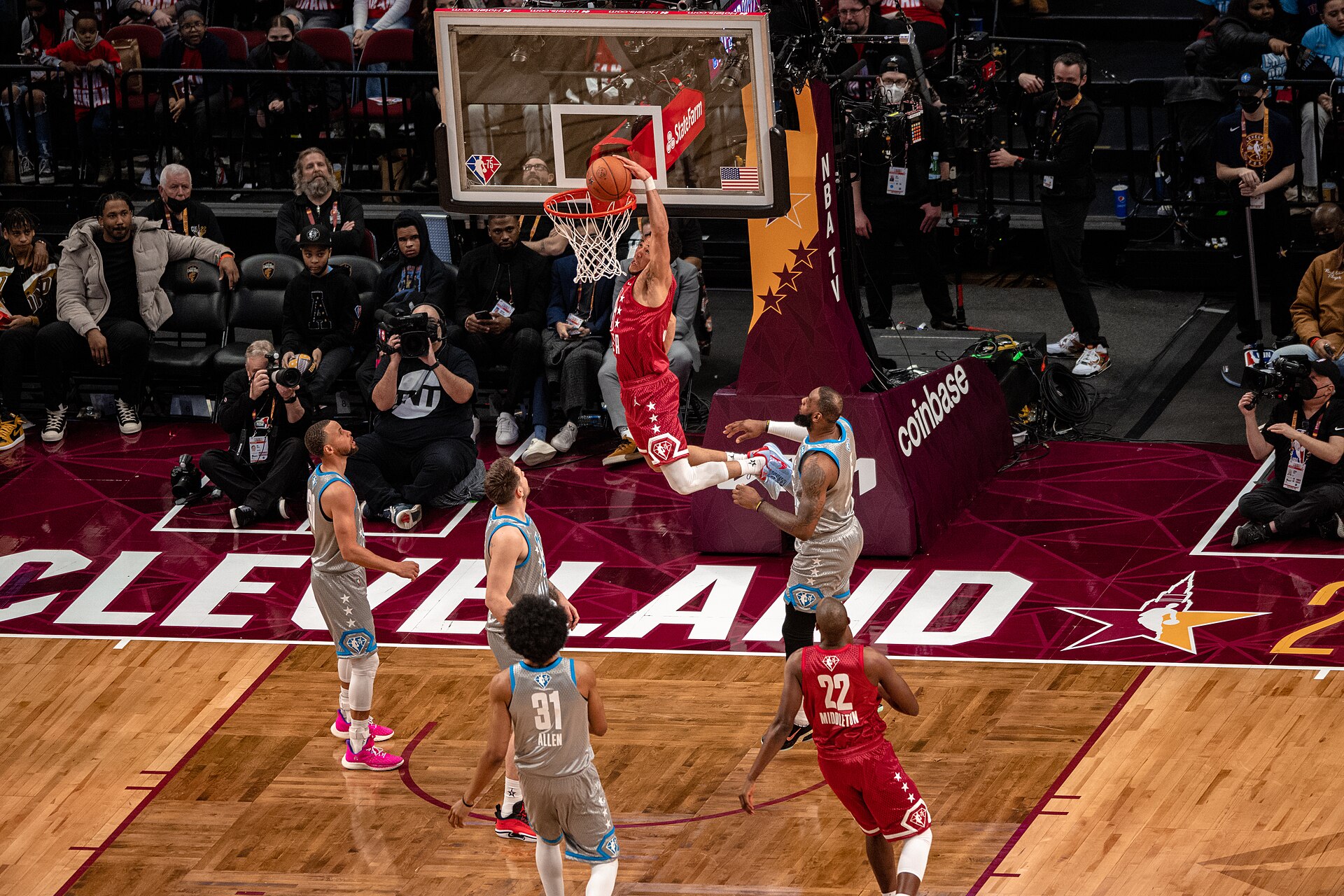
Jeremiah Fears recorded the first triple-double of his NBA career, and the New Orleans Pelicans gave the milestone a winning setting. The guard finished with 19 points, 10 rebounds and 10 assists as New Orleans beat the Golden State Warriors 115–94 on Monday at Smoothie King Center, ending a six-game losing streak.
Saddiq Bey led the Pelicans with 23 points and five three-pointers. Zion Williamson added 16, while Yves Missi collected 14 rebounds. The official box score shows a result built through several forms of production: Fears’ creation, Bey’s shooting, work on the glass and a defensive night that held Golden State to 33.3 percent from the field.
The game was largely shaped by a 35–11 first quarter. Golden State spent the rest of the night trying to repair a 24-point deficit, while New Orleans had enough additional offense to keep the advantage substantial. The Pelicans improved to 5–10 and the Warriors fell to 8–6. The final margin was 21, but the opening period explains why the visitors never established the footing required for a serious reversal.
Fears’ triple-double connected scoring, creation and rebounding
Fears reached his three double-figure categories in a little more than 29 minutes. He made six of 13 shots and six of seven free throws, with three turnovers. The Pelicans’ official game page highlights the 19–10–10 performance. Its significance is not simply the symmetry of the numbers, but the range of ways the guard contributed to a functioning team offense.
Ten assists indicate scoring opportunities finished by teammates, rather than points Fears had to supply himself. New Orleans made 41 field goals and recorded 25 assists as a team. A strong passing night from a lead guard can help organize a lineup with several different scoring preferences. It gives the offense a means of connecting those options instead of asking each player to create an isolated solution.
His 10 rebounds included nine at the defensive end. A guard helping secure the ball can complete defensive possessions and create the possibility of moving into offense quickly. The box score alone cannot establish the pace of every transition or who initiated each early attack. It does show that Fears was involved in ending opponents’ possessions as well as directing his own team’s scoring.
The turnover figure provides useful context too. Ten assists against three turnovers is a productive balance, although assists and turnovers do not capture every decision. It would be too strong to describe the game as error-free control. The clearer conclusion is that the positive outcomes were substantial: Fears created for teammates, scored efficiently enough himself and contributed on the glass.
A first career triple-double is an individual milestone. It is not, on its own, a forecast of how a player will perform every night. What makes this one especially encouraging for New Orleans is its relationship to the result. The rebounds, assists and points were part of a large team advantage, rather than numbers collected while an opponent controlled the game.
The first quarter gave the Pelicans a different kind of game to manage
The NBA’s official scorer’s report records New Orleans’ 35–11 start and a lead that later reached 31. Golden State never led. Those facts matter to interpreting the rest of the statistics. The Warriors were playing from behind almost immediately, while the Pelicans could focus on protecting a substantial advantage rather than creating one in the final minutes.
New Orleans led 61–36 at halftime and 93–65 after three quarters. Golden State won the fourth 29–22, but that reduced an already large gap rather than changing the outcome. A final-period scoring edge can mean different things depending on the game state. Here it did not erase the damage from the opening quarter or turn the contest into a close finish.
The Pelicans did not need an extraordinary overall field-goal percentage to sustain their lead. They shot 42.3 percent, which is hardly a flawless offensive performance. The advantage came from doing enough in multiple areas while Golden State struggled much more severely. New Orleans made 41 baskets to the Warriors’ 28 and 15 threes to their 11.
The perimeter comparison was especially costly for the visitors. Golden State attempted 46 threes and made 11, a 23.9 percent rate. New Orleans made 15 of 40, or 37.5 percent. That produced a 12-point difference in three-point scoring despite the Warriors taking six more attempts. A high volume of outside shots did not translate into the return required to reduce the deficit.
New Orleans also led 25–11 in fast-break scoring and 44–32 in points in the paint. Those are separate categories that can overlap, so their margins should not be added together as if they described entirely different baskets. They nevertheless show that the Pelicans generated productive opportunities beyond Bey’s perimeter shooting, giving Golden State several problems to solve.
The game also shows why the free-throw line is not a complete explanation for every result. Golden State made 27 of 30 free throws, an excellent 90 percent, while New Orleans made 18 of 24. The Warriors won that category by nine points. Their problems converting field goals and generating enough stops were large enough to outweigh the advantage.
Bey, Missi and Williamson gave New Orleans a strong supporting structure
Bey made eight of 15 shots and five of eight threes, adding six rebounds and three assists without a turnover. That is an efficient scoring line with useful work around it. His outside shooting gave the Pelicans points in a category where Golden State was receiving a poor return, helping make the early lead more difficult to challenge.
Williamson scored 16 in just under 25 minutes, with six rebounds, two assists and two steals. He did not attempt a three-pointer. His contribution occupied a different part of the offense from Bey’s, illustrating the variety in New Orleans’ scoring. The Pelicans could receive points from perimeter shooting and other finishes without requiring one player to provide both throughout the night.
Missi’s 14 rebounds included seven offensive boards. That was a major individual contribution to New Orleans’ 19 offensive rebounds as a team. Recovering a miss forces an opponent to defend again within the same possession. For a team already behind, that additional work can be especially costly: the initial stop does not necessarily become an opportunity to cut into the lead.
New Orleans finished with 57 player rebounds to Golden State’s 50. The offensive-rebound margin was 19–14, while the defensive margin was smaller at 38–36. Keeping those categories separate shows where the most meaningful rebounding advantage occurred. It was not simply that the Pelicans collected every available defensive miss; they also made the Warriors work to finish their own defensive possessions.
The additional offensive rebounds did not create a second-chance scoring advantage: both teams finished with 17 second-chance points. That is an important limit on the rebounding explanation. New Orleans recovered more misses and created further attempts, but the scoring comparison cannot be described as a runaway victory in every related category.
Derik Queen added 17 points and 10 rebounds, including four makes in five three-point attempts. Jordan Poole supplied 11 points and five assists. Those reserve contributions gave the Pelicans scoring and creation beyond the starters. They also help explain how New Orleans maintained a large advantage without requiring Williamson or Fears to play an unusually heavy minutes load.
Golden State’s absences explain context, not every failed possession
The NBA injury report listed Stephen Curry out with a right oblique tear and Jimmy Butler out following right ACL repair. Moses Moody was also unavailable following left patellar tendon repair. These are significant absences. An account that treats this as the Warriors’ usual full rotation losing an ordinary shooting contest would omit essential context.
Context does not make the actual performance unimportant. The available Warriors still had to generate useful shots, protect the ball and complete defensive possessions. They committed 16 turnovers to New Orleans’ 10 and made only 28 of 84 field-goal attempts. Those outcomes are part of the explanation even when the roster is missing important players. The task is to describe the available team accurately, rather than excuse or exaggerate it.
Yaxel Lendeborg led Golden State with 28 points and eight rebounds. He made nine of 23 field-goal attempts and all eight free throws. The total represented a large scoring responsibility, but the overall shooting line also shows the difficulty of converting enough chances. His production was not sufficient to offset the limited field-goal return elsewhere in the lineup.
Brandin Podziemski scored 15 with six rebounds and three assists, while Gui Santos added 12 and Will Richard 11. Draymond Green had eight rebounds and five assists but scored two points, and Al Horford went without a made basket in four attempts. The Warriors had useful contributions, but not enough efficient scoring across the available rotation to recover from the opening quarter.
For New Orleans, the immediate achievement is ending a losing streak with a performance that offered several reasons for encouragement. Fears’ organization, Bey’s shooting and Missi’s rebounding are different strengths that can support one another. The challenge is carrying those productive elements into tighter games and stronger opposing lineups, where an early 24-point cushion is unlikely to be available.
The conclusion from Pelicans 115, Warriors 94 is that New Orleans established control early and had enough balanced production to keep it. Fears’ first triple-double gives the night its memorable individual marker. The wider team result explains why it mattered: the Pelicans shot better, recovered more offensive rebounds and gave Golden State too much work to do after a disastrous first quarter.