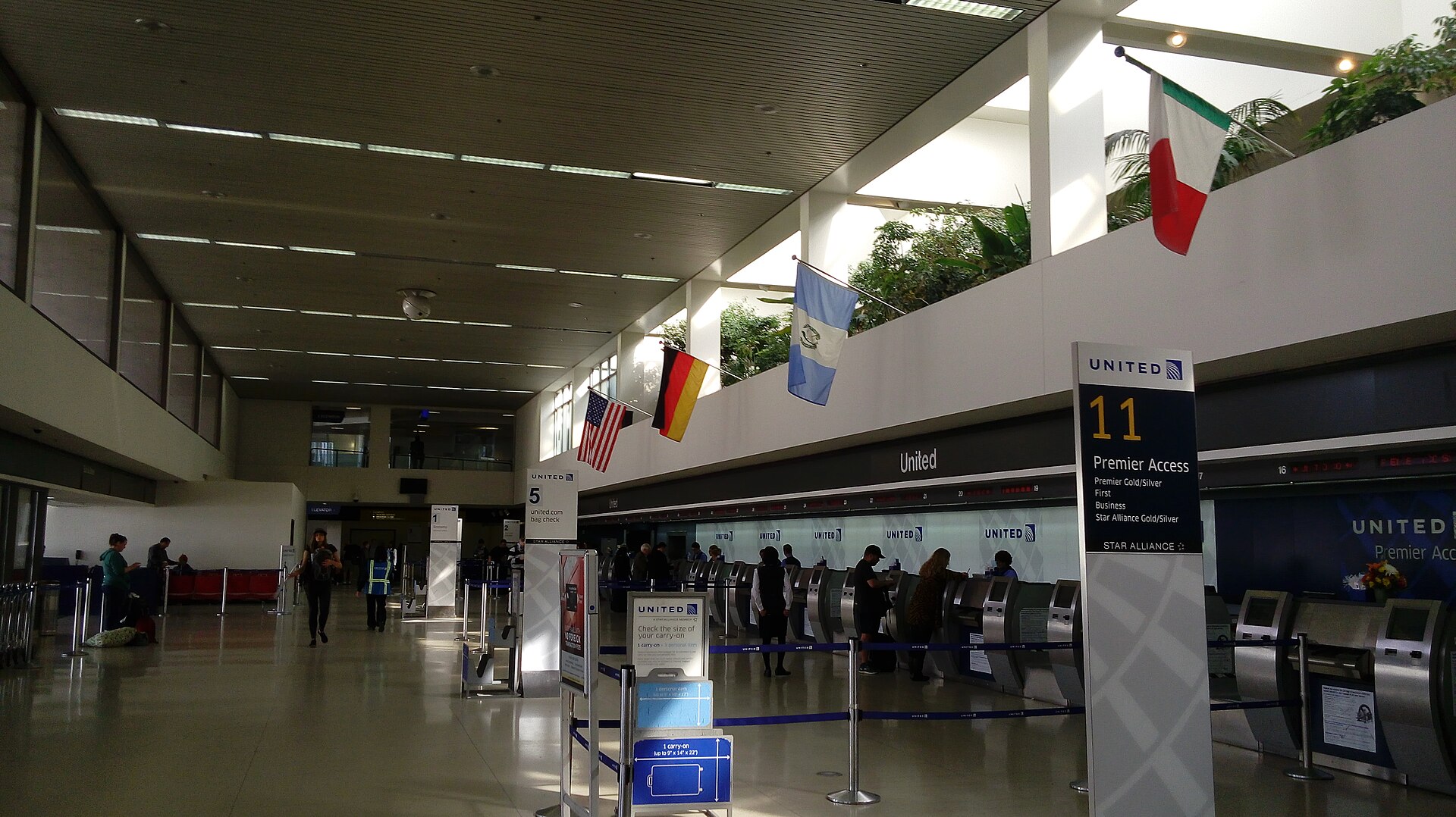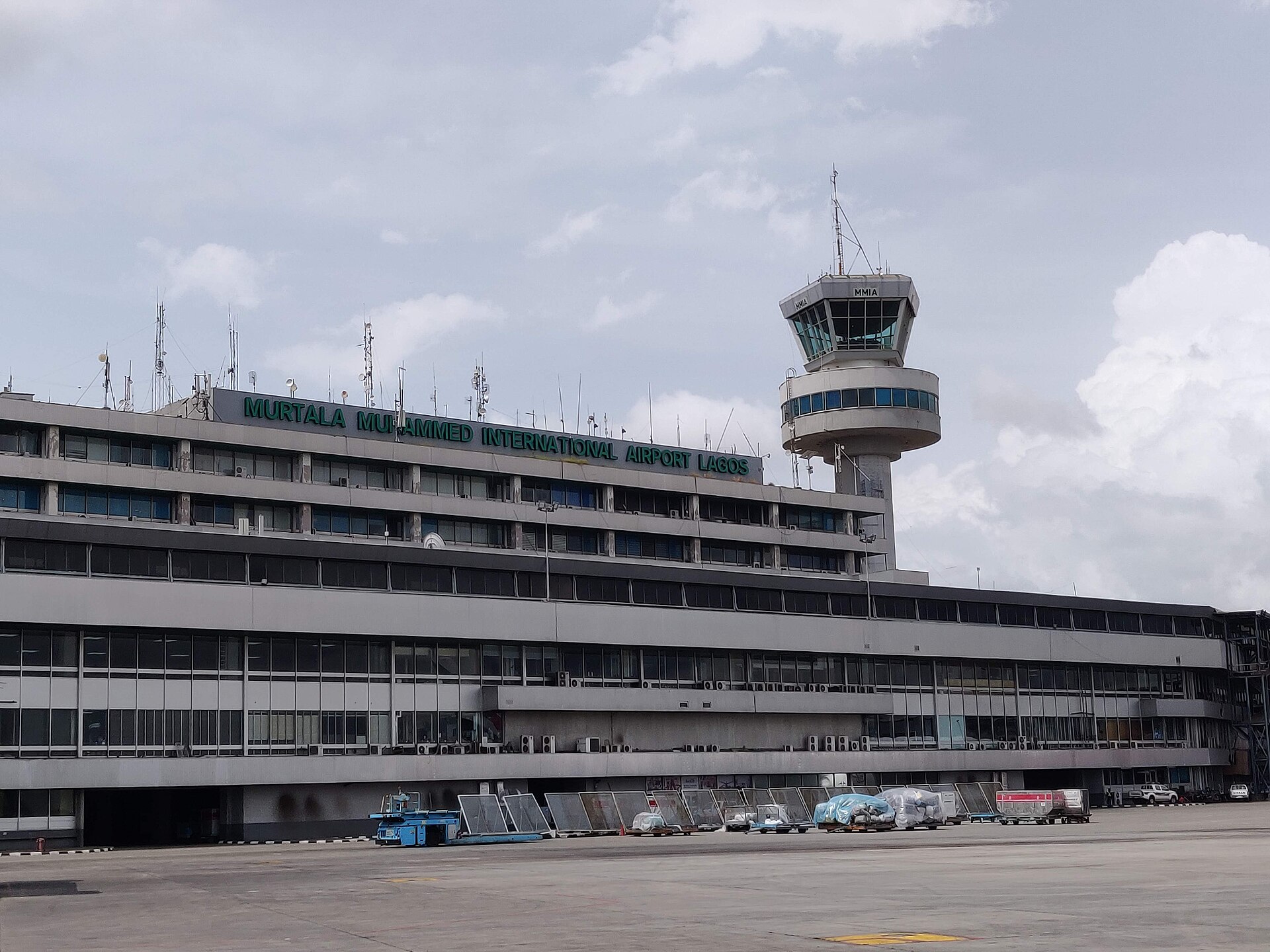
Murtala Muhammed International Airport in Lagos, photographed on March 24, 2019. The archive image shows the location, not the November 2026 arrest. Archive photo by Sm105 (CC BY-SA 4.0).
Nigeria’s drug enforcement agency says it has arrested a 28-year-old American basketball player at Lagos airport after finding 33.95 kilograms of cannabis in two checked bags. The case, announced on November 15, has drawn international attention because it involves a U.S. athlete arriving from Thailand, where he told investigators he had been playing professionally.
The National Drug Law Enforcement Agency’s statement identifies the man as Greene Da’monte Khiree, a native of Savannah, Georgia. American sports coverage uses the name Da’monte Khiree Greene. The agency says officers detained him on November 11 at Murtala Muhammed International Airport after his arrival on an Emirates flight from Thailand through Dubai. Its account remains an allegation by investigators, rather than a finding of guilt by a court.
As of the reporting available on November 16, the public record reviewed for this article did not establish a court date, the precise charges filed or a detailed response from a defense lawyer. That distinction is essential to understanding where the case stands. The arrest and the agency’s announcement are established developments; the criminal allegations still require the legal process that follows an investigation.
What the agency alleges happened at Lagos airport
According to the NDLEA, officers acting on intelligence watched Greene after his arrival and saw him leave two checked bags behind while attempting to depart with his hand luggage. They arrested him in the airport car park. The agency says the checked bags carried his name tags and contained 32 parcels of cannabis, as well as a tracking device. The reported total of 33.95 kilograms is approximately 75 pounds; headlines referring to 34 kilograms are rounding the same figure.
The NDLEA also says an examination of his phone indicated that he knew about and was involved in the alleged trafficking activity. It did not publish the underlying messages or a complete forensic report in the statement reviewed here. That leaves an important difference between the agency’s interpretation of digital evidence and material that a court, a defense team and the public may eventually be able to examine.
Channels Television’s account of the announcement reports that Greene told investigators he had lived in Thailand since October 2025 and had come to Nigeria on holiday to develop contacts for his basketball career. That explanation is itself presented through the agency’s account. It is not the equivalent of a defense statement responding to every allegation, and it should not be treated as a complete description of his position.
The official statement describes another airport seizure involving methamphetamine brought from South Africa. That was a separate operation involving a different traveler. Combining the two seizures into one shipment would misstate the allegation against Greene. Likewise, the other arrests and raids listed in the agency’s weekly release do not, by their inclusion in the same announcement, establish that he was connected to those cases.
The weight of a seizure can make a headline striking, but it does not answer every question that matters at trial. Investigators’ accounts of ownership, knowledge and involvement are distinct propositions. A court process gives the defense an opportunity to challenge how those propositions are supported. The seriousness of an allegation makes that scrutiny more necessary, rather than less.
Who is the American player named in the report?
BBC News reported that basketball records list a player named Damonte Greene, including an appearance at Thailand’s Phuket Elite Cup in September. Its account also traces time with Reinhardt University and South Georgia Technical College, followed by semi-professional basketball in Georgia. That background places the story in the wider world of players pursuing careers beyond the major American leagues. The reporting does not identify him as an NBA player.
USA TODAY’s sports report describes Greene as a Savannah guard who played at Johnson High School before continuing through college and semi-professional basketball. It says records also associate him with teams in Thailand. The spelling and ordering of his name vary among the agency’s release, sports listings and international headlines, which helps explain why readers searching for the case may encounter several versions.
Those differences deserve care because a familiar-looking basketball name can easily be attached to the wrong athlete. An identification should rest on the details in the actual record: the name used by investigators, age, hometown and documented career information. It should not be filled out with statistics, photographs or achievements belonging to someone else. Nor does a professional sporting background prove or disprove an allegation unrelated to play.
For athletes outside the most visible leagues, an overseas career can involve a patchwork of tournaments, short contracts and opportunities found through personal contacts. That makes the reported explanation about seeking basketball connections understandable as a statement of purpose. It does not establish what happened with the luggage. The career history and the criminal investigation are different parts of the story, and neither should be used as a shortcut to a verdict on the other.
The same caution applies to photographs. The airport image accompanying this article is an identified archive photograph of the location, not a photograph of the arrest or of evidence recovered in November 2026. Showing a real place with an accurate caption is more informative than presenting an unrelated player or a staged image as documentary evidence.
Nigerian law and the limits of consular help
The U.S. State Department’s Nigeria travel advisory states that possession, use and sale of cannabis and related products are illegal in Nigeria. American citizens remain subject to local laws when they travel. Differences between cannabis policies in U.S. states and those in another country do not create an exemption from that country’s criminal law, and legal availability somewhere else does not determine whether an international shipment is lawful.
The advisory also tells detained Americans to ask that the U.S. embassy or consulate be notified. That is a general instruction for U.S. travelers, not evidence that officials have taken a particular step in this case. The sources reviewed here do not establish whether Greene has received a consular visit or what communications may have occurred privately. An absence of a public announcement cannot resolve those questions.
The State Department’s guidance on arrest or detention abroad explains that consular officers can provide information about local lawyers, help communicate with family and seek to ensure appropriate treatment under local law. They cannot order a foreign court to release an American, declare the person innocent, provide legal representation or pay the person’s legal fees. Consular assistance and a defense lawyer therefore serve different functions.
The distinction can be lost when an American’s detention becomes international news. A consular visit is not a judgment on the allegations, and diplomatic interest does not displace the courts where a case is being heard. Equally, the existence of an investigation does not erase a detainee’s need for access to counsel, communication and basic welfare. Those interests can be recognized while the facts remain contested.
For an overview of procedure, the British government’s October 2026 guide to arrest and imprisonment in Nigeria explains that criminal cases are heard by judges, with prosecutors presenting evidence and the defense able to challenge it. The guide says bail may be available, depending on the offense and circumstances, and that conditions for foreign nationals can include travel restrictions or surrendering a passport. It does not establish whether any such order has been requested or made in Greene’s case.
That is why the next meaningful documents would be a charging record, a remand or bail decision, and any response filed by counsel. Such records would clarify the legal provisions at issue and the stage of proceedings. Predicting a sentence before those facts are established would create a false impression of certainty about both the charge and the outcome.
A wider enforcement campaign, but an individual case
The arrest comes amid prominent Nigerian drug enforcement operations. In September, the Associated Press reported that the NDLEA had dismantled a methamphetamine laboratory and arrested a Mexican national at Lagos airport. In May, the agency announced another large laboratory operation. Those reports provide context for the attention paid to international routes and airport interceptions; they do not demonstrate a connection between those investigations and this American traveler.
That boundary matters because broad claims about transnational crime can quickly overwhelm the evidence about a particular person. A country’s role in trafficking routes, an agency’s record of seizures and the nationality of a suspect may help explain why a story receives attention. None can substitute for proof of the acts alleged in an individual prosecution. Treating nationality or a travel itinerary as evidence of guilt would obscure the questions a court actually has to answer.
The public should also be wary of reading an agency’s weekly roundup as a single criminal narrative. Such releases collect unrelated operations to describe enforcement activity over a period of time. Their structure can place cannabis, methamphetamine, firearms and multiple suspects in adjoining paragraphs, even when no common organization has been alleged. Clear reporting separates those entries and identifies what, if anything, investigators have expressly linked.
For now, the most defensible account is specific. Nigerian authorities say they detained a 28-year-old American player after a cannabis seizure at Lagos airport, and they have published their version of how the bags and phone evidence connect him to it. His basketball background has helped bring the case to a wider audience, but the next consequential developments will come from the legal record and any substantive defense response.
The case is serious enough to require precision at every stage. Readers should expect updates that identify a real change—a charge, a court appearance, a custody decision or evidence tested in proceedings. Until then, the announcement supports reporting an arrest and the agency’s allegations. It does not support turning the attention surrounding an athlete into a conviction that a court has not delivered.