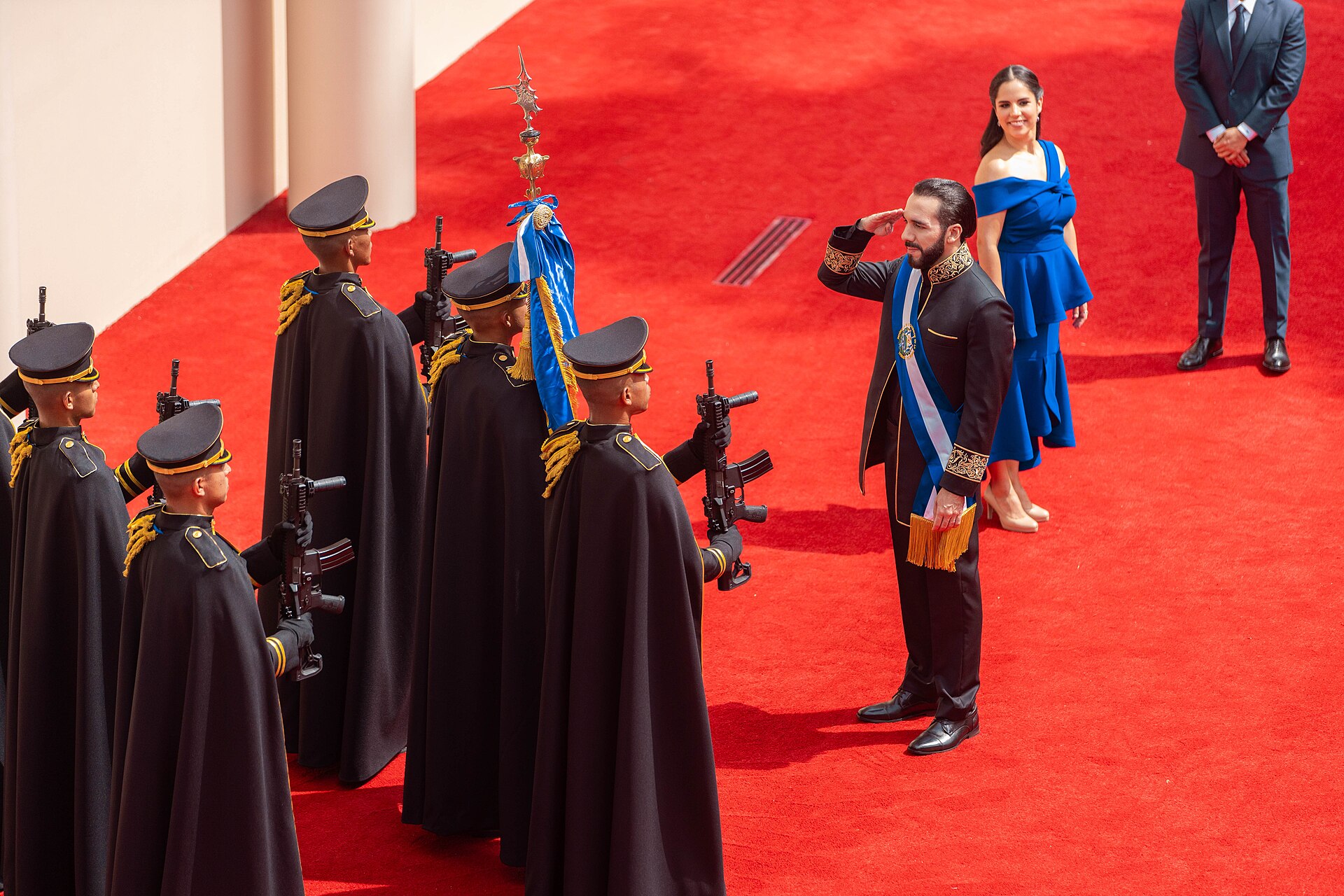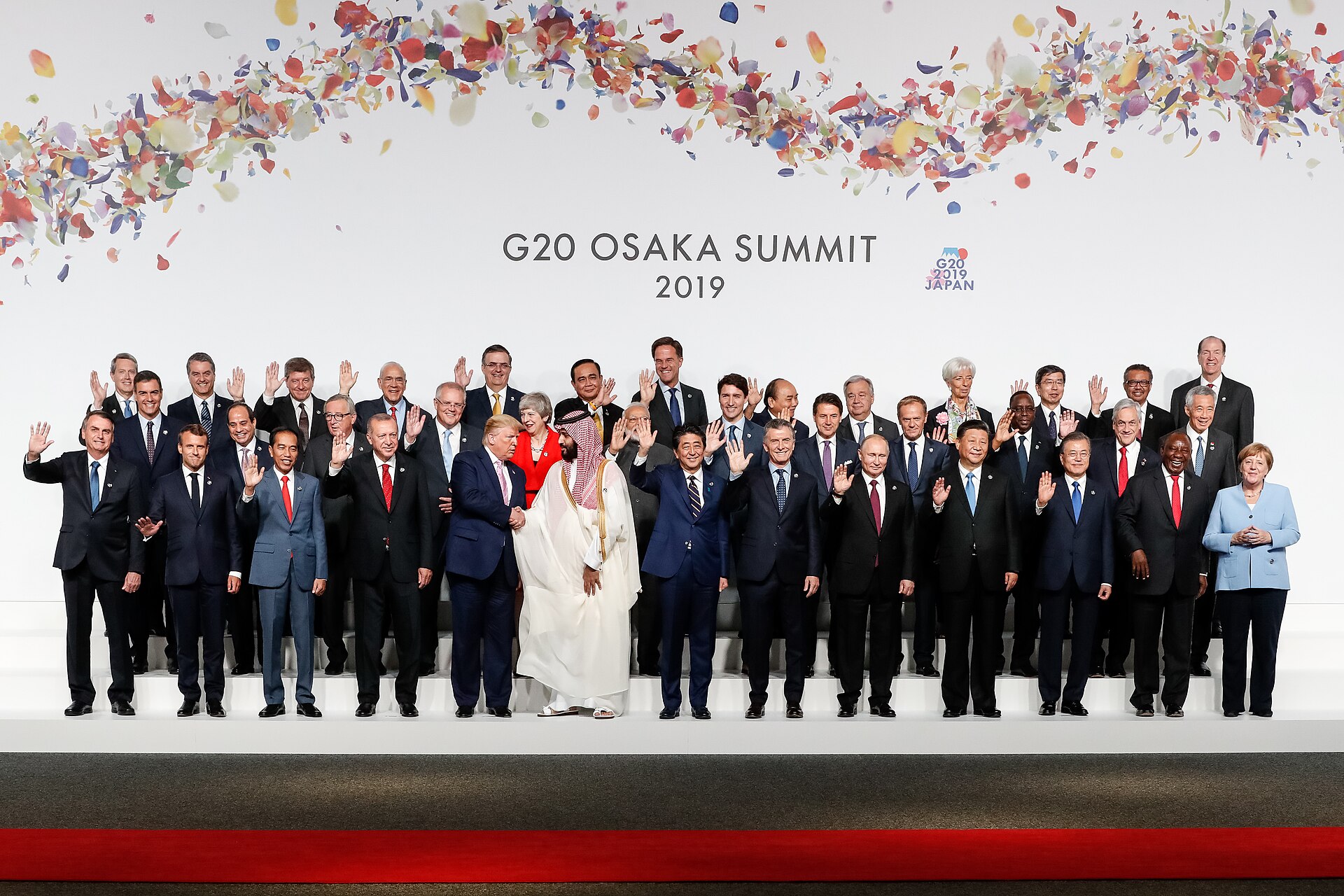
Donald Trump, Vladimir Putin and Xi Jinping among leaders posing at the G20 Osaka summit on June 28, 2019. Archive photograph; the planned 2026 meeting has not yet taken place. Archive photo by Alan Santos/PR (CC BY 2.0).
News analysis
Donald Trump, Xi Jinping and Vladimir Putin plan a dedicated three-way meeting in Shenzhen on Thursday, November 19, according to the Associated Press, citing the White House and Kremlin. The proposed session brings the leaders of the three largest nuclear powers together after the expiration of the last treaty limiting American and Russian strategic arsenals.
The setting gives the meeting unusual visibility. China is hosting the Asia-Pacific Economic Cooperation gathering, an economic forum whose members have interests extending well beyond the relationship among Washington, Beijing and Moscow. A summit photograph will be easy to produce. A credible path toward measurable restraint will require much more detailed work.
The stakes are substantial even if the immediate outcome is modest. Nuclear risk reduction has value during periods of political hostility, precisely because the consequences of miscalculation are so great. The question is whether the leaders can turn personal diplomacy into a process with defined objectives, technical negotiations and a way to verify what governments actually do.
What is scheduled in Shenzhen
China's Foreign Ministry says the APEC Economic Leaders' Meeting will run November 18-19, with Xi chairing the gathering. The related CEO summit is scheduled for November 17-18. The host has presented the wider week's purpose around regional prosperity, cooperation and innovation.
The planned trilateral is a separate diplomatic event on the sidelines. All three leaders have appeared at larger international gatherings before, including the 2019 G20 summit shown in this article's archive photograph. The significance now is a dedicated three-party session, rather than the first occasion on which the men have shared an international venue.
AP reports that U.S. officials expect discussion of Iran and nuclear arms, intend to steer away from Ukraine and do not anticipate announcing agreements. That limited expectation makes the meeting's follow-up especially important. A conversation can begin a useful process without resolving the hardest questions in a single sitting.
It also means the event should be judged against its stated purpose. A declaration of goodwill, a decision to appoint negotiators and an enforceable numerical limit are different kinds of outcome. Treating them as equivalent would obscure the distance between opening a discussion and establishing a durable security arrangement.
The nuclear treaty gap is already real
New START expired on February 5, 2026. In his statement marking that expiration, U.N. Secretary-General António Guterres warned that the United States and Russia had lost binding limits on their strategic nuclear arsenals for the first time in more than half a century. He urged a successor framework with verifiable limits.
The treaty's importance was not simply the number attached to a ceiling. Arms control can give governments a more reliable understanding of what an adversary possesses and how its forces are changing. Predictability reduces the pressure to plan around an unlimited range of worst-case assumptions.
Without an agreed framework, uncertainty itself becomes part of the strategic problem. One government may interpret another's modernization program as evidence of an intended expansion, then use that assessment to justify its own investment. The resulting action can reinforce the original suspicion. A negotiation needs to address that cycle as well as the weapons count.
Verification is therefore a practical requirement. A promise to show restraint is more useful when governments can define what is covered, exchange relevant information and assess compliance. The details can be technical and politically awkward, but they are the part that allows an agreement to survive beyond a favorable news conference.
The arsenals are large and unequal
The Stockholm International Peace Research Institute's 2026 assessment estimated 12,187 nuclear warheads globally in January. It placed 9,745 in military stockpiles potentially available for use and estimated 4,012 deployed with operational forces. These are research estimates, not a complete publicly verified inventory supplied by every government.
SIPRI's January 2026 inventory map lists total inventories of 5,420 for Russia, 5,042 for the United States and 620 for China. Total inventory includes retired warheads, so it is not interchangeable with the number deployed or available for military use. Keeping those categories separate is essential to understanding the balance.
The figures make the negotiating problem clear. Three governments can sit at the same table while starting from very different force sizes and strategic positions. An identical numerical limit might mean a reduction for one, no immediate change for another or room to expand for a third. The shape of an agreement matters as much as its headline ambition.
Other questions include delivery systems, nonstrategic weapons, modernization and transparency. A framework that counts one class of weapon but leaves another unconstrained can change incentives in unexpected ways. The technical work has to connect the chosen limits to the actual security concern the agreement is meant to address.
Washington wants a broader framework
A U.S. statement to the Conference on Disarmament in February argued that the strategic environment had changed and that a bilateral treaty was insufficient. Under Secretary of State Thomas DiNanno pointed to China's expanding arsenal and Russian systems outside New START's terms, while presenting the Trump administration's goal as a broader approach to strategic stability.
That argument identifies a real design challenge: an agreement built for two countries does not automatically address a third country's forces. It also leaves a sequencing problem. Negotiators must decide whether a comprehensive arrangement is achievable soon, whether interim risk-reduction steps are possible and what happens while the larger framework is being discussed.
Beginning with a broad aspiration can create political momentum, but it does not remove the need for a negotiating mandate. Governments will need to identify which systems are included, which obligations are reciprocal and how disputes will be handled. A successful opening would make those next steps more concrete.
The absence of an immediate treaty would not, by itself, make the session pointless. Establishing a dependable channel during a tense period can be valuable. Its significance would depend on whether that channel continues to function when a disagreement becomes difficult, rather than only when the leaders find a public meeting convenient.
APEC's economic agenda extends far beyond three leaders
APEC's November 3 briefing identified artificial intelligence, supply-chain resilience, energy security and food systems among the year's areas of work. Its policy unit projected regional growth of 3.4 percent in 2026 and inflation of 3.2 percent. Those are dated projections, rather than final results for the year.
The forum has 21 member economies, and its use of the term “economies” reflects its commercial focus. A meeting among the American, Chinese and Russian presidents is therefore taking place within a wider process whose participants bring different trade relationships, security concerns and development priorities.
For businesses, the distinction matters. A symbolic improvement in political relations does not immediately alter customs procedures, export rules, investment restrictions or shipping conditions. Companies planning across borders need to know which measures have actually changed, when changes take effect and whether governments have published the necessary implementation rules.
The same applies to AI cooperation. Broad agreement that the technology can improve productivity leaves difficult questions about data protection, standards and access to computing infrastructure. APEC's ongoing technical work can matter to those questions even when the world's attention is directed toward a leaders' meeting.
Ukraine's absence would not remove the war's consequences
A narrowly defined agenda cannot suspend the wider reality in which the talks occur. Russia's war against Ukraine remains part of the political environment surrounding Putin's participation. Decisions about European security affect countries whose interests cannot be represented solely by the three governments expected in the room.
For that reason, nuclear risk reduction and the treatment of another country's sovereignty need to be assessed separately. A useful effort to prevent escalation does not require accepting territorial conquest as legitimate. Likewise, disagreement over a war does not make every channel for preventing nuclear catastrophe worthless. Diplomacy has to carry both responsibilities.
A durable arrangement involving Ukraine would require Ukraine's participation and consent, alongside the involvement of partners expected to help sustain it. A trilateral format may be suited to discussing the participants' own nuclear policies; it does not give those participants authority to dispose of other states' futures.
This is one of the most consequential tests of the public presentation afterward. A broad phrase about “stability” can conceal different meanings. Readers should look for an explanation of which security risks were addressed, whose interests were represented and which questions remain in other negotiating processes.
What would make the meeting consequential?
The strongest early evidence would be a defined follow-up: named negotiating teams, a timetable for further discussions and a clear description of the issues to be covered. Governments could also identify practical measures intended to reduce the risk of misunderstanding while more demanding negotiations proceed.
Public readouts will need to be compared carefully. Leaders can leave the same room describing different priorities, and a common photograph cannot resolve those differences. Where statements overlap, the shared language may identify a workable starting point. Where they diverge, the disagreement remains part of the outcome.
Numbers will require equally careful handling. A promise to reduce an inventory needs a baseline, a category and a method of assessment. An inventory including retired weapons should not be compared with a deployment figure as though the two describe the same thing. Precision is the foundation of accountability in this subject.
Conclusion: the test is the process that follows
The proposed Shenzhen meeting creates an opening at a moment when the nuclear arms-control framework has weakened. The scale of the arsenals and the unequal starting positions make serious negotiations difficult, but those same facts make a credible attempt valuable. Clear objectives would give the public a way to assess progress.
A meaningful result would be visible in the work that follows: more predictable behavior, a sustained channel and movement toward verifiable restraint. The immediate image may be historic. The lasting judgment should rest on whether the governments build something that continues to protect people after the cameras leave.