Published November 5, 2026 · Taken Social Editorial
JACKSON, Miss. — Taken Social projects that Democrat Scott Colom will defeat Republican Sen. Cindy Hyde-Smith in Mississippi’s U.S. Senate race, an extraordinary result that would send the state’s first Black senator since Reconstruction to Washington and extend the Democratic breakthrough across the South.
Our independent projection is based on Colom’s expanding lead in counted ballots, evidence of support beyond the state’s traditional Democratic strongholds and the geography of the unfinished count. It is Taken Social’s editorial assessment of the expected final outcome, not a declaration by election officials or an announcement that the Associated Press or CNN has called the contest. Those organizations were still withholding a projection in the reporting reviewed for this article.
In Decision Desk HQ’s November 5 update at 4:20 p.m. Eastern, Colom had 466,838 votes, or 49.05 percent, against Hyde-Smith’s 464,946, or 48.85 percent. Independent Ty Pinkins had 20,049 votes, or 2.11 percent. Colom’s advantage stood at 1,892 votes out of 951,833 tabulated.
The margin is narrow. The case for the projection comes from the direction and composition of the count, rather than from describing a roughly two-tenths-of-a-point lead as insurmountable. Taken Social judges that Colom is better positioned to retain his advantage as counties finish processing eligible votes. That judgment can be tested against the arithmetic and reporting set out below.
Why Taken Social is projecting a Colom victory
The first consideration is the movement in verified public returns. An earlier AP results snapshot put Colom at 464,926 votes and Hyde-Smith at 463,788, a difference of 1,138. The later DDHQ count shows a larger lead. These are different providers’ snapshots and should not be mistaken for a single, perfectly synchronized vote-drop series. They nevertheless establish that the later public tally is more favorable to Colom than the earlier benchmark.
The second consideration is that his support is not confined to one metropolitan center. DDHQ’s county table showed Colom leading in DeSoto County by 6.10 percentage points, Lowndes by 16.10 points and Lafayette by 0.70 points. Those results illustrate the coalition behind the statewide lead. They do not predict the preference of every uncounted voter, but they weaken the argument that his standing is merely an artifact of one early Democratic reporting batch.
The third consideration is the unfinished geography. Mississippi Today’s reporting identified outstanding votes in Democratic Hinds County as well as coastal counties where Hyde-Smith held an edge. That is a mixed remaining pool. Taken Social’s judgment is that the Democratic opportunity within it, combined with the lead already accumulated, gives Colom the stronger path to the final plurality.
This is not a claim that all remaining votes favor Democrats. It is an assessment that Hyde-Smith must now achieve a sufficiently favorable net result from a pool that also contains meaningful sources of Colom support. Her campaign’s path requires overcoming an existing deficit while limiting his gains elsewhere.
The arithmetic behind the call
The simplest way to understand the remaining challenge is to work backward from the 1,892-vote margin. If 10,000 additional valid votes were divided only between the two leading candidates, Hyde-Smith would need at least 5,947 of them—about 59.5 percent—to move ahead. If the remaining two-candidate pool were 20,000, she would need at least 10,947, or about 54.7 percent. With 5,000 remaining, the requirement would rise to about 68.9 percent.
Those are sensitivity calculations by Taken Social, not estimates of how many votes actually remain. They exclude additional Pinkins votes, possible revisions to previously reported totals and ballot eligibility decisions. Their purpose is to show why both the size and the political composition of the unfinished count matter. The existence of thousands of uncounted ballots alone does not establish which candidate benefits from them.
Secretary of State Michael Watson’s office identified approximately 3,600 outstanding absentee-by-mail ballots and an unknown number of affidavit ballots, according to the local reporting. The 3,600 figure is not a complete statewide inventory of every uncounted vote. Some mailed ballots may not return or qualify, while valid affidavit ballots add another component whose final size had not been established publicly.
For transparency, Taken Social has not conducted exit polling for this contest and does not possess a private county-by-county inventory of unresolved ballots. Our projection is a reasoned assessment of public returns and reporting, rather than a statistical claim of a particular win probability. A material change in the count or credible new information about outstanding ballots would require reassessment.
A later Associated Press update reported the state Republican Party’s estimate that as many as 20,000 mail and provisional votes remain, from areas it describes as Republican-leaning. That is a party assessment, rather than a reconciled inventory from every county. It is nevertheless material contrary evidence: a remaining pool of that size would leave a mathematically plausible route for Hyde-Smith. Our call is an independent editorial forecast, and the published returns do not yet establish that her path has been eliminated.
A breakthrough with deep historical significance
Colom’s expected victory carries significance beyond the immediate Senate balance. As Axios explains, he would become Mississippi’s first Black senator since Reconstruction. The state last elected a Democrat to the Senate in 1982. His candidacy has challenged the assumption that a statewide Democratic campaign in Mississippi can do little more than narrow a Republican margin.
The contest also carries a striking personal history. President Joe Biden nominated Colom for a federal judgeship, but Hyde-Smith blocked that nomination through the Senate’s home-state consultation process. Instead of joining the federal bench, the prosecutor ultimately challenged her for her Senate seat. That sequence helps explain the national attention, although the election must be understood through voters’ choices rather than reduced to a personal rivalry.
Colom’s expected win would join a wider Democratic advance already sufficient to secure control of the Senate in the national projections. Mississippi is therefore consequential to the strength and composition of the majority, rather than the sole contest deciding which party will organize the chamber. Every additional seat can affect committee margins and the number of defections a majority can absorb.
His coalition will deserve examination after the returns are complete. County gains can show where a candidate outperformed expectations; explaining why requires additional evidence about turnout, persuasion and voters’ priorities. A statewide result cannot, by itself, prove that a single advertisement, issue or demographic group caused the outcome.
Putting the historical milestone in perspective
The Senate’s official Mississippi chronology identifies Hiram Revels as the first African American to serve in the chamber. He took the oath on February 25, 1870, following Mississippi’s readmission to congressional representation. Blanche Kelso Bruce later served a full term, from March 1875 to March 1881. Those dates explain the extraordinary length of the gap that a Colom victory would close.
There is also an important difference between those elections and the statewide contest now being counted. Revels and Bruce entered the Senate in an era when state legislatures selected senators. The National Archives records that the Seventeenth Amendment, ratified in April 1913, established direct popular election. The comparison is therefore about representation across history, rather than an assertion that the electoral systems were identical.
That history gives the race significance without supplying evidence about the ballots still outstanding. A possible milestone can explain why people are watching; it cannot determine who received more valid votes. The same separation applies to the nationwide Democratic gains. They provide political context, while the Mississippi outcome ultimately depends on Mississippi’s count.
Colom’s county-level coalition also should not be reduced to assumptions about individual voters. A favorable result in a county does not reveal how every racial, age or occupational group voted inside it. Establishing those patterns would require appropriate voter research or more detailed returns. The available county totals show where support appeared, rather than proving a complete explanation for why it did.
How the next returns will test the assessment
The decisive measurement is the change in the statewide margin after each valid batch. An increase in the number of ballots counted does not necessarily mean the trailing candidate is catching up. What matters is the difference between the candidates’ additions. Ten thousand further two-candidate votes split 52 percent for Colom and 48 percent for Hyde-Smith would add 400 to his margin.
The opposite scenario illustrates the risk. If Hyde-Smith received 60 percent of a 10,000-vote two-candidate pool, she would gain 2,000 net votes and erase a 1,892-vote deficit, moving ahead by 108. These are conditional examples calculated by Taken Social. Neither is a forecast of a specific county’s unresolved ballots.
Election administrators’ information about eligible mail and affidavit votes will consequently matter more than a party’s assertion that its remaining pool is favorable. A sound assessment must incorporate both the final number admitted to the count and how those votes actually divide. That is the evidence against which this independent projection should be judged as the canvass proceeds.
The count continues after a news projection
Mississippi’s official absentee-voting guidance says qualifying mailed ballots must arrive within five business days of the election, by November 10. County officials still have to verify eligibility, review affidavit ballots and complete their canvass. WDAM reports that counties have until November 13 to submit certified results.
Hyde-Smith’s campaign has maintained that it expects her to prevail when every legally cast ballot is counted. That position belongs in the record. So does the fact that other news organizations can apply a higher projection threshold or wait for more complete ballot inventories. Taken Social’s independent call does not change the legal process, invalidate outstanding votes or require another decision desk to reach the same conclusion at the same time.
The call is clear: Taken Social projects Scott Colom will win Mississippi’s U.S. Senate election. The basis is equally clear—a widening counted lead, demonstrated support across several kinds of counties and a remaining-vote landscape that we assess as more likely to preserve his advantage than erase it. The certified result will ultimately establish the final totals and margin.
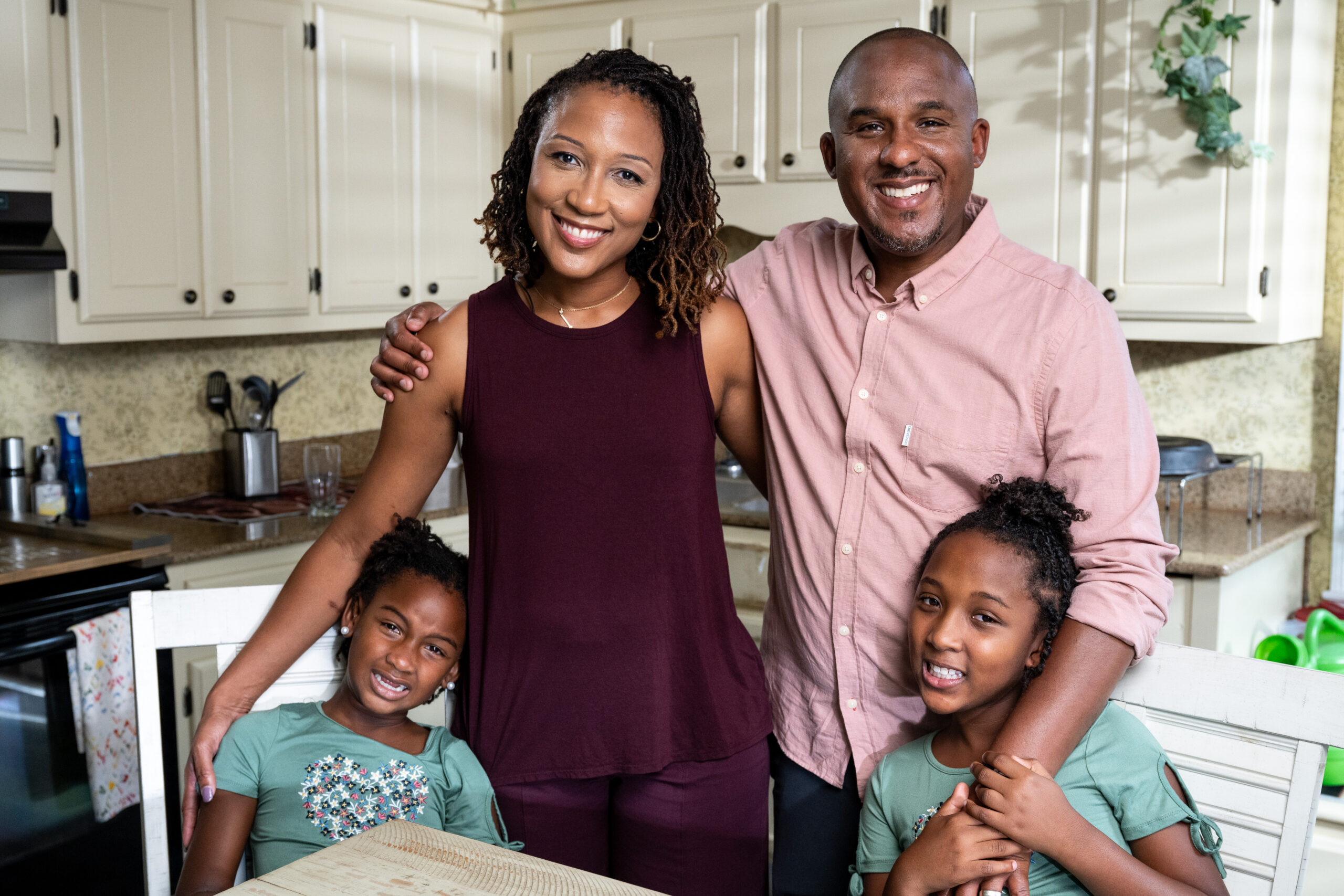
Header photograph: Scott Colom with his family in an archival campaign photograph published on his official website. Campaign handout; not a photograph of a victory event.