Published November 6, 2026 · Taken Social Editorial
Susan Saint James died of metastatic pancreatic cancer, according to a death certificate obtained by People and reported on November 5. The Emmy-winning actor, whose television work stretched from The Name of the Game to McMillan & Wife and Kate & Allie, died on October 26 at eighty.
The new report supplies additional detail about her death; it does not change the date on which she died. Her family had previously disclosed a pancreatic cancer diagnosis. The latest account has renewed attention to a career that helped define several different periods of network television and to decades of service with Special Olympics.
Saint James was familiar to viewers as a witty partner in a mystery, a capable working mother in a comedy and a performer whose distinctive voice could make dialogue feel conversational. Away from the screen, organizations in Connecticut remember a volunteer and advocate whose commitments continued long after she stepped back from regular series work.
What the latest report confirms
People's report, republished by AOL, says the certificate identifies metastatic pancreatic cancer and lists the interval between onset and death as months. Taken Social has not independently obtained the certificate. The description is attributed to the publication that reviewed it.
The Television Academy's record confirms October 26, 2026, as her date of death and August 14, 1946, as her birth date. Those dates place the loss in its proper chronology as tributes and later reporting continue to circulate.
The medical detail should also remain within the scope of the available record. A death certificate's description does not disclose the full course of a person's treatment or justify speculation about private decisions. The significance of the update is confirmation of the reported cause.
Her family's public remembrance emphasized generosity, kindness and attention to other people. Those qualities appear repeatedly in accounts of her work beyond acting, giving the tributes a continuity that reaches further than her most recognizable characters.
An Emmy arrived early in a long television career
Saint James won the 1969 Emmy for her supporting performance in The Name of the Game, playing research assistant Peggy Maxwell. The Television Academy lists further nominations for that role in 1970 and 1971, followed by recognition for her two best-known later series.
Its database records three nominations associated with McMillan & Wife, in 1972, 1973 and 1975, and lead comedy actress nominations for Kate & Allie in 1984 and 1985. The record spans supporting drama, leading dramatic work and comedy.
That range is a useful corrective to remembering an actor through only one familiar title. A viewer introduced to Saint James in the 1980s could encounter a fully established comedy performer without knowing that she had already won major recognition more than a decade earlier.
Television careers are often remembered as a sequence of roles, but those changes also involve different kinds of performance. A supporting character must establish an identity within someone else's story. A series lead must help sustain the audience's interest across repeated visits. Saint James worked in both positions.
Sally McMillan was part of a distinctive partnership
In McMillan & Wife, Saint James played Sally opposite Rock Hudson's San Francisco police commissioner, Stewart McMillan. The series emerged in 1971 within NBC's rotating Mystery Movie format, sharing that programming framework with Columbo and McCloud.
A 2021 Television Academy retrospective explains the ninety-minute format and the show's mixture of mystery, relationships and humor. Its ensemble included John Schuck and Nancy Walker, whose work helped establish the household and professional world around the couple.
In that retrospective, Saint James recalled enjoying romantic comedy with Hudson and described the ease of their working relationship. She also explained that she left when her contract ended because she wanted to try films.
The role's importance goes beyond appearing opposite a major movie star. A partnership-driven mystery needs an audience to care about the people talking between the clues. The exchanges that establish a relationship give the investigative plot a human setting and a reason for viewers to return.
Sally's presence was therefore part of the show's identity. Removing one half of a recognizable partnership changes its rhythm, even if other elements continue. The series eventually carried on under the shorter title McMillan, a visible reminder of how closely Saint James' character had been built into its premise.
Kate and Allie made friendship the center of a household
The next major chapter placed Saint James opposite Jane Curtin. Kate & Allie began on CBS in March 1984 and ran until May 1989, following two divorced mothers who shared a home while raising their children.
The Museum of Broadcast Communications history, hosted by the Television Academy Foundation, credits creator Sherry Coben with developing the idea after observing divorced women finding comfort in one another's company at a school reunion.
Saint James played Kate McArdle, with Curtin as Allie Lowell. The history records Saint James' preference for production in New York and before a live audience. It also places the women's friendship at the center of a series dealing with work, children, money and changing expectations.
That premise gave the sitcom a practical foundation. The women were not merely neighbors exchanging jokes before returning to separate stories. Their decisions affected a shared household, creating a reason for daily negotiation, disagreement and mutual support.
The arrangement also offered a different way to organize a family comedy. A household could be sustained by friendship and cooperation after marriages had ended. The characters' lives continued to contain uncertainty, ambition and humor rather than existing only as an aftermath.
Saint James and Curtin had to make that arrangement credible every week. The continuing friendship supplied an emotional structure around which a particular episode's problem could change. That is part of why the pairing remains central to the show's memory.
Service became a second, enduring public role
The Connecticut Women's Hall of Fame, which inducted Saint James in 1994, describes a life combining acting, family and volunteer work. It records her involvement with Special Olympics in California and her later service in Connecticut after moving there in 1983.
The organization's account also identifies honorary doctorates from five Connecticut institutions and recognition for her advocacy and volunteer leadership. These were not simply references to a celebrity appearing at an occasional benefit; they reflected a sustained relationship with the work.
A 2019 University of Connecticut Foundation event biography provides more specific context. It describes her involvement in the 1995 Special Olympics World Games in New Haven and her continuing activities as an adviser, fundraiser and volunteer.
That biography also notes her work with the Litchfield Garden Club and her status as a Connecticut Master Gardener. The details suggest the breadth of a public life that was rooted in a community as well as in nationally familiar television roles.
There is a difference between lending recognition to an organization and continuing to participate after the cameras move on. Institutional records are useful here because they document repeated service over time, rather than relying only on the warm language that accompanies a tribute.
Her own words explain a lasting commitment
In a letter published by Special Olympics, Saint James recalled first meeting Eunice Kennedy Shriver at the California State Games in 1972. She described working beside her in sporting settings and public events around the world.
The letter's perspective is that of a participant who had watched the work develop over decades. Its emphasis is on athletes, volunteers, families and the example set by Shriver, rather than on Saint James' own celebrity.
That is an important part of the legacy now being remembered. Television made her recognizable to people she had never met. Volunteering placed that recognition within relationships that required time, persistence and attention to other people's goals.
The two forms of work should not be collapsed into one another. An acting performance can matter deeply to an audience, while service matters in a different, more immediate way to the people taking part. Saint James built a public life containing both.
A family remembers the person beyond the roles
TV Insider's account of the tributes includes Curtin's remembrance of the laughter, community and family surrounding their work together. It also recounts the family's appreciation of Saint James' care for others after the death of her son Teddy in a 2004 plane crash.
Those memories place her professional history beside a private life marked by both attachment and loss. They allow the tribute to remain about the person, rather than turning her death into a final plot point in the story of a television character.
The latest report has brought her name back into the news, but the work that made it familiar remains across several decades of television. Peggy Maxwell, Sally McMillan and Kate McArdle were different roles, each requiring a recognizable presence and a relationship with an audience.
Saint James' other legacy is recorded in the organizations and communities she continued to serve. Together, those records offer a fuller remembrance of an actor whose career gave viewers companionship and whose life beyond the screen made room for sustained care.
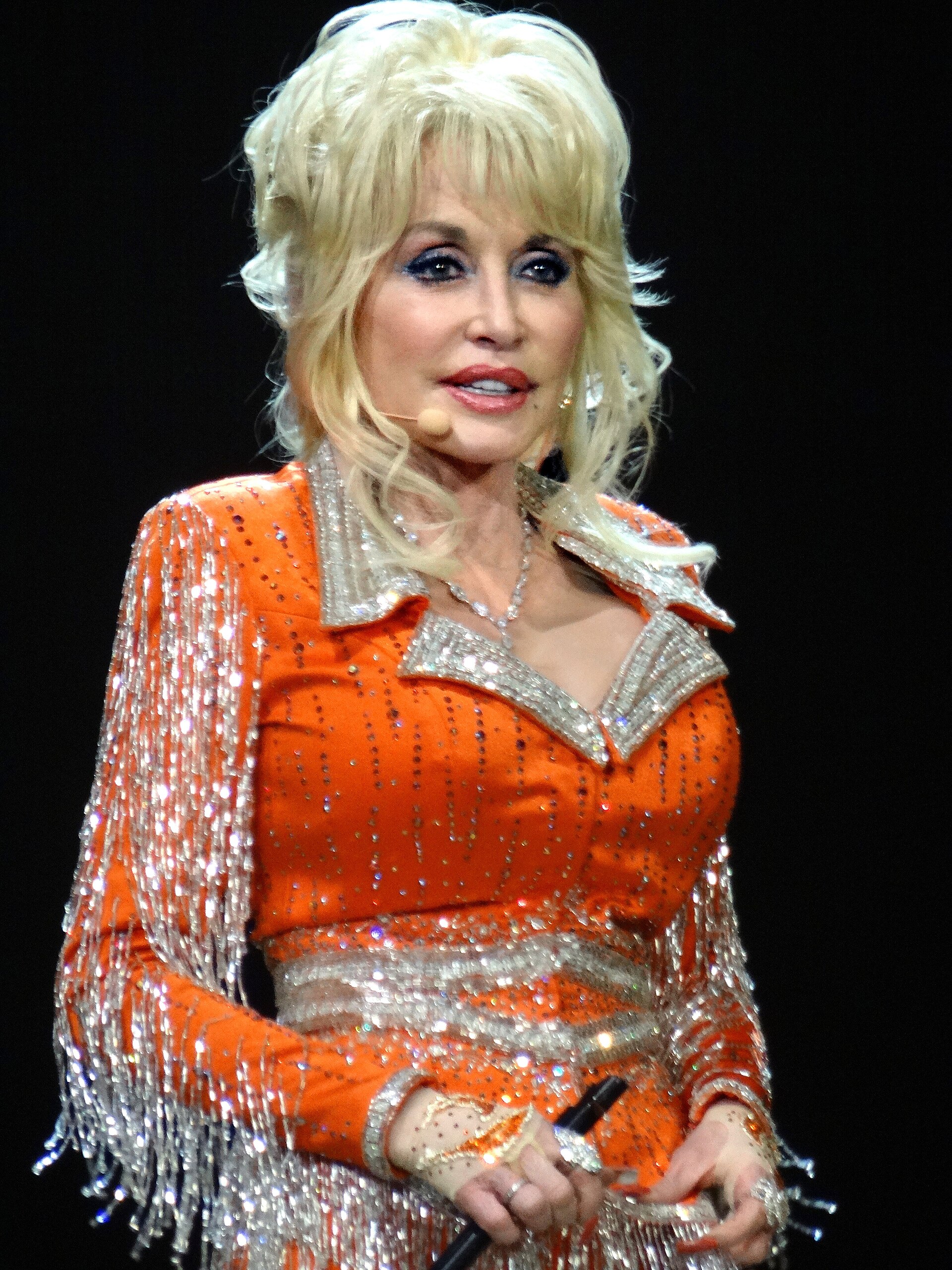
Susan Saint James in a 1971 Universal Television publicity photograph for Once Upon a Dead Man, the pilot associated with McMillan & Wife. Archival public-domain image; this photograph does not depict her later illness. Source: Wikimedia Commons.