Published November 6, 2026 · Taken Social Editorial
Kimmarie Johnson, the actress and model whose work included Beverly Hills, 90210 and Dude, Where's My Car?, has died at fifty. Her niece, Rhonda Scott, confirmed the death to ABC News on Thursday, describing a woman whose warmth was remembered as strongly as her appearances on screen.
Johnson died November 4 after a medical emergency the previous week, according to the family account. The news has prompted renewed interest in a career that moved through pageants, runway and print modeling, television, independent film, theater and a skincare business bearing her name.
Those different strands matter. The familiar television credit explains why many readers recognize her, but Johnson's own account of her working life placed modeling and entrepreneurship alongside acting. She was a performer whose professional identity extended beyond any single role.
Her story also had a geographical arc familiar to many people who enter entertainment: a beginning in Pennsylvania, a move west without an established circle of friends and a career built from a succession of opportunities rather than one defining breakthrough.
Her family has described the final days
Scott told ABC News that Johnson experienced a medical emergency at her Los Angeles home on October 27 and was taken to Cedars-Sinai Hospital. Her niece described a diagnosis as a “heart aneurysm condition.” An official cause of death had not been confirmed in the report.
The distinction is straightforward: the family has supplied a timeline and its description of the medical circumstances. That does not provide a basis for assigning a more specific condition, a particular complication or an explanation beyond what has been publicly confirmed.
In remembering her aunt, Scott emphasized the positive energy she brought to other people. She told the network: “We will miss her tremendously and will continue to honor her life forever.”
The tribute is an important counterweight to the way celebrity deaths can quickly become collections of medical keywords. Johnson's relatives are describing a person they knew, while audiences are revisiting the work through which they encountered her. Both belong in the account, with the family's privacy respected.
From Wilkinsburg to a national pageant
In a 2025 VoyageLA interview, Johnson described growing up in Wilkinsburg, near Pittsburgh, and said her circumstances were modest. She recalled seeing a newspaper advertisement offering a pageant prize, entering and winning, before going on to the Miss USA finals without formal coaching.
Contemporary material helps anchor that part of the story. An advertisement in Carnegie Mellon's student newspaper dated October 19, 1992 identifies Kimmarie Johnson as Miss Pennsylvania USA while promoting the next state competition. She represented Pennsylvania at Miss USA in 1993.
The historical document is useful because later profiles can compress a state competition and a national title year into one date. The clear point is her progression from a Pennsylvania title to the national stage, which became an early platform for the work that followed.
Johnson's recollection was less about a carefully designed route to fame than about taking an unexpected opportunity. A newspaper notice led to a competition; that experience helped open another door. It is a different career narrative from the idea of a performer arriving with every step already planned.
Her move to Los Angeles brought its own difficulties. In the same interview, she described unfamiliar traffic, a different way of speaking and the challenge of arriving without friends. She also recalled working at the El Rey Theatre while pursuing acting and modeling opportunities.
Those details give substance to a phrase such as pursuing a career in Hollywood. It meant adjusting to a new city, maintaining other work and building relationships at the same time as seeking jobs in front of a camera. The glamorous images were one part of a much more ordinary process of making a working life.
Familiar screen credits were part of a wider acting career
Johnson appeared as Judy in a 1998 episode of Beverly Hills, 90210. Her connection to the series was a guest appearance, rather than a role in the regular central cast. That is a useful distinction when a well-known program becomes the shorthand in an obituary headline.
The Paley Center's archive dates the series premiere to October 4, 1990. Its original premise followed the Walsh family's move from Minnesota to Beverly Hills, as the official episode listing recalls. Johnson's later appearance placed her within a television world viewers had already been following for years. That continuing familiarity helps explain why even a brief credit can remain a point of recognition long after an episode first airs.
Two years later, she appeared in the comedy Dude, Where's My Car?, whose cast was led by Ashton Kutcher and Seann William Scott. Us Weekly's career account identifies her among the film's jumpsuit-wearing characters and also records work in V.I.P. and other productions.
The same account lists films including Shadow Fury, Spanish Fly, Gang Warz, Break a Leg and The Summer of Massacre. Taken together, the credits show movement between recognizable commercial titles and smaller productions, rather than a career confined to one television franchise.
Her work extended behind the camera as well. The credits for Young Man Kang's 2005 film The Last Eve list her as an executive producer under the name Kim Marie Johnson. They also identify an acting role, another example of the different functions she undertook within independent filmmaking.
A filmography can record those functions without pretending that every credit carries the same prominence. A guest appearance, an ensemble part and a producing role involve different responsibilities. Looking at them separately gives a more accurate picture than inflating each into a starring role or reducing the whole career to its most famous title.
It also gives viewers a practical way to revisit the work. The television appearance belongs to the ongoing world of a series; the comedy uses a different tone; the independent productions place her in other genres. Those distinctions are part of the career, not inconveniences to be smoothed away.
Stage work and physical performance added another dimension
An archival in! magazine profile describes Johnson working in stage productions as well as film, television and modeling. At the time of that profile, she was appearing in The Wind Up Puppet Show and Vampire Masquerade at The Next Stage in Hollywood, directed by Chris Berub.
The profile also records her interest in dance, athletic activity and taekwondo. It describes live theater as a setting she valued for its exchange with the audience. Those details supply a fuller picture of her craft than a list of screen titles alone.
The archival account also describes the importance of family to her working life. It identifies the memory of her late mother, Carol, as a continuing source of motivation and notes her wish to have relatives nearby in Los Angeles. It is a more personal dimension of the career: professional ambition connected to the people whose encouragement and memory gave that work meaning.
A stage performance has a different relationship with its audience from a filmed scene. It unfolds in the room, with the performer responding to the pace and attention of people present. Johnson's interest in that exchange helps explain why theater could remain meaningful alongside work made for a camera.
Her physical interests also connect several parts of the résumé. Runway work, dance, stage performance and action-oriented material all place demands on movement and presence. That connection is an interpretation of the range she described, rather than a claim that one discipline automatically determined her success in another.
Modeling and SkinGlow remained part of her public identity
Johnson continued to identify strongly with modeling. Her Legacy remembrance names work associated with Vidal Sassoon and Lady Footlocker, alongside the pageant and screen career. Reports after her death also noted an August 2026 digital cover appearance for Grazia Slovenia.
Her skincare venture, SkinGlow by Kimmarie, identifies 2011 as its starting year. The published product selection includes shea butter, marula oil, an oatmeal soap and a coffee-based exfoliant. The website documents the business and its offerings; its promotional descriptions should not be mistaken for an independent medical evaluation of the products.
The venture gave Johnson a public role in which she could choose a product range and communicate directly with customers. That differs from performing a character or modeling another company's design. It was another way of putting her own name and judgment into her work.
In her later interview, she spoke about the value of mentoring and the difficulty of entering an industry without that support. The reflection is consistent with the broader story she told: opportunities mattered, but so did knowing how to navigate unfamiliar places and professional expectations.
Johnson's death brings those pieces back into view together. She was a Pennsylvania pageant winner, a working model, a screen and stage performer, a producer and a business founder. Remembering that range offers a more complete account than the television credit that first draws attention to her name, and leaves space for the warmth her family has asked the public to remember.
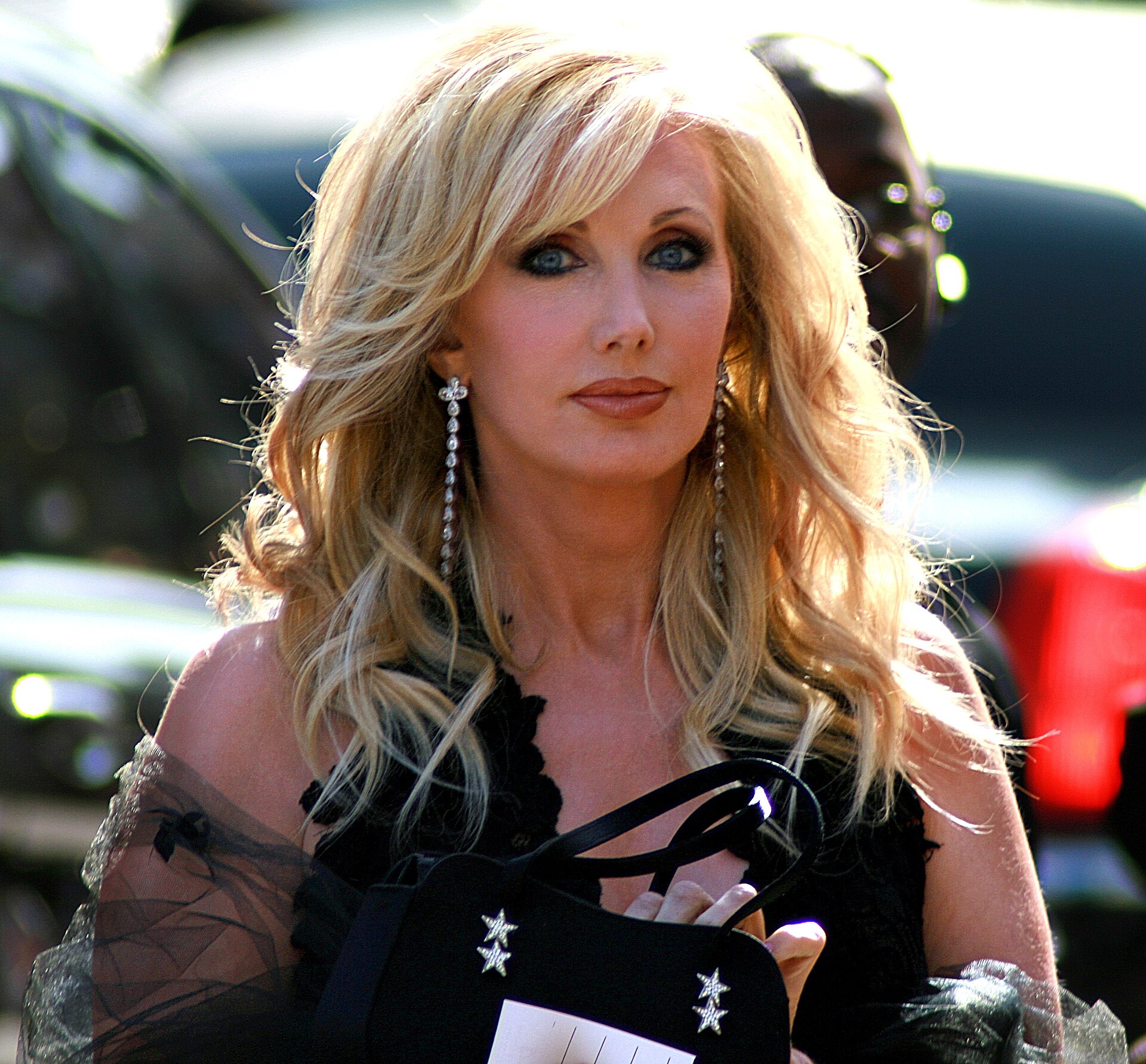
Kimmarie Johnson in Los Angeles on April 9, 2025. Archival photograph by The Troubadour; CC BY-SA 4.0. This portrait predates the October–November 2026 medical emergency and her death. Source: Wikimedia Commons. Image license.