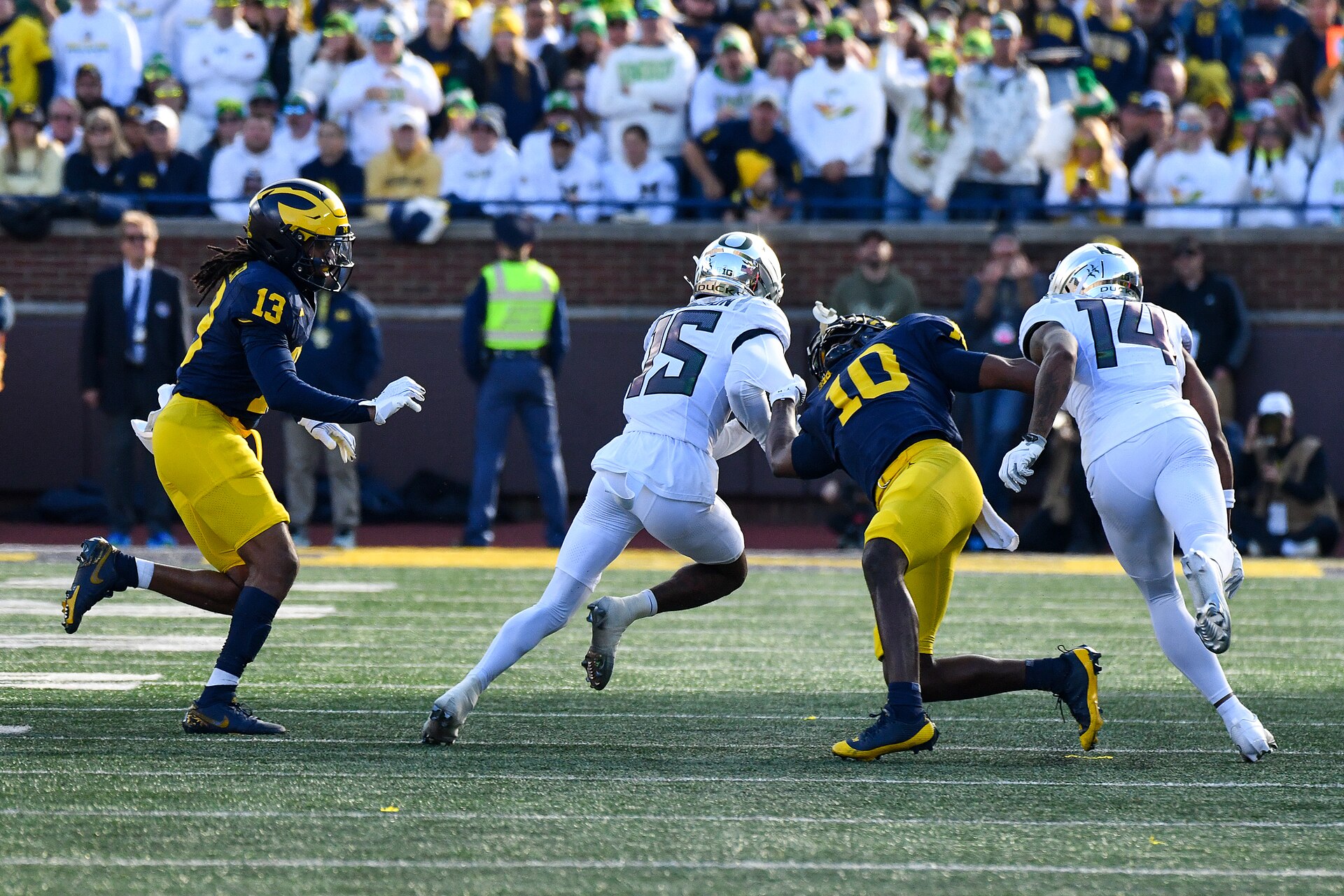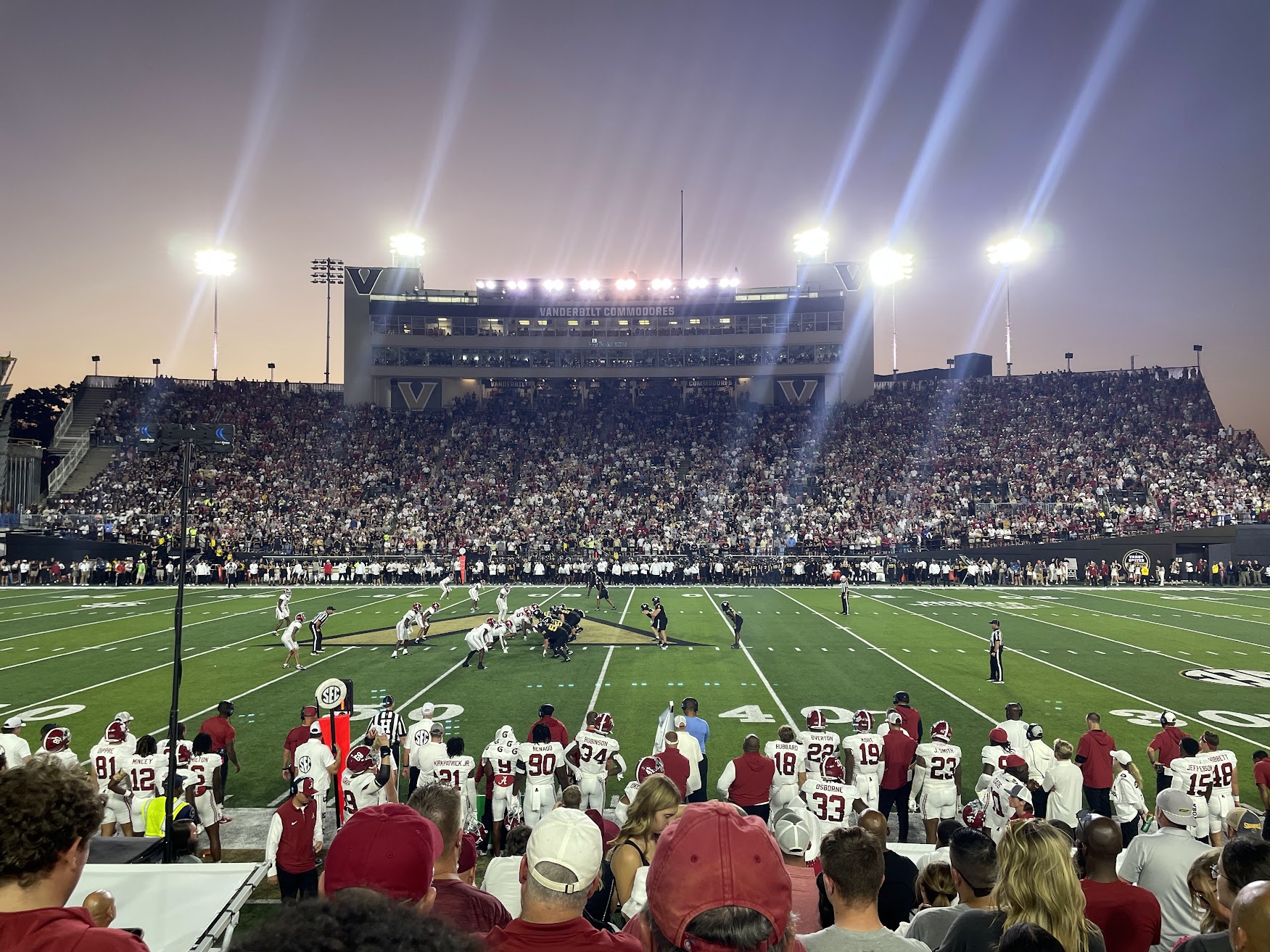
Georgia quarterback Gunner Stockton hands off to running back Nate Frazier in a September 12, 2026 archive photograph. This is not a photograph of the Missouri game. Archive photo by BullDawg2021 (CC BY 4.0).
Georgia gave Missouri almost no time to imagine an upset on Saturday. An interception on the first play from scrimmage created an immediate scoring opportunity, the Bulldogs scored on their first five possessions, and a 31–0 second-quarter lead became a 48–21 victory at Sanford Stadium. Nate Frazier ran for three touchdowns, while Gunner Stockton supplied efficient passing and a rushing score of his own.
The Bulldogs’ official final recap confirms a result that moved Georgia to 9–1 overall and 7–1 in the SEC. Missouri fell to 6–4 and 3–4. The final margin was substantial, but the defining feature was how quickly Georgia removed the game’s balance: the visitors were chasing several scores before they had established a reliable offensive rhythm.
For readers searching Missouri vs Georgia, the answer is a 48–21 Bulldogs win built around a powerful start and contributions across offense, defense and special teams. The useful conclusion reaches beyond the score. Georgia showed how an early defensive event can become a sustained advantage when the offense repeatedly converts the field position and momentum it receives.
The interception that set the game’s direction
Raylen Wilson intercepted Austin Simmons’ opening pass and returned it to Missouri’s seven-yard line. Frazier scored shortly afterward, giving Georgia a lead just over a minute into the game. The turnover mattered not simply because possession changed, but because it changed so close to the end zone that the Bulldogs could immediately make the mistake visible on the scoreboard.
Georgia then showed that its start was not entirely dependent on the short field. Stockton’s eight-yard touchdown run finished the next scoring drive, and another Frazier touchdown completed a longer possession later in the first quarter. The school’s first-half notes document the mixture of opportunism and sustained offense behind the early lead.
That distinction is central to evaluating a fast start. A team can benefit from an opponent’s opening error and then spend the rest of the half struggling to create anything independently. Georgia instead followed the first score with additional productive possessions. The defense’s initial contribution became a platform rather than the whole explanation.
By the end of the opening quarter, the Bulldogs led 21–0. They added a Peyton Woodring field goal and a Stockton touchdown pass to Isiah Canion before Missouri scored. A game that began with the visitors making one mistake had become a much broader problem involving their ability to stop drives and generate a response of their own.
Gunner Stockton made the offense difficult to interrupt
Stockton completed eighteen of twenty-four passes for 252 yards and a touchdown, in addition to his rushing score. A 75 percent completion rate, calculated from those totals, reflects an afternoon in which Georgia did not need a large volume of unsuccessful attempts to move the ball through the air.
The important point is efficiency within a balanced operation. An offense that can make reliable gains passing and also finish drives on the ground asks a defense to protect several possibilities. Missouri could not simply wait for an obvious passing situation and assume the Bulldogs had exhausted their alternatives.
Craig Dandridge Jr. caught six passes for 85 yards, a career high in receptions, and also contributed a 22-yard run. Canion’s touchdown gave Georgia another receiving contribution beyond the leading yardage total. The distribution helped the offense keep making progress without reducing every important play to the same target.
There is a useful contrast between a quarterback’s raw yardage and the conditions under which it is produced. A team chasing a large deficit may accumulate passing yards because it has little choice but to throw. Georgia built its passing production while controlling the score and retaining a credible running game. The offense could choose among workable options instead of being forced into one narrow response.
Nate Frazier’s three touchdowns supplied the finishing power
Frazier led Georgia with 72 rushing yards on fourteen carries and scored three times. Dwight Phillips Jr. added 66 yards on seven carries. Those totals, reflected in the official game center, show how the Bulldogs shared the ground workload while giving Frazier the most visible role in completing scoring possessions.
The touchdown total is the headline, but the supporting rushing production matters. A defense must deal with the repeated gains that bring an offense into scoring position as well as the final carry. Phillips’s contribution helped prevent the ground game from becoming a single-player assignment, while Frazier’s finishes made the collective work count.
Georgia finished with 182 rushing yards and 286 passing yards, producing 468 total yards. Missouri managed 286 overall. That 182-yard difference in total offense illustrates the scale of the Bulldogs’ advantage without requiring a claim that every possession was flawless. They created more productive football across the afternoon, particularly during the period when the result was being established.
It also explains why the score was not simply the product of one early turnover. The opening interception created an excellent first opportunity, but the sustained yardage and repeated scores required execution afterward. Georgia continued to build on the lead rather than waiting for Missouri to supply another mistake.
Missouri found scores after the game had tilted heavily
The Tigers eventually reached the end zone through Simmons’ touchdown passes to Naeshaun Montgomery, Donovan Olugbode and Kenric Lanier II. Those scores gave Missouri something to show for its persistence, but they came against a game state that Georgia had already made extremely difficult to reverse.
That timing matters when comparing the final score with the early performance. Twenty-one points can suggest a team stayed in regular scoring contact. Here, Georgia had already reached 31 before Missouri scored its first touchdown. The Tigers improved their total without restoring the uncertainty that an upset would have required.
Missouri finished two of eleven on third down. That limited its ability to sustain possessions and made the early defensive workload harder to manage. When an opponent is repeatedly scoring, an offense needs more than occasional successful plays. It needs enough conversions to keep the ball, create a response and give the defense a more favorable rhythm.
The result also followed a 34–20 loss to Texas, the context described in Missouri’s official preview of the trip to Athens. Consecutive games against highly regarded opponents created a demanding test, but the difficulty of the schedule does not remove the specific issues exposed in the latest loss: a damaging opening turnover, a large early deficit and too few sustained offensive answers.
Special teams helped Georgia keep favorable conditions
Woodring made two field goals, from 41 and 40 yards. Sacovie White-Helton contributed a 58-yard kickoff return to open the second half, helping Georgia begin with advantageous field position even after the break. The Bulldogs did not turn that particular opportunity into a touchdown, but the field goal still extended a lead that Missouri could not afford to see grow.
That sequence is a useful example of complementary football without relying on the phrase as an empty compliment. A return changes the distance an offense must cover. A successful kick completes a possession that stops short of the end zone. Together, those contributions can preserve control even when the offense does not produce its best possible outcome.
The opening interception supplied another version of the same relationship. Defense created position, offense converted it and the scoreboard changed quickly. Georgia’s advantage was therefore distributed across units. That is more encouraging for a leading team than a result that depends entirely on an isolated offensive star overcoming problems elsewhere.
There were still useful distinctions within the performance. The Bulldogs could appreciate the long return while examining why the following drive ended in a field goal. Winning comfortably does not make those details irrelevant. It creates a less costly setting in which to address them before a closer contest makes the difference between three points and seven decisive.
Why the fast start matters in Georgia’s season
Georgia entered the day as the nation’s top-ranked team, with its position supported by a strong recent response after the season’s earlier loss. The school’s season results show victories over Florida and Ole Miss immediately before the Missouri game. Saturday extended that winning sequence and preserved the Bulldogs’ opportunity to finish the regular season from a powerful position.
The early scoring also fit a broader pattern documented in the team’s halftime notes: Georgia had regularly established first-quarter advantages across the season. Saturday made that tendency especially visible. Scoring early changes the choices available to both sidelines, particularly when the leading team can still use a balanced offense rather than protecting a fragile advantage.
For a team with championship ambitions, the value lies in making an opponent play outside its preferred plan. A large deficit can force more passing, reduce the patience available for the running game and make fourth-down decisions more urgent. Georgia’s opening quarter created those pressures before Missouri had much chance to establish the conditions it wanted.
The next scheduled test is at South Carolina on November 21, followed by Georgia Tech at home. Those games will present different personnel and circumstances. Saturday’s result does not decide them, but it provides concrete strengths to carry forward: efficient quarterback play, multiple productive runners and a defense capable of creating an immediate advantage.
Conclusion: Georgia turned opportunity into control
The strongest part of Georgia’s 48–21 win was the connection between its opening opportunity and everything that followed. Wilson’s interception started the movement, but Stockton, Frazier, the receiving group and special teams kept supplying reasons for the lead to grow. Missouri’s later touchdowns changed the final totals without undoing the decisive opening stretch.
For the Bulldogs, the result reinforced a credible championship profile through execution in several phases. For the Tigers, it identified the cost of allowing an early mistake to become a series of unanswered possessions. Georgia did more than begin quickly. It made the quick start the foundation of a game that remained firmly under its control.