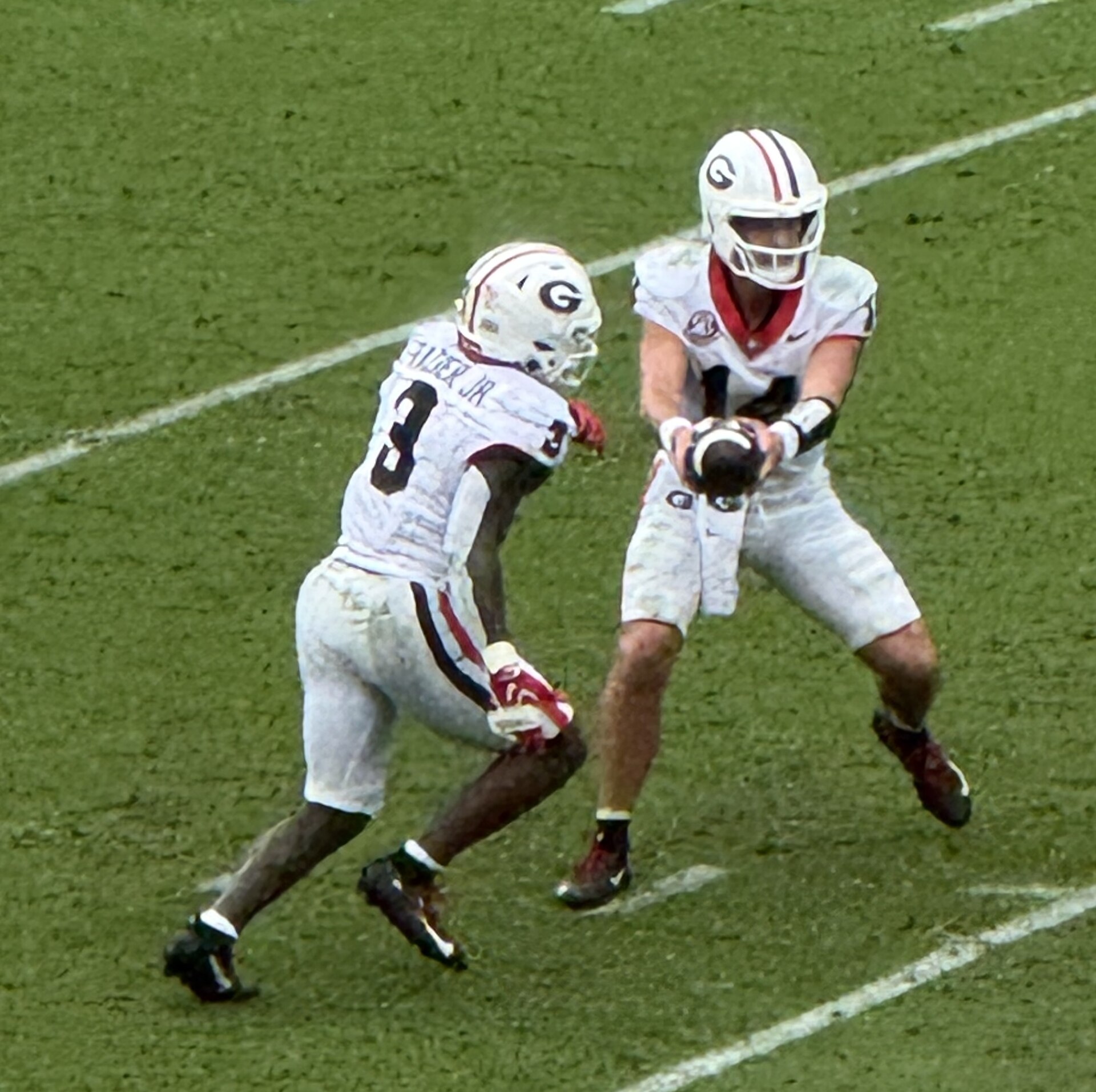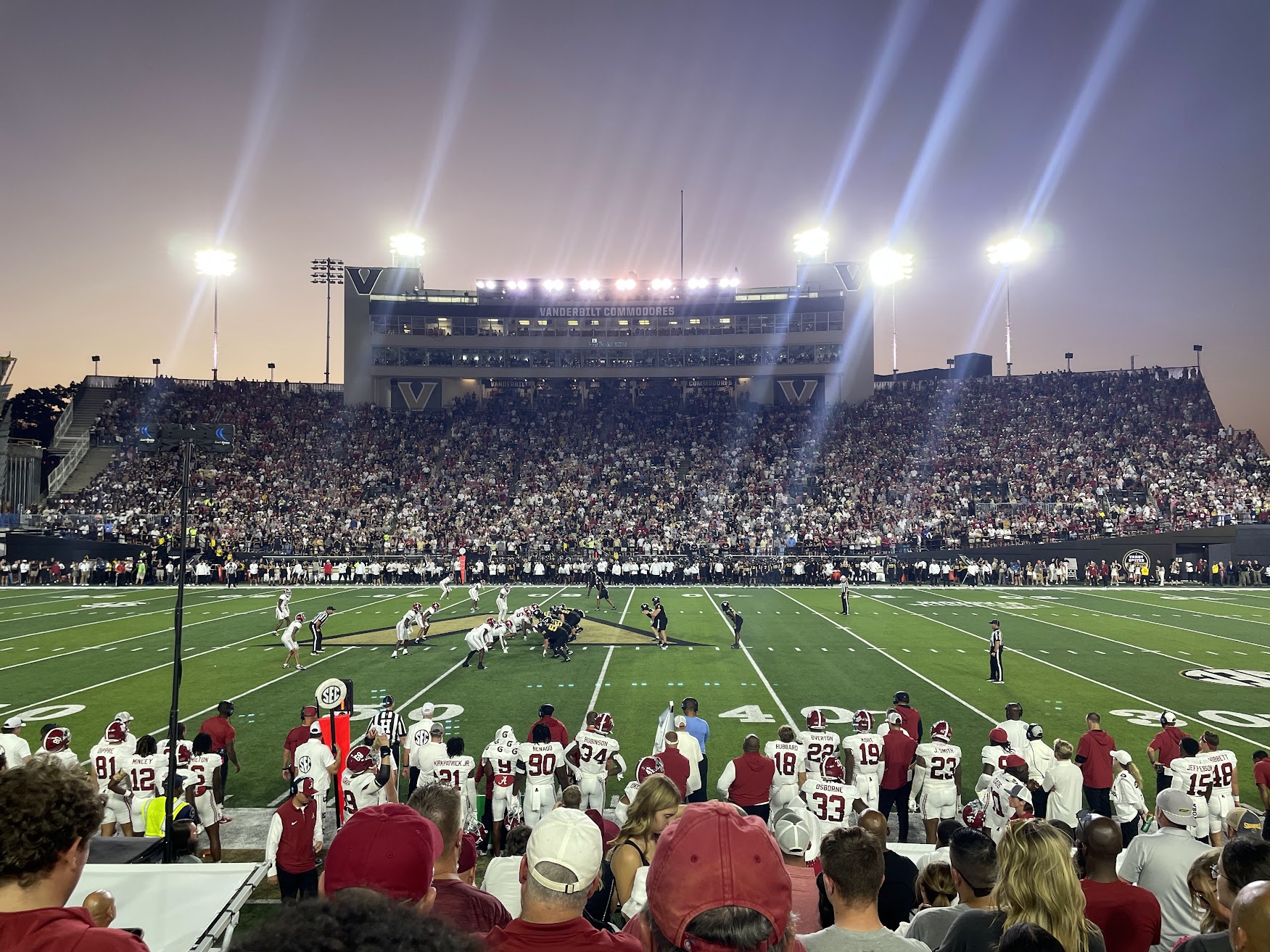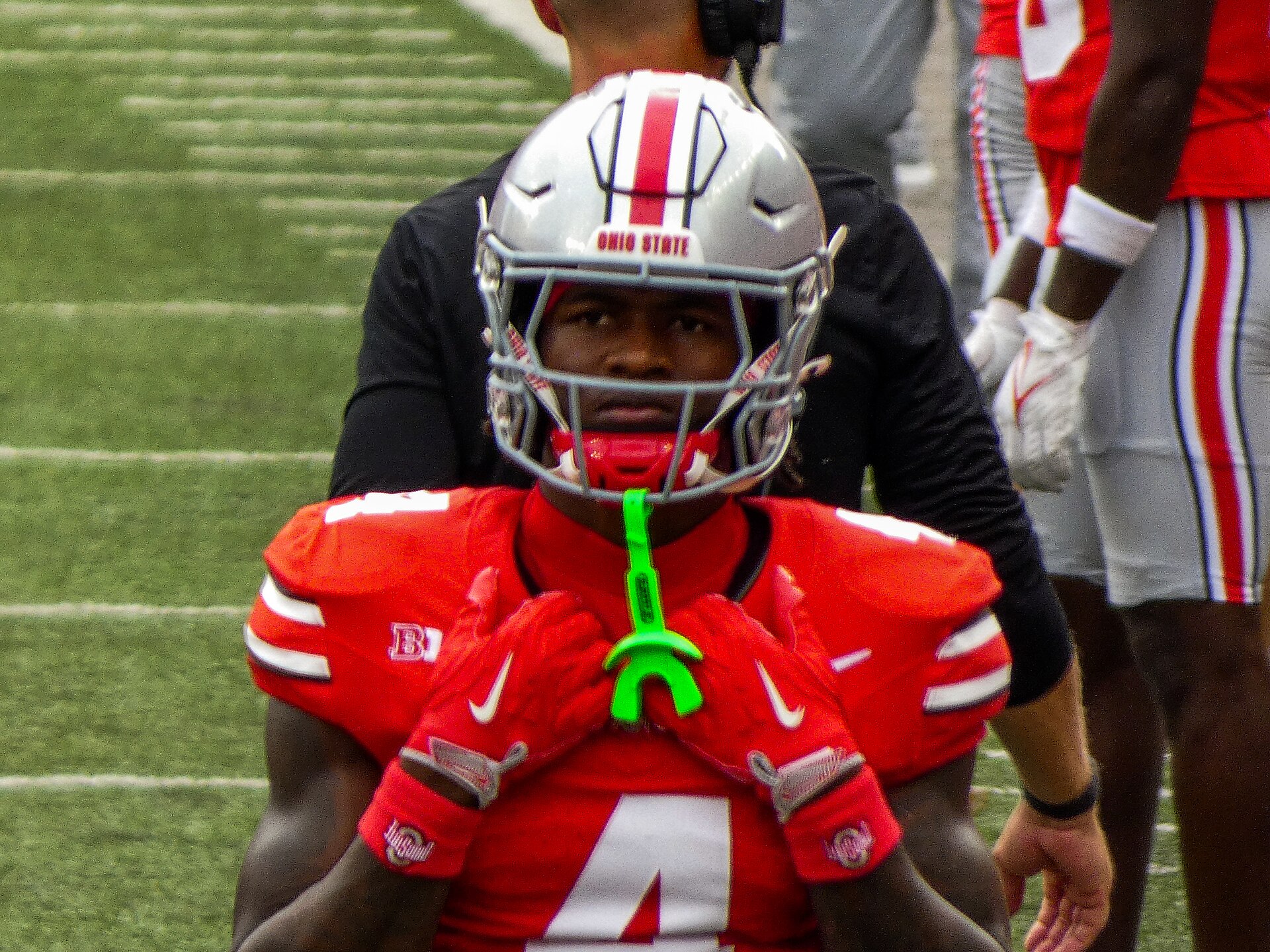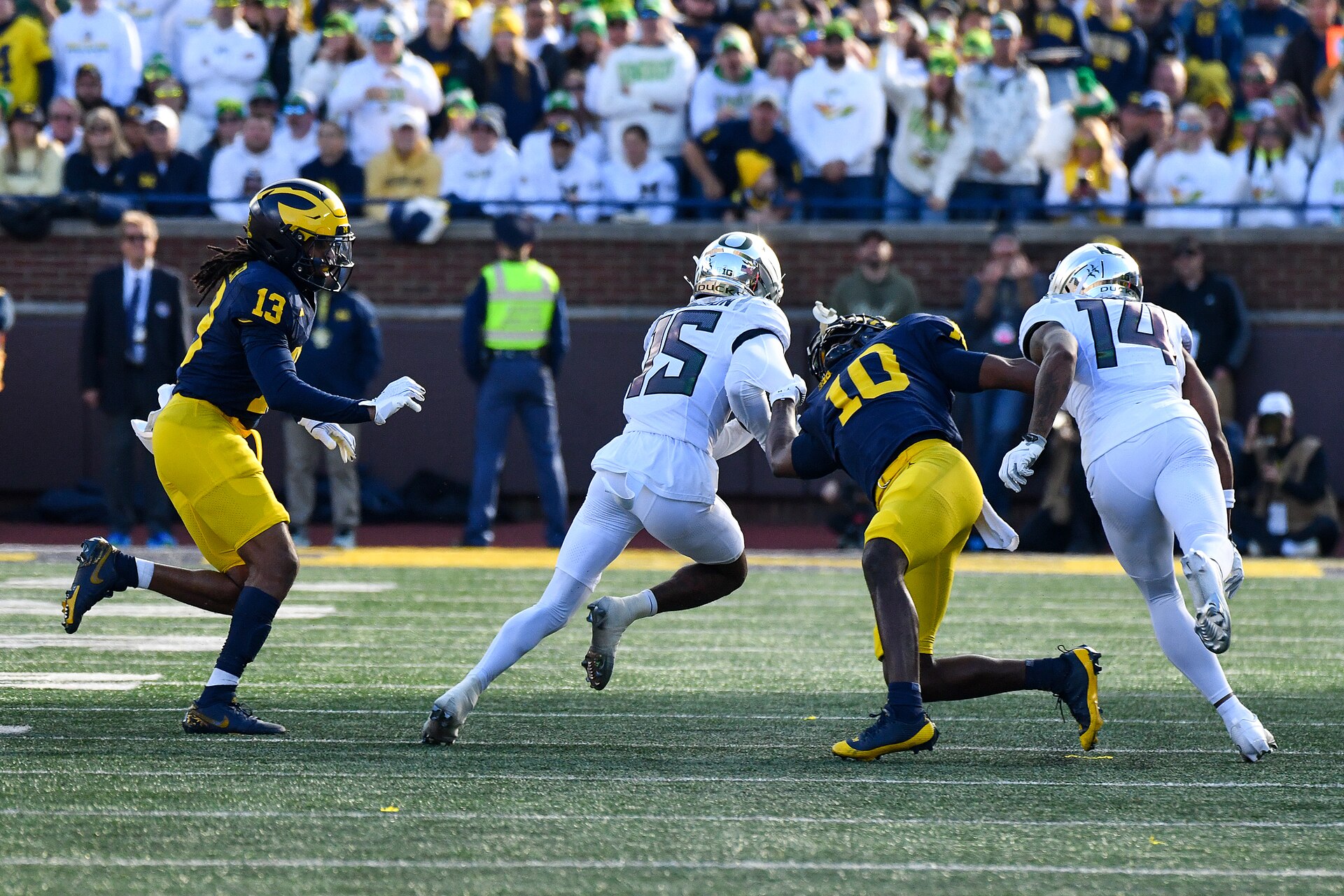
Oregon and Michigan players during their November 2, 2024 meeting at Michigan Stadium. Archive photograph; the November 2026 game was played at Autzen Stadium in Eugene. Archive photo by Maize & Blue Nation (CC BY 2.0).
Oregon used explosive passing plays to make Michigan pay for another limited offensive afternoon, winning 31–7 at Autzen Stadium on Saturday behind Dylan Raiola’s four touchdown passes. The Ducks built a two-score lead in the opening quarter, answered Michigan’s lone touchdown before halftime and added separation late while the Wolverines struggled to turn rushing production into sustained scoring.
The official Michigan game center confirms the November 14 result, moving Oregon to 7–3 and Michigan to 5–5. Raiola finished with 341 passing yards. Michigan produced 215 yards on the ground but only 71 through the air, a contrast that explains much of the gap between moving the ball occasionally and creating a complete offensive threat.
The result carried particular significance for Michigan because it came in the first game after a change in offensive leadership. Kyle Whittingham had dismissed coordinator Jason Beck on November 8 and placed Jim Harding in charge on an interim basis. Saturday did not provide the immediate scoring response the Wolverines needed, leaving the program with the same broad problem in a new set of game circumstances.
Oregon’s explosive plays established the difference
Raiola opened the scoring with a 60-yard touchdown pass to Jeremiah McClellan and later found Da’Jaun Riggs for a short score that made it 14–0. Michigan responded on Savion Hiter’s 70-yard touchdown run at the start of the second quarter, briefly reducing the deficit to one possession.
Oregon’s next major answer came just before halftime. Raiola connected with Dakorien Moore for a 59-yard touchdown with six seconds remaining, producing a 21–7 lead. In the fourth quarter, a 49-yard screen-pass touchdown to Dierre Hill Jr. extended the advantage to 28–7. Those scoring details come from The Wolverine’s live reporting from Eugene.
The timing of the Moore touchdown was especially costly for Michigan. A seven-point deficit at the break would have preserved a different range of second-half possibilities. Instead, Oregon turned a late possession into a two-touchdown cushion, forcing the visitors to find more offense against a defense that could protect a substantial lead.
The third quarter remained scoreless, which gave Michigan time without giving it the points required to change the situation. Oregon did not need to keep scoring at the same rate to retain control. It needed to avoid allowing the kind of repeated breakthrough that would have made the final quarter a different contest.
The late screen-pass score then illustrated the problem explosive plays create for an opponent trying to stay close. A defense can succeed on several snaps and still lose the value of that work when one play travels a long distance. Michigan’s afternoon contained stretches of resistance, but Oregon repeatedly found plays that changed the scoreboard much faster than ordinary possession could.
Raiola gave Oregon an advantage Michigan could not match through the air
The passing-yardage difference was 341 to 71, a 270-yard gap. McClellan led Oregon with 105 receiving yards, while Andrew Marsh led Michigan with 46. Those totals do not explain every route or coverage decision, but they establish a clear contrast in the teams’ ability to make the passing game a productive part of the afternoon.
Oregon’s scores came through several receivers, making the threat broader than one successful matchup. McClellan and Moore supplied long downfield touchdowns, Riggs finished near the goal line and Hill turned a screen into a major gain. Different receiving roles contributed to the same outcome, giving the defense several kinds of problem to solve.
That range matters because a defense cannot answer every threat with the same adjustment. Protecting against a deep pass can create room underneath; reacting aggressively to shorter plays can expose space elsewhere. The available scoring record does not justify claiming that every touchdown came from one repeated coverage error. It does show that Oregon found more than one route to a decisive play.
Michigan’s passing limitation had the opposite effect. With only 71 yards through the air, its offense had difficulty making the defense account for comparable danger across the field. A productive running play could create an opening, but the Wolverines were unable to combine enough of those moments with a passing response that changed how Oregon had to defend.
Why 215 rushing yards became only seven points
Hiter finished with 107 rushing yards, including the 70-yard touchdown. His scoring run was a substantial individual contribution and the Wolverines’ clearest offensive highlight. It also provides a useful way to read the team total: one play accounted for nearly a quarter of Michigan’s 286 yards of total offense.
Calculated from the published totals and that scoring distance, Michigan’s other 59 offensive plays produced 216 yards, or about 3.7 yards per play. That does not make the long run less valuable. It explains why a respectable-looking rushing total could coexist with a game in which the offense rarely generated a complete scoring possession.
Oregon finished with 467 total yards to Michigan’s 286. The teams held the ball for almost the same amount of time, separated by only 42 seconds. The difference was therefore not simply that one offense had vastly more possession. Oregon created more value from the time and snaps it used.
Michigan also went four of thirteen on third down and failed on all three fourth-down attempts. Those are the situations where a drive must either continue or end. An offense can accumulate yards between those decisions and still struggle to score if it cannot execute when the available choices become narrower and the defense knows the stakes.
The clearest missed opportunity came around the start of the fourth quarter, when Michigan reached a goal-to-go situation but turned the ball over on downs. At that stage, the score was still 21–7. A touchdown would have changed the pressure on Oregon; an empty possession allowed the Ducks to retain the cushion while more time disappeared.
A coordinator change did not produce an immediate solution
Michigan’s November 8 announcement stated that Beck had been relieved of his duties because the offensive results had not matched the program’s expectations. Harding was named interim coordinator for the remainder of the regular season, with Whittingham planning a national search for a permanent appointment.
That change supplied the backdrop to Saturday’s performance, but it should not become an excuse to treat one game as a complete verdict on the interim arrangement. A staff can change responsibilities quickly; installing a substantially different offense, correcting execution and building confidence across positions are more complicated tasks.
The immediate evidence is still sobering. Michigan scored once, did not score after halftime and lacked an effective passing complement to its rushing production. Those are concrete outcomes for the staff to address. Broad promises about a new approach become meaningful only when they alter the situations in which drives are currently ending.
The quarterback picture also remained part of the story. Tommy Carr began the game, while Bryce Underwood entered on the drive that produced Hiter’s touchdown, according to the live account. Carr finished as Michigan’s leading passer with 45 yards. The presence of more than one quarterback did not generate a passing total large enough to change the overall offensive balance.
For Whittingham, the challenge extends beyond selecting a name for the next start. The offense needs a credible relationship among protection, routes, timing and the running game. A quarterback change can affect those relationships, but it cannot independently solve every problem around them. Saturday’s numbers point toward a collective assignment.
What the result means for Oregon and Michigan
Oregon entered after victories over Northwestern and Ohio State, results documented in its official game notes. Beating Michigan added another win to that recovery and moved the Ducks to seven victories. The season’s earlier losses still form part of the record, but the latest performance gives Oregon a stronger recent body of work.
The most encouraging part was the ability to create separation without relying on one narrow source of production. Raiola’s passing led the offense, while Hill supplied 98 rushing yards. The defense prevented Michigan from turning the rushing total into repeated scoring drives. Those contributions worked together rather than asking one spectacular play to carry the entire afternoon.
Michigan’s remaining schedule brings UCLA to Ann Arbor on November 21 before the trip to Ohio State on November 28. At 5–5, the Wolverines have little room to treat the final stretch as a distant planning exercise. They need an offense capable of providing their defense with more than an occasional explosive response.
The recent scoring pattern adds urgency. Michigan had also struggled in losses to Indiana and Michigan State, as the school’s season results show. The Oregon game therefore belongs to a broader run of offensive difficulty. The next improvement must appear in the repeated tasks that support scoring, including third downs, red-zone execution and enough passing success to keep an opponent from narrowing its defensive focus.
Conclusion: Oregon had the answers that Michigan is still searching for
The 31–7 result was built on a clear difference in offensive capability. Oregon could strike quickly through the air, distribute its touchdown production and use a strong early position to manage the rest of the game. Michigan produced a memorable Hiter run but could not turn its other possessions into enough scoring pressure.
For Oregon, the victory strengthens a productive late-season sequence. For Michigan, it makes the next assignment more specific: a change in offensive leadership must be followed by changes in execution that survive beyond one successful play. Saturday showed the value of an offense with several answers, and the cost of continuing to search for them while the season’s remaining opportunities grow fewer.