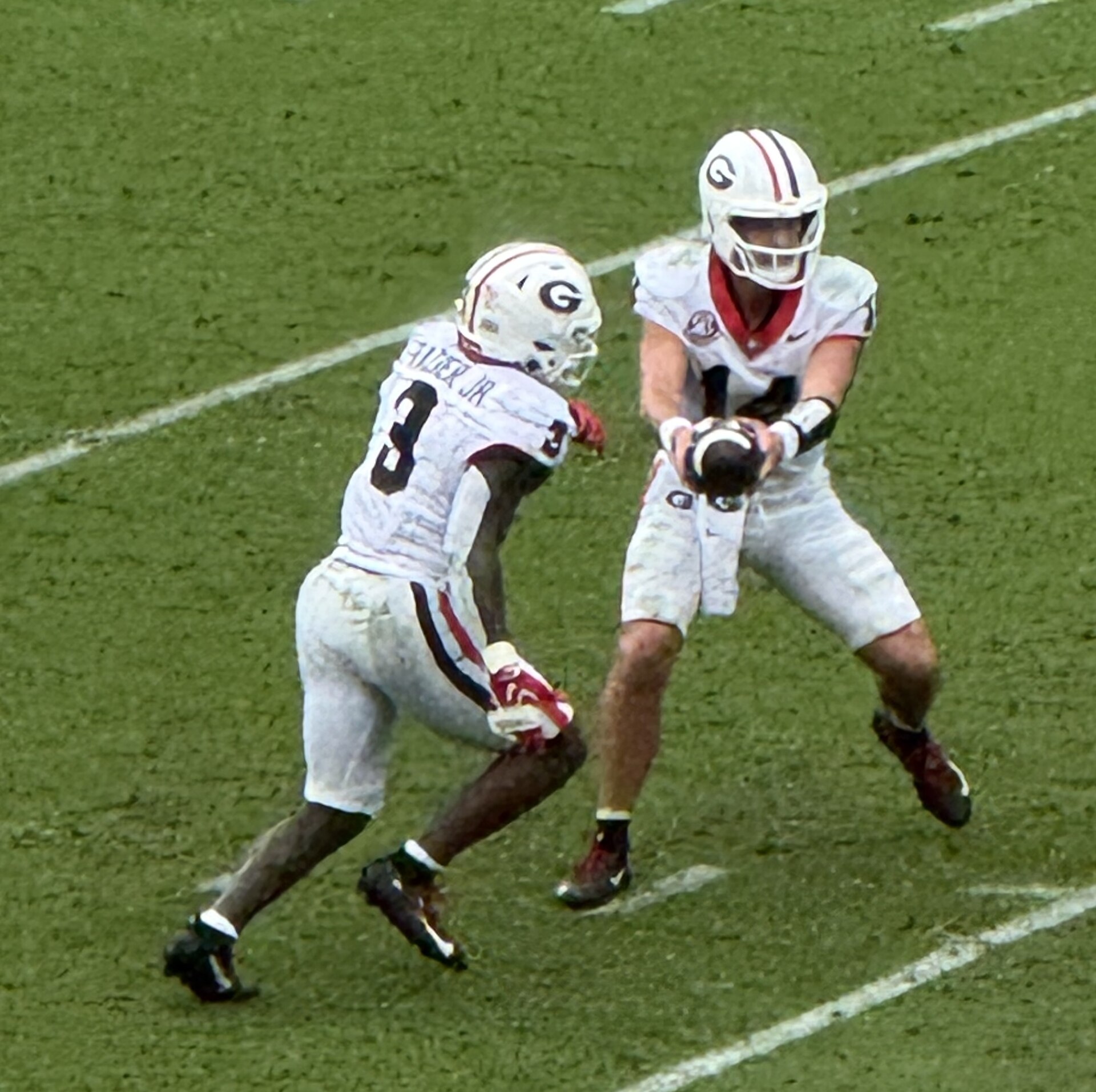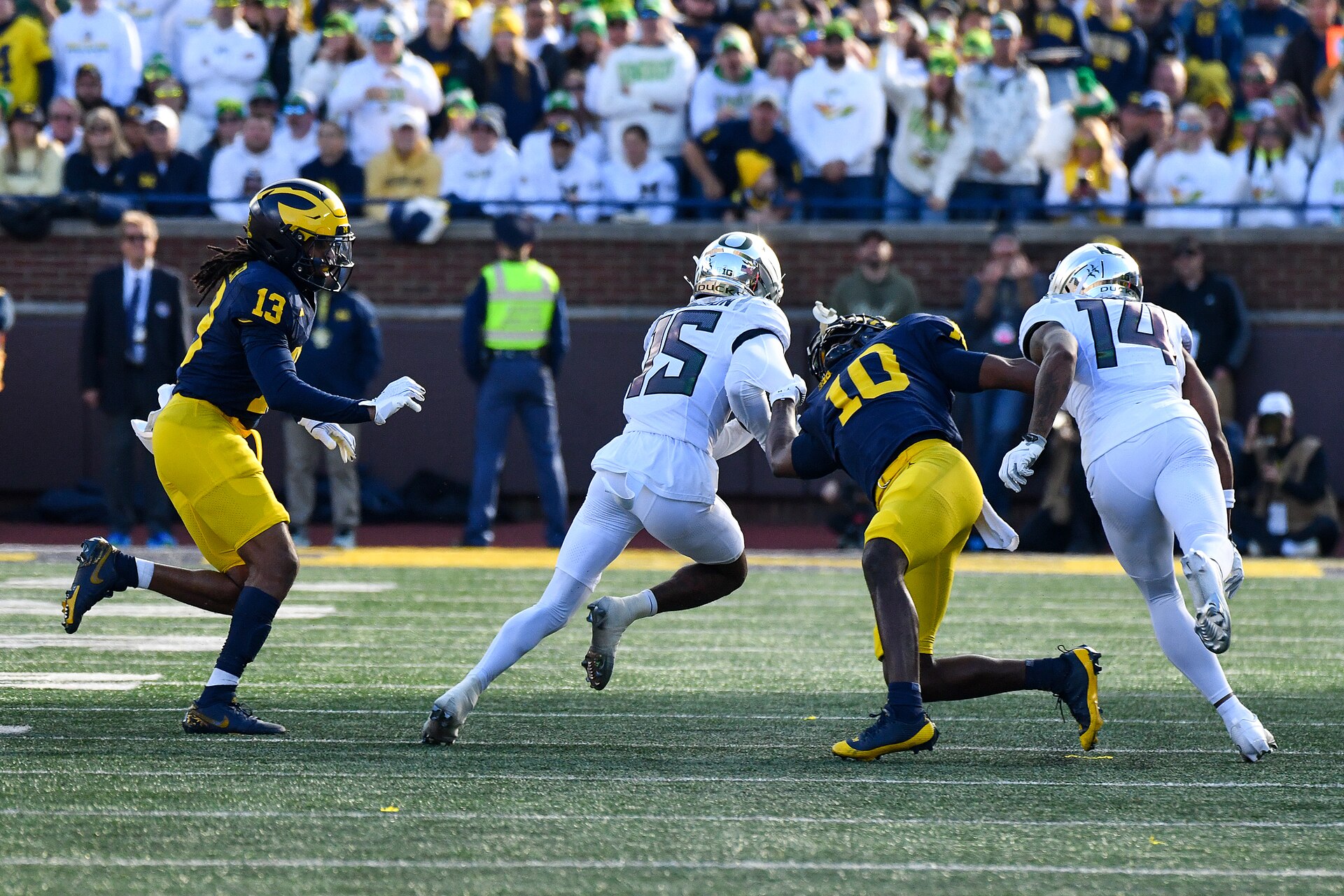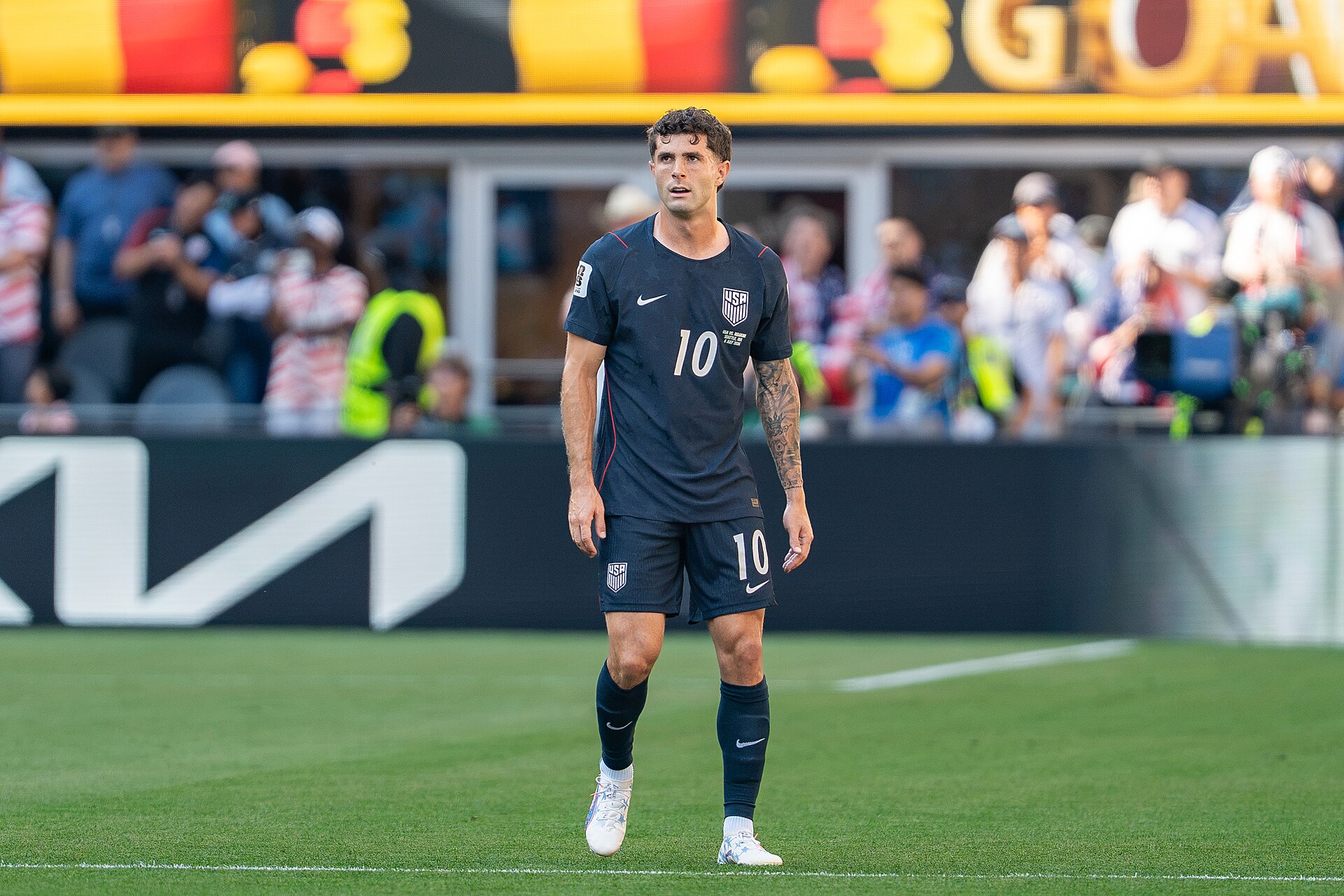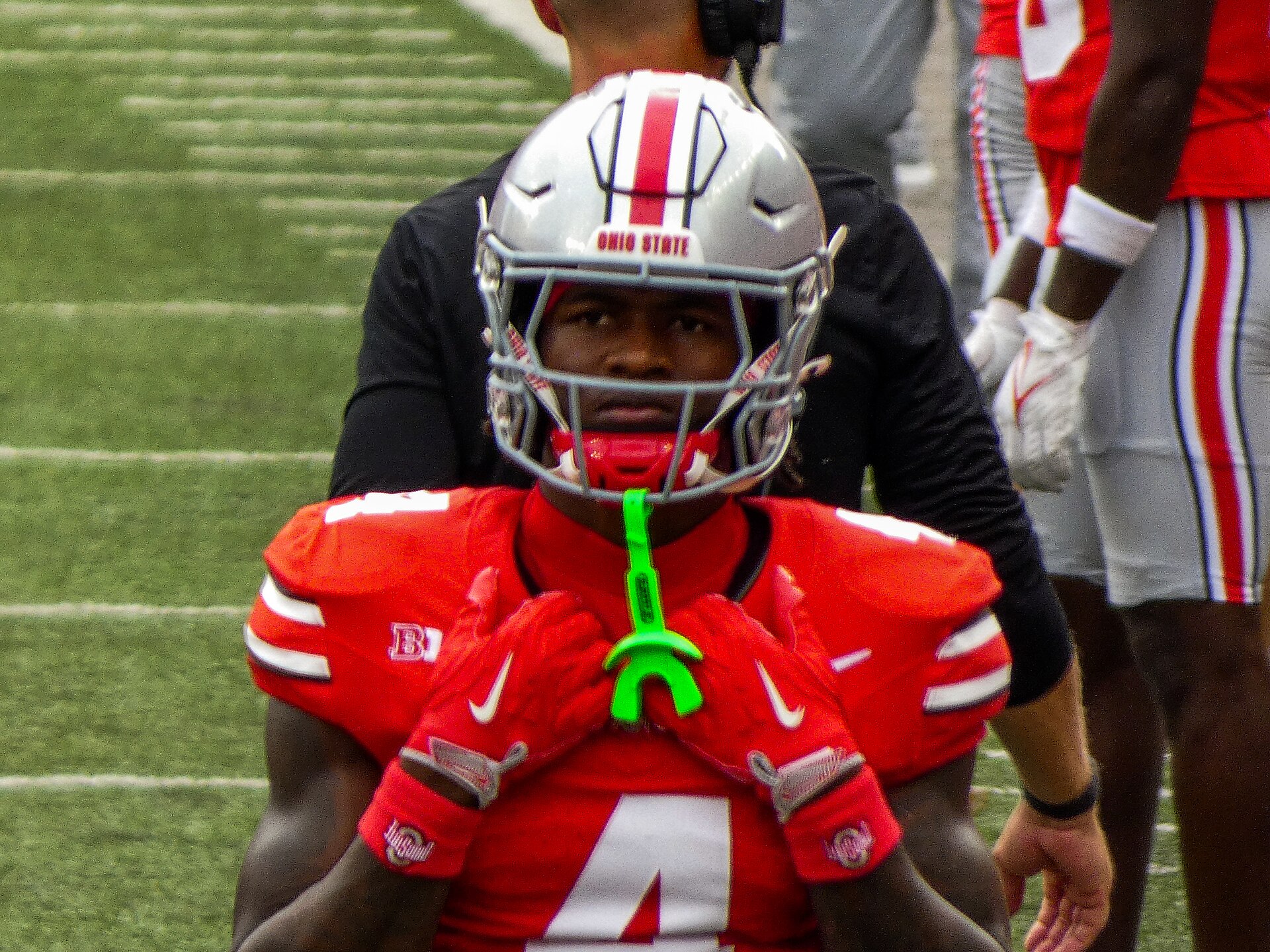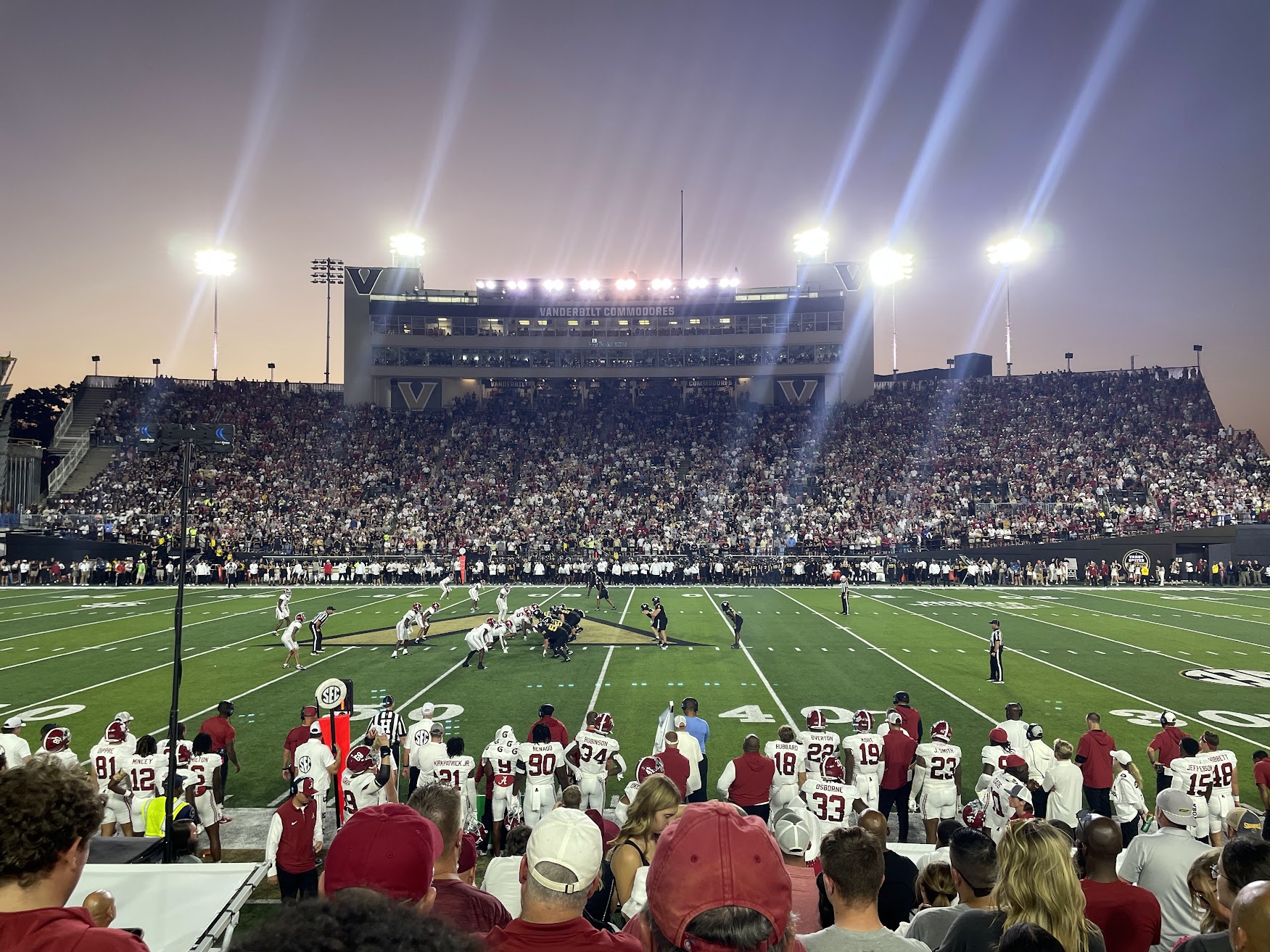
Alabama and Vanderbilt meet at FirstBank Stadium in Nashville on October 5, 2024. Archive photograph of the earlier matchup; not the November 2026 game. Archive photo by Mcdon177 (CC BY 4.0).
Alabama left Nashville with a 21–6 victory over Vanderbilt on Saturday because its defense made the most important part of the field extraordinarily difficult to cross. The Commodores moved the ball in stretches and produced two long field goals, but they never reached the end zone. Keelon Russell’s three touchdown passes supplied enough separation for a Crimson Tide team whose offense was effective at crucial moments rather than consistently dominant.
The official Alabama game center confirms the November 14 result, moving the Tide to 8–2 overall and 6–2 in the SEC. Vanderbilt fell to 4–6 and 1–6. The score protected Alabama’s season, but the manner of the victory offers a more complicated assessment: a strong defensive performance carried an uneven offensive afternoon through a matchup that remained uncomfortable well into the second half.
For anyone searching Alabama vs Vanderbilt, the clearest conclusion is that Alabama won by fifteen points without allowing a touchdown. The explanation lies in the details behind that margin: five sacks of Jared Curtis, limited Vanderbilt rushing production, a pair of third-quarter scoring passes to Lotzeir Brooks and a major kickoff return that created a particularly short path to the final touchdown.
The late first-half touchdown changed the afternoon
Neither team scored in the opening quarter. Vanderbilt eventually went ahead on Brock Taylor’s 52-yard field goal with 4:13 left in the second. Alabama answered with a nine-play, 75-yard drive, finished by Russell’s nine-yard touchdown pass to Marshall Pritchett with six seconds remaining before halftime.
The official scoring summary shows how sharply that possession changed the game’s immediate direction. Vanderbilt had an opportunity to enter the break ahead after keeping Alabama scoreless for almost an entire half. Instead, the Tide went to the dressing room leading 7–3, then returned to produce another 75-yard touchdown drive.
Russell found Brooks for a 39-yard score early in the third quarter. Taylor responded with a 57-yard field goal, cutting the deficit to 14–6, before Brooks caught another Russell touchdown pass from nine yards. The final scoring drive covered only twelve yards, a reminder that the field-position battle mattered alongside the offense’s ability to finish.
That sequence is the difference between an afternoon that stayed vulnerable and one that tipped toward Alabama. A late score before halftime and another soon after it allowed the Tide to build an advantage without requiring a sustained offensive surge across four quarters. The third touchdown then made Vanderbilt’s lack of end-zone production increasingly difficult to overcome.
Russell and Brooks delivered the decisive passes
Russell completed 22 of 33 passes for 217 yards, three touchdowns and one interception. Brooks caught five passes for 62 yards, with two of those catches producing touchdowns. Ryan Coleman-Williams led Alabama with seven receptions for 68 yards. Those individual totals explain why the passing game was decisive even though it did not generate a large overall yardage number.
The distribution also matters. Coleman-Williams supplied repeated receptions, while Brooks supplied the scoring impact. Pritchett’s only catch became the touchdown that changed the halftime score. The offense did not require every receiver to perform the same task. It needed reliable movement between the twenties and precise execution on the plays that finished possessions.
Russell entered the game after dealing with an ankle issue, a concern documented in Saturday Down South’s coverage of the quarterback decision. His availability was therefore part of the pregame story. The result supports crediting him for the scoring throws he produced; it does not establish that the injury had no effect or allow an outside observer to diagnose his condition from the final statistics.
Alabama’s rushing total was less convincing. The team finished with 92 net yards on 35 attempts, although Daniel Hill gained 89 on fourteen carries. That contrast is important. Hill’s production was useful, but the broader rushing line included lost yardage and other attempts that did little to increase the total. A single productive runner can help an offense without making the entire ground game efficient.
The distinction leaves Alabama with a clear offensive assignment. It can value the successful touchdown drives while asking why other possessions stalled. An opponent that prevents the late-half breakthrough or the explosive scoring pass could make the same unevenness more expensive. Saturday’s win gives the coaches a result to protect, rather than a reason to ignore the stretches that required defensive rescue.
Alabama’s defense made six points stand as Vanderbilt’s ceiling
The team statistics are striking. Vanderbilt gained 235 yards, including only twelve net rushing yards. It converted two of fifteen third downs and one of four fourth downs. Alabama generated 309 yards and nineteen first downs to Vanderbilt’s ten. These figures identify a game in which the Tide’s defense repeatedly prevented the visitors’ opportunities from becoming a sustainable offense.
Curtis completed 25 of 40 passes for 223 yards without an interception, but Alabama sacked him five times. Junior Sherrill provided seven catches for 100 yards. Vanderbilt could therefore point to a productive receiver and a quarterback who avoided throwing the ball away to the opponent, yet still lacked the complementary rushing and situational success needed to turn those positives into touchdowns.
Net rushing statistics in college football include sacks, which helps explain why a team’s final ground total can look especially severe when its quarterback is under pressure. That accounting detail does not erase Alabama’s success. It clarifies the nature of it: the defense disrupted the passing operation as well as limiting conventional rushing gains.
The third-down record made the pressure cumulative. Converting two of fifteen leaves an offense repeatedly deciding between punting, attempting a difficult kick or accepting the risk of fourth down. Vanderbilt’s fourth-down results then narrowed its options further. The six-point total was the outcome of several failed opportunities to extend or complete possessions, rather than merely the absence of one fortunate bounce.
Taylor’s field goals from 52 and 57 yards deserve individual recognition. They produced all of Vanderbilt’s points and demonstrated range. At the same time, relying on such long attempts places a limit on an offense’s scoring potential. A long field goal can rescue a possession; it cannot regularly match an opponent that is finishing selected drives with seven points.
Special teams and penalties shaped the margin
Dijon Lee Jr.’s 83-yard kickoff return created the field position for Alabama’s last touchdown. The short drive that followed turned a 14–6 game into a 21–6 advantage. That is a substantial contribution from a unit that can be overlooked when a recap focuses only on the quarterback and the receivers listed beside the touchdown passes.
Alabama still had to complete the opportunity. A short field does not guarantee a touchdown, particularly in a game where both offenses had struggled for consistency. But the return removed much of the distance and made the next scoring task markedly easier. Credit belongs both to the player who created the position and to the offense that converted it.
Vanderbilt also carried a heavy penalty burden: fourteen flags for 92 yards, compared with four for 25 against Alabama. Penalty yardage does not tell the whole story of when an infraction occurred or which drive it altered. It does show how often the Commodores had to absorb a setback or allow the opponent help that did not come from a completed offensive play.
For a team trying to beat Alabama with limited scoring chances, that burden was especially damaging. An underdog needs its successful plays to accumulate. Repeated administrative or execution losses force it to spend more of those successes repairing position. The practical lesson is about preserving opportunity, not simply promising greater discipline after a disappointing final.
Why Nashville carried a recent history of danger
This matchup returned Alabama to the setting of Vanderbilt’s 40–35 victory over the top-ranked Tide in October 2024. That result gave the Commodores one of the defining wins in their recent history and established a reference point that naturally accompanied another visit to FirstBank Stadium. It also explains why an uncomfortable first half could carry more emotional weight than the score alone suggested.
Alabama had already answered that defeat with a 30–14 home victory in 2025. Saturday’s game was therefore another chapter in a recent sequence, rather than the first opportunity for a response. The personnel and circumstances have changed across those meetings, but the comparison helps place the current result within a rivalry that briefly became much less predictable.
The useful historical comparison concerns how the games were won. Vanderbilt’s breakthrough required a complete scoring performance against Alabama. In 2026, the Tide prevented that kind of accumulation. The absence of a Commodores touchdown was the clearest difference, even if Alabama’s own offense did not deliver the kind of free-flowing afternoon its supporters might have wanted.
Conclusion: defense secured the win, execution must improve
Alabama’s remaining regular-season schedule brings Chattanooga to Tuscaloosa on November 21 before the Iron Bowl against Auburn. The Tide reaches that closing stretch with another conference win and a defensive performance it can reasonably trust. It also reaches it with enough uneven offensive possessions to make the next week’s corrections specific rather than ceremonial.
The 21–6 verdict belongs first to a defense that kept Vanderbilt out of the end zone and repeatedly won the downs that determine whether drives continue. Russell’s three touchdown passes, Brooks’s two scores and Lee’s return supplied the decisive support. Alabama accomplished the necessary task in Nashville. Turning that result into a stronger finish now requires making the productive moments more repeatable and the defensive rescue less essential.