Published November 6, 2026 · Taken Social Editorial
LSU's women's basketball team turned a Thursday night home game into a record-setting performance, beating Texas Southern 131–22 at the Pete Maravich Assembly Center. The 109-point margin surpassed the previous Division I women's record of 108, set by another Kim Mulkey team at Baylor a decade earlier.
The ninth-ranked Tigers improved to 2–0 behind a scoreless second quarter for their opponent, a deep scoring rotation and a defense that repeatedly created additional offensive opportunities. Freshman Anna Minaeva led LSU with 21 points, while seven Tigers reached double figures.
The result explains the surge of attention around LSU women's basketball on November 6. It is an extraordinary early-season score, with the record defined by the gap between the teams rather than by LSU's point total alone.
The second quarter changed the scale of the game
LSU led 25–13 after the opening quarter. Over the next ten minutes, it outscored Texas Southern 40–0, taking a 65–13 lead into halftime. A competitive-looking early score had become a 52-point separation by the break.
The official final box score records Texas Southern going 0-for-13 from the field in that period, while LSU made 15 of 20 attempts. The contrast was particularly stark beyond the arc: LSU went 5-for-6 and Texas Southern 0-for-7.
Jada Williams supplied much of the offensive acceleration. The Associated Press game report credits her with 16 of her 18 points in the second quarter, including three three-pointers. That concentrated burst helped turn a lead into a runaway.
The effect was larger than scoring forty points in isolation. Holding an opponent scoreless means every successful possession extends the margin. There is no answering basket to interrupt the accumulation, and no short scoring exchange to keep the game within reach.
Texas Southern's first-quarter thirteen points also show why the game's final total requires a look at its sequence. The visitors scored more than half their eventual points in the opening period. The remaining three quarters produced only nine, while LSU added 106.
The box score shows control across several areas
LSU finished with 53 made field goals on 89 attempts, a 59.6% shooting performance. It recorded 36 assists against nine turnovers, while Texas Southern committed 38 turnovers. The rebounding difference was 61–26 in LSU's favor.
The Tigers' scoring breakdown included 55 points off turnovers, 76 in the paint and 36 on fast breaks. Those categories overlap: a basket can follow a turnover, come on a fast break and be scored in the paint. Adding them together would incorrectly count some points more than once.
Read separately, however, they describe the breadth of the advantage. Turnovers denied Texas Southern opportunities and supplied LSU with opportunities of its own. Rebounding gave the home team control of many missed shots, while the paint scoring shows that its offense was not dependent entirely on outside shooting.
The final field-goal gap was substantial in both volume and accuracy. LSU attempted 34 more shots than Texas Southern. A team can struggle to recover even with respectable shooting when it has far fewer attempts; Texas Southern also had difficulty converting the chances it did obtain.
The four-to-one assist-to-turnover ratio offers another useful reading of LSU's offense. It reflects a high number of recorded assists alongside relatively few giveaways. It does not establish the quality of every decision, but it supports the broader picture of an attack that generated and finished opportunities consistently.
Minaeva leads a scoring effort spread across the roster
The official box score lists Minaeva with 21 points and seven rebounds, followed by Mikaylah Williams with 20 points. Jada Williams scored 18, ZaKiyah Johnson 17, Grace Knox and MiLaysia Fulwiley 15 each, and Lola Lampley ten.
LSU's official recap identifies the seven double-figure scorers as the team's first such group since its first-round NCAA Tournament game against Jacksonville in March. It also reports 46 points from the bench.
That distribution matters when interpreting a blowout. A huge team total can come from one dominant individual, but this one also reflected production from multiple players. LSU could continue scoring while using different combinations rather than relying on a single player to carry the entire offense.
For a freshman, leading a deep roster in scoring is a notable early marker. Minaeva's performance gives the staff another productive option as the season develops. The more demanding test will be whether that production carries into games with less space, fewer easy opportunities and a closer score.
The guard production is significant as well. Jada Williams' second-quarter surge and Mikaylah Williams' twenty-point total provided different sources of scoring. An opponent preparing for a team with several effective creators has more decisions to make about where to direct defensive attention.
A record with a direct connection to Mulkey's Baylor years
The previous benchmark came on December 15, 2016, when Mulkey's Baylor team beat Winthrop 140–32. Baylor's contemporary report described the 108-point difference as an NCAA record for margin of victory.
That game, like LSU's latest win, combined substantial scoring with an extended defensive shutdown. Baylor held Winthrop scoreless in the fourth quarter and finished with a 75–25 rebounding advantage. All twelve available Baylor players appeared for between thirteen and twenty-one minutes.
The comparison clarifies why Thursday's record is about margin. Baylor scored nine more points than LSU did in these two games, but also allowed ten more. Subtracting the opponent's score produces 108 for Baylor and 109 for LSU.
A scoring record, a winning-margin record and a school record can therefore identify different achievements. LSU's announcement specifically identifies the Division I women's margin mark. It also describes 53 made field goals as a program record and 131 points as the second-highest total in LSU history.
The shared coach adds a historical thread, but the teams belong to different eras and programs. The useful comparison is the numerical standard and the way each result was constructed, rather than assuming that two November and December performances predict identical seasons.
LSU's recent history puts the offense in context
Mulkey's official LSU biography records the program's 2023 national championship and four consecutive seasons with at least 29 victories. It describes the 2025–26 team scoring 3,325 points over 35 games, an average of 95 per game.
That background makes the latest offensive outburst part of a program that was already producing high totals. The biography identifies sixteen games with at least one hundred points during the previous season, showing that triple-digit scoring was an established feature rather than a new concept introduced this week.
Mulkey brought three Baylor national championships to her LSU appointment, having previously won titles as a player and an assistant at Louisiana Tech. The career spans several versions of the college game, while her present LSU group is building its own identity through a changing roster.
Thursday also connected the current team to a recent championship generation. The LSU recap notes Angel Reese's attendance and describes the value Mulkey placed on former players remaining engaged with the program. Her presence gave the night a link between what LSU has achieved and what its current players are trying to establish.
That continuity can matter in ways a box score does not measure. Players see a visible path from the college program to a professional career, and supporters see familiar figures returning. The atmosphere around a program develops from those relationships as well as the result on a particular evening.
What the result establishes, and what the season still has to test
The win demonstrates that LSU could maintain its production through a deeply one-sided matchup. The next evaluation will concern how the same habits function against opponents capable of reducing the turnover gap, contesting the paint and limiting second opportunities.
A team facing better ball security may get fewer transition chances. An opponent able to finish defensive possessions can make each half-court attack more important. Those situations ask a different question from whether LSU can keep scoring once it has already established control.
Free-throw execution is another area where context changes the importance of a number. LSU's 16-for-23 performance did not threaten this result. In a close game, missed free throws can carry much greater weight, making routine improvement useful even after a record-setting win.
The same applies to depth. Seven double-figure scorers are encouraging, but a close contest may require a smaller group to solve more difficult possessions. The early games help establish options; subsequent tests reveal which combinations work when an opponent can answer.
For Texas Southern, the game leaves a specific set of problems to address: protecting the ball, generating more reliable attempts and completing defensive possessions. The final margin is severe, but the underlying categories offer a more actionable review than the score alone.
The next date on LSU's schedule
LSU's official recap schedules its next game for Tuesday, November 10, against McNeese in Baton Rouge, with a 7 p.m. Central tip on SEC Network+. That is the next announced opportunity to see how the Tigers build on their opening performances.
Thursday's achievement already has a place in the record book: 131 points scored, 22 allowed and a 109-point difference. The larger season will be measured by how LSU develops beyond those numbers. For one evening, its offense, defense and depth combined to produce a margin Division I women's basketball had not previously recorded.
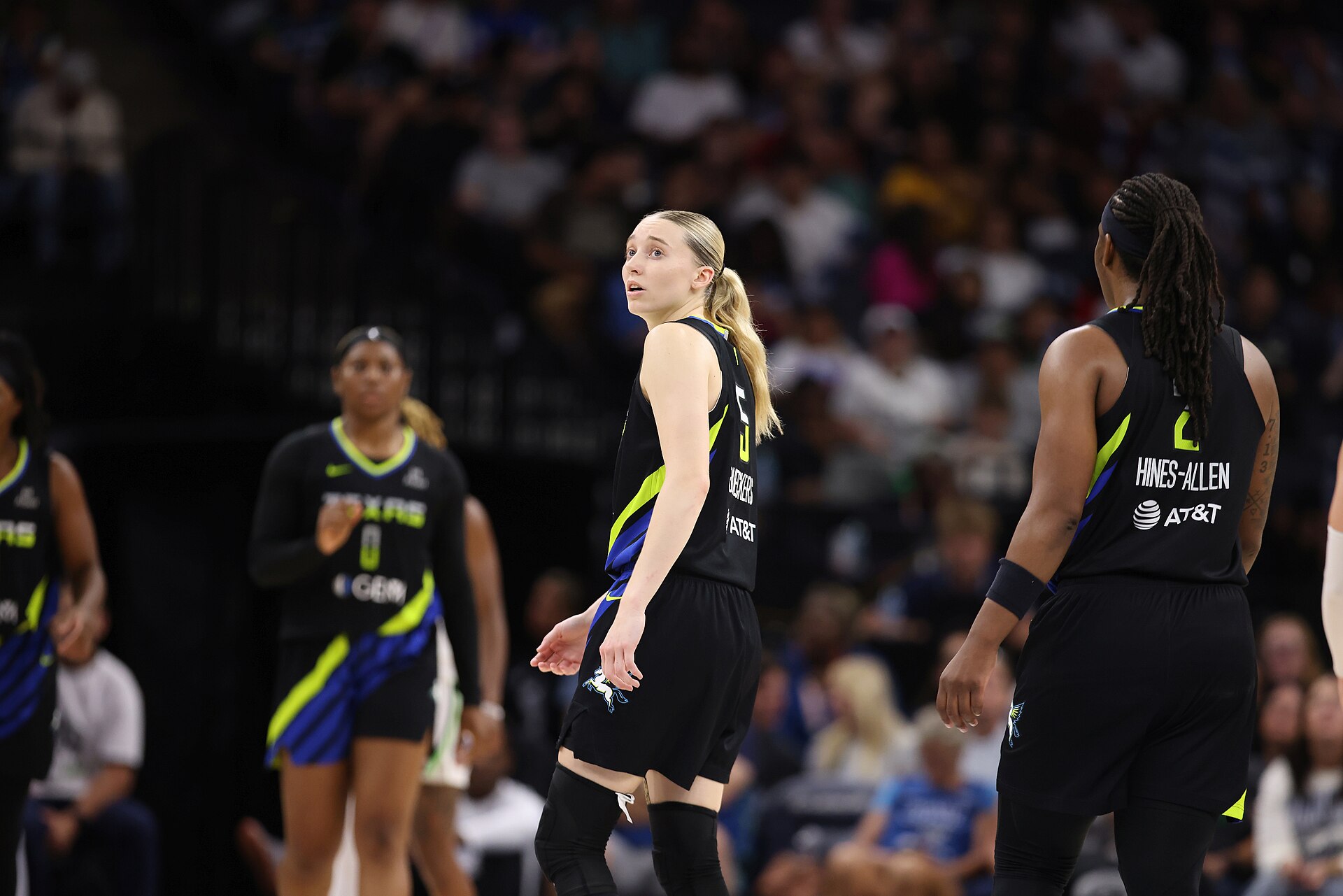
LSU coach Kim Mulkey on January 4, 2024. Archival photograph by Jonathan Mailhes; CC BY-SA 2.0. This photograph does not show the November 5, 2026 Texas Southern game. Source: Wikimedia Commons. Image license.