Published November 6, 2026 · Taken Social Editorial
The Toronto Blue Jays have distanced the organization from anti-Muslim videos shared on Anthony Santander's Instagram account, saying the individual comments do not represent the club's values. The response follows posts circulated after the U.S. midterm elections and criticism from fans and public figures.
The controversy centers on material targeting Muslims and suggesting that the election of Michigan's Abdul El-Sayed to the U.S. Senate would bring religious law to the country. The posts were taken down Thursday, according to contemporaneous reporting.
The club's public statement establishes its position on inclusion. It does not announce a suspension, a roster move or another disciplinary measure. As the story develops, that distinction is important: a response rejecting the message is an established action, while any further consequence requires its own confirmation.
What the Blue Jays said
CityNews Toronto reported the club's statement on November 5. Its opening declaration was “Baseball is for everyone.” The organization said it sought a welcoming experience at its ballpark and separated individual comments from its values and beliefs.
USA Today Sports' November 6 report, republished by Yahoo, also records receiving the statement from a team spokesperson. It identifies the material as Instagram Stories shared after the election.
The wording is significant in two ways. It addresses the experience the organization wants to offer fans, and it explicitly declines to treat an individual's comments as the club's own position. It does not, in the quoted text, describe an investigation or name a particular penalty.
That leaves the public response narrower than some readers may assume from a headline about a team condemning a controversy. It is possible to describe the statement firmly while remaining precise about what the organization has and has not announced.
The underlying issue also extends beyond a disagreement over which candidate should win an election. The reported videos made generalized claims about people because of their religion. That is why the response concerns inclusion and anti-Muslim prejudice, rather than only a player's political preference.
The election claim requires basic constitutional context
The Associated Press reports that El-Sayed will become the first Muslim American elected to the U.S. Senate. That milestone does not change the constitutional framework within which a senator serves.
Article VI of the Constitution, published by the National Archives, requires senators and other specified officials to support the Constitution by oath or affirmation. It also prohibits a religious test as a qualification for federal office.
The relevant distinction is between a public official's personal faith and the powers of the office. A senator's religious identity does not, by itself, rewrite the laws of the United States or replace the country's constitutional system.
That context is necessary when a political result is used to characterize an entire religious community as a threat. Claims about an elected official's proposals should be evaluated through the actual proposals, statements and voting record. Religion alone is not evidence of a plan to impose a different legal order.
It is also possible for people of the same faith to disagree sharply about policy. Treating millions of individuals as if they share one political program removes the very distinctions that serious political reporting is supposed to examine.
The constitutional text answers the qualification question. It does not settle every debate about religion and public life, but it makes clear that membership in a particular faith is not a disqualification from serving in the Senate.
A Canadian team speaks to a diverse audience
Toronto's response also has a Canadian context. Statistics Canada's account of the 2021 census records 1,775,715 people identifying as Muslim, or 4.9% of the national population. That is a census measurement from 2021, rather than an estimate of the population in November 2026.
The agency notes that the share rose from 2% in 2001 and that close to three in ten Muslims counted in 2021 were born in Canada. The data describes a community with varied backgrounds, rather than a population that can be understood through a single national origin.
Those figures do not measure how many Muslims support the Blue Jays, and they should not be presented as fan research. They do show why a statement about welcoming people at a Canadian ballpark has significance beyond an abstract institutional slogan.
A sports organization asks people with different backgrounds to share an experience. They may disagree about politics, religion or other questions while supporting the same team. The practical promise of a welcoming ballpark is that a shared sporting identity does not require surrendering those differences.
That promise becomes more difficult to sustain when a prominent player's account circulates material demeaning a group of people. The club's response is therefore about the relationship between individual visibility and a collective institution, as well as the content of the posts themselves.
Criticism has focused on the next step
Sports Illustrated's November 6 report records criticism from Amira Elghawaby, Canada's former special representative on combating Islamophobia. She called for an apology from Santander and a clearer account of how the Blue Jays would respond.
The report said Santander had not issued a follow-up statement or apology at that point and that no disciplinary action had been announced. Those are time-specific observations, not predictions about what he or the team will do next.
Removing a post and explaining it are different actions. The absence of material from a page does not establish why it was removed, whether the account holder rejects its content or whether a private conversation has taken place.
That is why a direct statement would be a meaningful further development. It could address the player's intention, his understanding of the criticism and any steps he chooses to take. Until such a statement is available, those questions should not be answered through speculation.
Public criticism is also not itself an official sanction. A commentator may demand discipline, an organization may consider a response and a league may have applicable policies. Each is a different stage that should be reported according to the evidence available.
Baseball's conduct principles include social media
Major League Baseball's published code of conduct on harassment and discrimination calls for dignity and respect regardless of characteristics including religion, national origin, race and citizenship status. It expressly addresses inappropriate comments in social media and electronic communication as well as workplace settings.
The document also describes routes for reporting concerns, including contact with a supervisor or legal and human resources personnel, and an option to submit a complaint anonymously through an external system.
Those principles provide relevant background for discussing expectations within the sport. They do not establish that a specific disciplinary proceeding has begun in this case, or allow a reporter to announce a penalty that the responsible organization has not imposed.
Policies and public statements also serve different purposes. A policy describes standards and processes in advance. A statement responds to a particular event. Assessing an organization's response requires looking at what it actually does under those standards, rather than assuming that one automatically supplies the other.
The distinction protects accuracy in both directions. A general inclusion statement should not be inflated into an announced punishment. At the same time, a player's use of a personal account does not make the material irrelevant to the institution with which the public associates him.
The sporting background is separate from the conduct question
Santander joined Toronto on a five-year, $92.5 million contract before the 2025 season, after eight major-league seasons with Baltimore. CityNews reports that injuries limited him to 54 games with Toronto and that shoulder surgery kept him out for the 2026 season.
Those details explain his place within the organization and why his name is familiar to its audience. They do not determine the seriousness of the posts. A player's availability or batting performance is a different question from the standards governing public conduct.
The distinction matters especially when a controversy prompts arguments about whether a contract has produced value. Sporting frustration can become entangled with a conduct issue, but combining them can obscure what a team is actually being asked to address.
There is a historical point of comparison: in June 2023, Toronto designated Anthony Bass for assignment after a separate controversy involving an anti-LGBTQ post. That earlier roster decision is documented in the club's transaction record. It does not establish the outcome of Santander's case.
Different incidents involve different records, decisions and circumstances. A useful comparison asks how an organization explains its standards over time, rather than assuming that a previous event supplies an automatic penalty for a later one.
What remains to be established
The confirmed development is the Blue Jays' public distancing from the posts and the criticism that followed. A direct response from Santander or an additional organizational action would change the public record and warrant further reporting.
For now, the professional way to describe the story is with those boundaries intact. The posts prompted an inclusion statement; the statement did not announce discipline. The election reference requires constitutional context, and the faith targeted in the material encompasses a diverse population.
The next measure of the response will be concrete: what the player says, what the organization announces and what actions can be documented. That is where the story moves beyond a brief social media controversy into a test of the standards baseball says it wants to uphold.
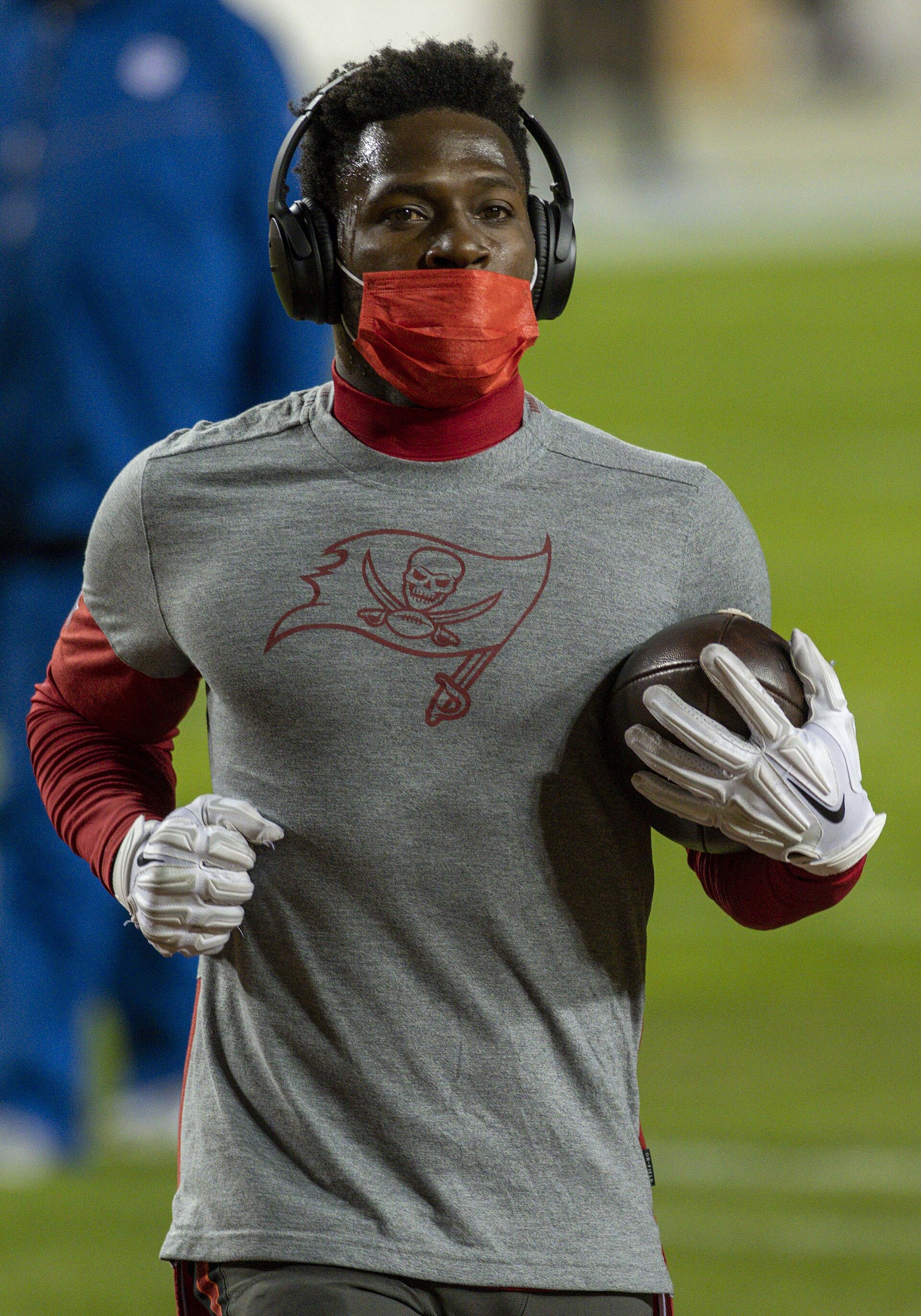
Anthony Santander batting for the Baltimore Orioles against Detroit on April 29, 2018. Archival photograph by Keith Allison; CC BY-SA 2.0. Santander now plays for Toronto; this photograph does not show the November 2026 controversy. Source: Wikimedia Commons. Image license.