Published November 6, 2026 · Taken Social Editorial
Calley Means has turned his departure from the Trump administration into a public dispute over the direction of the Make America Healthy Again agenda. In a Joe Rogan interview released Friday, the former health adviser alleged that a small circle of officials had frustrated reforms while accommodating industry interests.
The White House rejects the suggestion that the agenda has been abandoned. In its response, it points to changes in dietary policy, food ingredients and farming, presenting President Donald Trump and Health Secretary Robert F. Kennedy Jr. as continuing champions of the movement.
The immediate news is an unusually public disagreement inside a political coalition that promised to change the relationship between Washington, the food industry and health policy. Means' account is an allegation from a former participant. It is not, by itself, proof of corruption or a finding that an official acted unlawfully.
The dispute is consequential because it concerns policies that can reach well beyond the personalities in the interview: how the federal government defines ultra-processed food, what schools serve and how an administration measures progress against promises made to its supporters.
What Means is saying after leaving government
The official Joe Rogan Experience listing identifies the November 6 conversation as episode 2578 and describes Means as a former senior adviser to the Department of Health and Human Services. His appearance follows his October resignation, rather than an announcement that he is leaving government for the first time on Friday.
The Associated Press reported his resignation on October 22. At that time, the White House publicly thanked him for his work. Friday's interview supplies his fuller account of the departure, two weeks after that initial announcement.
Axios reported that Means linked his departure to alleged internal obstruction and expressed frustration about the administration's approach to glyphosate and delays in defining ultra-processed foods. White House spokeswoman Allison Schuster responded by citing what the administration describes as substantial MAHA achievements.
The conflict is about both the substance of policy and who gets to claim ownership of it. Means argues that the movement's goals have been frustrated within government. The administration argues that its record demonstrates continuing delivery. Those positions can be evaluated through particular decisions, published standards and implementation dates rather than through the intensity of either side's language.
That distinction is especially important when accusations involve motives. Evidence that a proposal was delayed establishes a delay. Establishing why it was delayed, who directed the decision and whether an improper interest determined the outcome requires a more detailed record. A podcast account can identify questions for scrutiny without conclusively answering all of them.
His public identity combines advocacy, a book and a business
Means became associated with MAHA through an argument that health policy should change the financial incentives surrounding food, exercise and treatment. His personal website describes earlier work consulting for pharmaceutical and food businesses and presents that experience as part of the background to his advocacy.
The site identifies him as a co-founder of Truemed and a co-author of Good Energy with his sister, Casey Means. The roles are distinct: Calley is the former government adviser speaking in Friday's interview, while the book is a joint project with his sister.
Those affiliations are relevant context when assessing his public arguments. An advocate can bring experience and a coherent policy perspective while also having commercial interests in the broader field being discussed. Readers should be able to see those connections without treating them as evidence that every argument is either correct or compromised.
The same standard applies to the officials and industries he criticizes. Professional relationships, lobbying activity and policy preferences deserve transparent reporting. An allegation of improper influence needs evidence about the decision in question, rather than an assumption based solely on a person's association with a business or political organization.
Means' departure has also changed the forum for the disagreement. Inside an administration, disputes can be handled through meetings, draft documents and agency review. Outside it, a former adviser can speak directly to the movement's audience. That creates public pressure, but it also makes it more important to connect broad claims to identifiable policy actions.
Why a federal definition of ultra-processed food matters
One of the clearest policy issues is the effort to establish a common federal definition of ultra-processed food. A definition sounds technical, but it determines which products belong in a category used by researchers, public officials and consumers.
The FDA's July 23, 2025 announcement set out a joint request for information with the Agriculture Department. The agencies sought data on the factors and criteria that should shape a uniform definition. At that point, the FDA explicitly said there was no single authoritative definition covering the U.S. food supply.
That announcement is a dated starting point, not proof that the process was completed that day. A request for information asks for evidence and views. It is different from publication of a finished definition, and different again from adoption of a binding requirement that uses the definition.
The distinction helps explain the political argument. Supporters may regard agreement on terminology as an essential first step, while still disagreeing about how quickly agencies should finish the work and what consequences should follow. A policy can move through several stages before it changes a product label, a purchasing rule or a consumer's choices.
The FDA's information page on the initiative describes the effort to gather public input and build a consistent framework. Its relevance to Friday's dispute is procedural: the administration created an identifiable project with an identifiable public record. That record gives observers something more concrete to examine than a general promise to improve the food supply.
For accountability, the useful questions are specific. What language has actually been released? Which agency is responsible for the next decision? Does the definition merely classify products, or is it being incorporated into another policy? What date governs implementation? Answering those questions would show whether a claimed victory is a completed action, an intermediate step or an intention.
School meals already have a regulatory history
The school-food debate also needs to be read against an existing framework. It does not begin with Friday's interview. Federal meal programs already contain requirements, and changes often follow a phased schedule that gives schools and suppliers time to adjust.
The Agriculture Department's published implementation timeline for the 2024 school-meal rule distinguishes requirements introduced in different school years. Product-specific added-sugar limits began earlier than the broader weekly calorie limit scheduled for the 2027–28 school year.
The final rule in the Federal Register explains the phased changes and the evidence used to develop them. That history matters because a new proposal may amend, accelerate or replace part of an existing system. Describing all school meals as entirely unregulated would obscure the actual policy choice.
It also matters to the people expected to carry out a change. Schools need menus that meet requirements, food that can be purchased and prepared, and meals students will actually eat. A policy's ambition and its operational design have to be assessed together.
The department's standards update discusses practical approaches such as student taste tests and nutrition education. Those details show why implementation is more than announcing a preferred ingredient or food category. A successful change must move through procurement, preparation and the daily experience of the cafeteria.
None of that answers Means' allegation about internal obstruction. It provides a baseline against which a particular proposed reform can be evaluated. The question is what the administration intended to change in the rules or practice already in place, and what documented action followed.
How to distinguish policy disagreement from proof of wrongdoing
Washington produces several kinds of records that can help resolve such disputes: proposals, comments, agency decisions, meeting records where available and statements explaining a policy's legal basis. They do not all prove the same thing, but together they can reveal how a decision moved from an idea to a government action.
The Administrative Procedure Act's rulemaking provisions generally require notice and an opportunity for public participation for covered rules, while recognizing exceptions. The framework creates a distinction between a political preference and an operative regulatory text.
That distinction offers a fair test for both sides of this dispute. An administration claiming a completed reform should be able to identify the action and its effect. A former adviser alleging that a specific reform was blocked should identify the proposal, the decision and the evidence supporting his account of the reason.
Public criticism is not required to wait for a criminal case before it becomes newsworthy. Equally, the fact that a criticism attracts a large audience does not convert it into an established legal conclusion. Reporting can describe the allegation, present the response and examine the records without collapsing those separate steps.
For MAHA supporters, Friday's interview puts a practical question at the center of the movement's next phase: which promised changes can be demonstrated in published policy and everyday implementation? Means and the White House offer competing accounts of the same project. The strongest assessment will follow the decisions, the evidence behind them and the outcomes they actually produce.
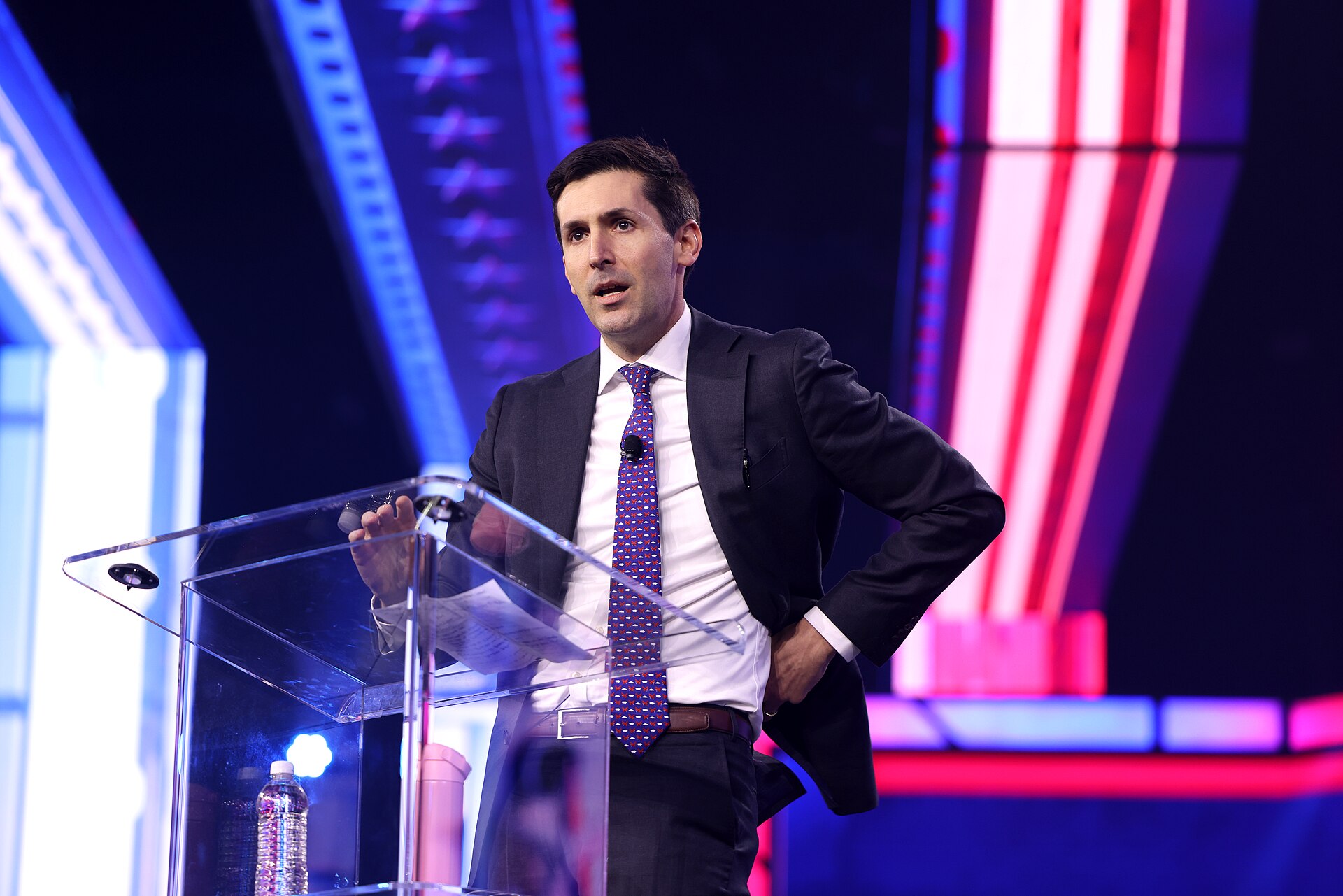
Calley Means speaking at AmericaFest at the Phoenix Convention Center on December 20, 2024. Archival photograph by Gage Skidmore; CC BY-SA 2.0. This photograph does not show the November 2026 Rogan interview. Source: Wikimedia Commons. Image license.