Published November 6, 2026 · Taken Social Editorial
Bill Clifton, the singer, guitarist and song collector who helped carry bluegrass and old-time country music far beyond its American home, died October 30 at 95. His family's notice, published by Farris Funeral Service in Virginia, confirms the death of the musician born William August Marburg.
Clifton's significance extended beyond the records issued under his name. He helped make older songs available to younger musicians, organized an early bluegrass gathering and introduced traditional performers and their music to listeners overseas. His career connected a Maryland upbringing, Virginia musical friendships and years abroad to a tradition he believed deserved a wider audience.
The family's obituary announces a private memorial service and invites tributes to the Carter Family Memorial Music Center. It does not state a cause of death. The announcement has prompted a renewed look at a life devoted to keeping songs in circulation.
A listener before he became an ambassador
Clifton was born April 5, 1931, in Riderwood, Maryland. The Bluegrass Music Hall of Fame's biography describes an upbringing outside Baltimore, where workers from Virginia introduced him to the Old Dominion Barn Dance on Richmond radio station WRVA.
The musical discovery was a crossing of social and geographic boundaries. He came from a prosperous family rather than the rural mountain background associated with many early performers. Recordings and broadcasts allowed him to encounter a musical world beyond the circumstances in which he was raised.
At the University of Virginia, he found a fellow enthusiast in Paul Clayton. The two performed as the Clifton Brothers, and the professional name Bill Clifton became lasting. He later assembled the Dixie Mountain Boys, developing a career that connected folk audiences with the string-band music he admired.
That beginning helps explain a recurring feature of his later work. He understood the importance of the interested newcomer: someone who first hears a song through another person, a broadcast or a record and then wants to learn where it came from. His work repeatedly created opportunities for that encounter.
A.P. Carter supplied more than a repertoire
The Hall of Fame account identifies A.P. Carter as a central influence and a friend Clifton met during his college years. Their relationship connected an emerging performer with a musician whose work collecting and recording songs had helped define country music's early recorded history.
The family's account emphasizes the purpose Clifton drew from that example. Preserving music meant making sure it could still be heard and learned. It was an active responsibility rather than simply a matter of admiring an earlier generation's accomplishments.
That idea can be seen in the different forms his career took. Performing a song introduces it to an audience; printing it gives another musician a way to learn it; arranging a concert creates a meeting between an artist and listeners. Each form can support the others.
The connection also made tradition a personal relationship. For Clifton, the music was tied to people he knew, respected and wanted others to hear. That gives the familiar description of him as an ambassador a concrete meaning: he helped introduce one musical community to another.
A songbook helped the music travel without its singer
The Wilkes Heritage Museum's artist biography identifies his 1955 collection, 150 Old-Time Folk and Gospel Songs, as a resource that circulated widely among bluegrass musicians. The family's notice says he worked on the collection during his Marine Corps service after graduating from Virginia in 1954.
A printed collection has a different reach from a single performance. It can remain with a reader, travel between musicians and become part of a rehearsal or an informal gathering. A song can acquire another voice even when its collector is no longer present.
That is a particularly important form of influence in music carried through shared repertoires. A musician's legacy may include the songs performed by people who never attended one of their concerts. The visible career of recordings and appearances can therefore understate the effect of the material passed along.
Clifton's songbook belongs to that less conspicuous history. It helped turn enthusiasm for older music into something other people could use. The task was practical as well as affectionate: making songs available enough that another generation could actually sing them.
The Luray gathering anticipated a festival movement
On July 4, 1961, Clifton organized an outdoor Bluegrass Day at Oak Leaf Park in Luray, Virginia. The Wilkes museum describes an all-day gathering featuring major figures from the music, including Bill Monroe, the Stanley Brothers and the Country Gentlemen.
It is best described as an early festival milestone, with an important distinction between that one-day gathering and the later multi-day format. Bluegrass Today's remembrance places Clifton's event before Carlton Haney's 1965 three-day festival and identifies it as an influence on what followed.
The achievement was organizational as much as musical. Bringing several performers together turns an individual appearance into a shared occasion. Listeners can hear different approaches to the music, meet other enthusiasts and understand themselves as part of a larger audience.
That is one reason festival history matters within a musician's obituary. Creating a place for the music can shape the careers of other performers and the habits of listeners long after the organizer's own set has ended. Clifton helped build an environment in which the tradition could gather strength.
England and the wider world became part of the story
The family moved to England in 1963. The Wilkes account also records Clifton's Peace Corps service in the Philippines beginning in 1967 and his continuing performances and recordings abroad. His work brought bluegrass and old-time songs into settings far from their original regional associations.
Bluegrass Today describes an extended relationship with British and European audiences and notes his later work in other countries, including New Zealand. The career involved repeated exchanges rather than a single overseas appearance followed by a return to the same circuit.
A musical ambassador's work depends on that continuity. A first concert may introduce a sound; continued contact gives listeners a way to remain involved. Recordings, visits and collaborations can turn curiosity into a lasting musical interest.
Clifton also had an advantage he recognized in himself: the ability to travel and connect people. The family notice says he valued representing musicians who had fewer opportunities to take their work abroad. His own mobility could become a means of extending someone else's audience.
That account is a useful way to understand influence without reducing it to sales or fame. A person can change the geography of a musical tradition by helping its songs and performers reach people who would otherwise never encounter them.
A recording career and a return to Virginia
The Hall of Fame biography traces Clifton's recordings through Blue Ridge, Mercury, Starday and later County, alongside releases on his own Elf label. It also records his return to Mendota, Virginia, in the late 1970s, near the Carter Family's home region.
Bluegrass Today's remembrance identifies the First Generation group with Red Rector and Don Stover as part of his later performing life. It also points to songs associated with him, including “My Nights Are So Lonely,” “Lonely Heart Blues” and “When Autumn Leaves Begin to Fall.”
The range of labels and collaborators reflects a career sustained through several phases of interest in traditional music. Clifton worked across the boundaries between bluegrass, older country songs and the folk revival, with the repertoire often providing the continuity.
His International Bluegrass Music Association Distinguished Achievement Award came in 1992, followed by induction into the Bluegrass Music Hall of Fame in 2008. The recognition acknowledged a career whose importance included preservation and public access as well as performance.
A biography captures the unusual shape of the life
Historian Bill C. Malone devoted a book to that career: Bill Clifton: America's Bluegrass Ambassador to the World, published by the University of Illinois Press in 2016. Its account places the recordings alongside military service, international life, song collecting and festival organization.
The publisher's description emphasizes the apparent contrasts in Clifton's story: a man from a prominent Maryland family who championed music associated with working-class and rural lives, and a traveler who helped preserve songs rooted in particular places.
Those contrasts are part of what makes the life interesting. Tradition was not sustained only by people remaining where a song originated. It was also carried by listeners who moved, learned, organized and made introductions. Clifton's career demonstrates how preservation and travel can reinforce each other.
The book also offers a route for readers whose interest begins with the news of his death. An obituary can identify the main achievements; a researched biography can follow the relationships and decisions that gave those achievements their shape.
The family's tribute points toward living music
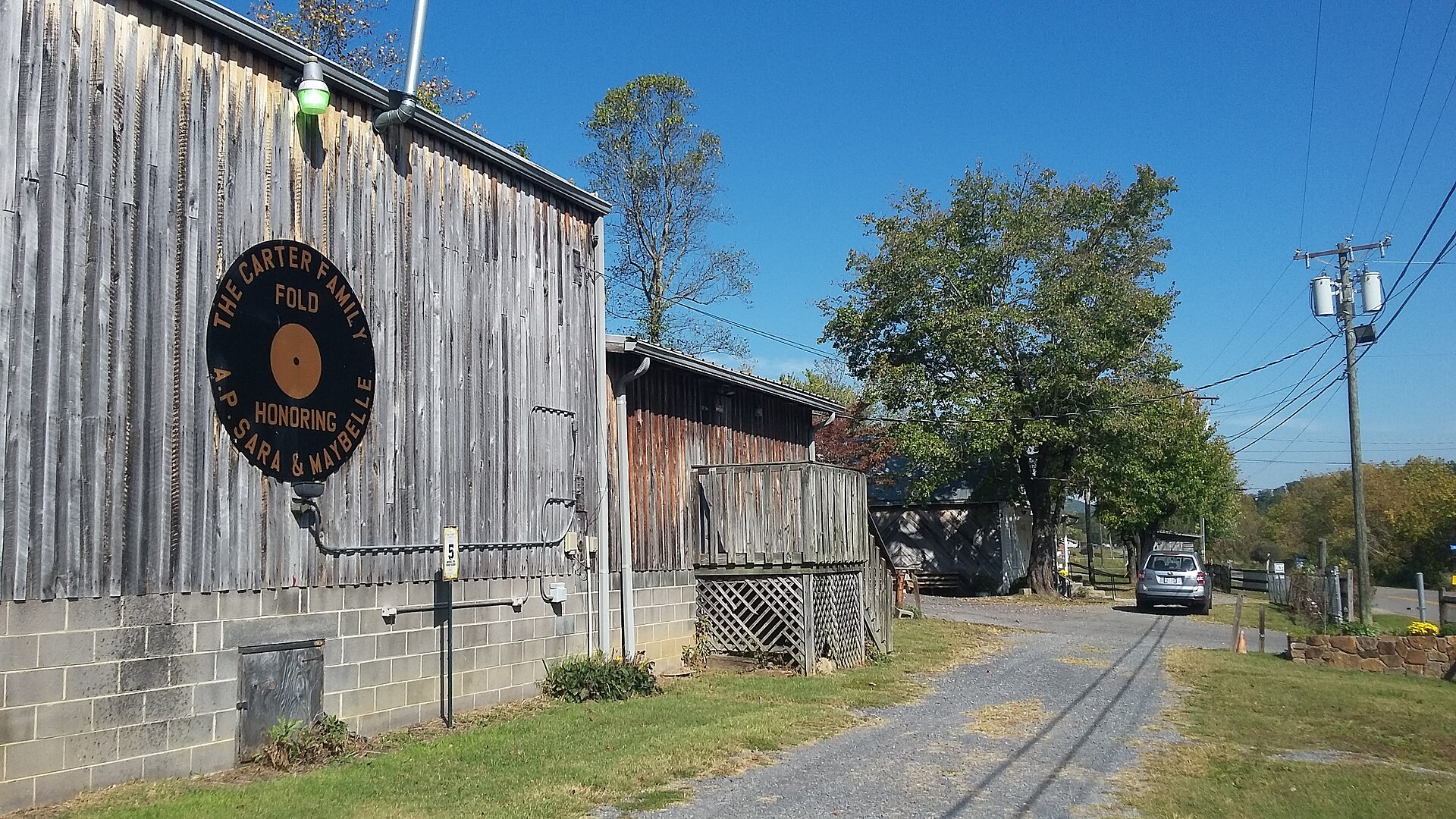
The family lists ten children, eighteen grandchildren and eight great-grandchildren among his survivors. It says his wife Tineke predeceased him. The memorial arrangements are private, with support for the Carter Family Memorial Music Center suggested as one way to honor him.
The center's own website describes a nonprofit devoted to presenting traditional music in Hiltons, Virginia, through regular performances and its connection to Carter Family history. The suggested tribute therefore directs attention toward a place where the music continues to be played.
The family's other invitation is simpler: hear an old song, learn it and share it. That gesture fits the work Clifton spent decades doing. His recordings preserve his voice; the musicians who continue passing the repertoire along preserve another part of the achievement. The bluegrass ambassador's journey ends with a tradition that still has new listeners to find.
The Carter Family Fold performance building in Hiltons, Virginia, photographed October 15, 2016. Archival photograph by Swampyank; CC BY-SA 4.0. Bill Clifton’s family named the Carter Family Memorial Music Center as a suggested recipient of memorial tributes. This is a venue photograph, not a photograph of Clifton. Source: Wikimedia Commons. Image license.