Published November 6, 2026 · Taken Social Editorial
Keira Knightley and Ben Whishaw are back in Black Doves, with the spy thriller's six-episode second season now streaming on Netflix. Released November 5, the new installment places Helen Webb closer to the center of British political power while making the secrets inside her own organization more dangerous.
The return has generated a fresh wave of reviews and searches for the show's Rotten Tomatoes score. On the Season 2 page checked November 6, the Tomatometer stood at 94% from 16 reviews. That is a strong early critical response, although it is a dated snapshot that can change as more reviews are added.
The appeal of the premise remains the collision between personal loyalty and professional betrayal. Helen sells secrets while maintaining a family life built around political visibility. Sam, her longtime friend and a hired killer, is one of the few people who understands both sides of her existence. The second season puts pressure on that arrangement from several directions at once.
What changes in Season 2
According to Netflix's release guide, Helen's husband Wallace is preparing to become prime minister. That increases the public exposure surrounding a character whose clandestine work depends on concealing her real loyalties. Meanwhile, her handler Reed becomes entangled in a plot threatening her position within the Black Doves.
The organization is a private intelligence network trading in secrets rather than a straightforward government service. That distinction gives the story a different kind of conflict from a conventional national-security mission: agents can be serving an employer whose interests are commercial, personal or internally contested.
Helen's role therefore contains more than the familiar difficulty of keeping a secret identity from a spouse. Her access to political power is part of what makes her valuable to the organization. The same visibility that improves the value of her information can increase the danger of discovery.
Netflix describes the new mission as leading Helen and Sam deeper into the organization's past. That setup expands the source of danger beyond outside enemies. When the people who assign work become part of the mystery, the characters must question the structure that previously told them whom to trust.
The returning cast and the new arrivals
The official cast guide confirms Knightley as Helen, Whishaw as Sam, Sarah Lancashire as Reed and Andrew Buchan as Wallace. Kathryn Hunter returns as Lenny Lines, while Ella Lily Hyland and Gabrielle Creevy reprise Williams and Eleanor.
Ambika Mod joins as Laila, a Black Doves operative. Babou Ceesay plays Mr. Conteh, an executive within the organization, and Sam Riley appears as Patrick, who offers Sam a new arrangement. Neve Campbell plays Cecile Mason. These additions expand the network of people surrounding the central pair.
The cast guide also identifies Sylvia Hoeks and Goran Kostic as Katia and Alexi Chernov, and Samuel Barnett as Jerry. A growing character list is part of the season's promise of a larger world, while also increasing the number of relationships viewers have to keep straight.
For returning audiences, the stable center is the Helen–Sam friendship. New players can complicate a conspiracy, but the existing bond provides a reference point through those changes. The dramatic question is not simply who has the next piece of intelligence; it is which relationships can survive what that information reveals.
What the Rotten Tomatoes number tells you
A Tomatometer percentage measures the share of included professional reviews classified as positive. It is different from an average rating out of ten and different from the audience score. A 94% figure should therefore not be translated into a claim that every critic awarded the season 9.4 out of ten.
The review count matters alongside the percentage. Sixteen reviews provide an early picture of critical reception, while a larger sample may change the balance. A single additional review has a greater numerical effect on a small collection than on one containing hundreds of entries.
For example, an imaginary set of 15 positive reviews out of 16 would yield 93.75%, rounded to 94%. That calculation illustrates the percentage's sensitivity; it is not a separate audit of how Rotten Tomatoes classified each of the show's reviews. The live page remains the reference for the current score and count.
The page checked for this report showed fewer than 50 audience ratings. Professional reception and audience response should be read as separate measures, each developing over time. A strong early critical percentage is useful context for deciding whether to investigate the show, rather than a guarantee of an individual viewer's taste.
The reviews praise the leads while noting some complexity
Kelly Woo's review for Tom's Guide awards the season four stars out of five. Woo praises Knightley and Whishaw's pairing, the humor and the deeper exploration of Reed, while noting that the conspiracy can become complicated and that Campbell's character receives relatively little to do.
Those reservations help explain the kind of show being discussed. A thriller can be entertaining while asking viewers to track a crowded set of motives and affiliations. The review's praise concerns the pleasures of the performances and relationships, rather than a claim that the plot is always simple.
In a separately enthusiastic assessment, Daily Beast critic Nick Schager praises the season's action, wit and central performances.
The overlap between those assessments is more informative than treating the reviews as identical votes. Both direct attention toward the leads and the blend of violence with humor. Woo's qualifications add a useful consideration for viewers who prefer a more streamlined espionage story.
London becomes both a setting and a disguise
Netflix's production-location guide identifies a mixture of real places and stand-ins. Some interiors representing Downing Street were filmed at Harefield Grove in Uxbridge, while Gray's Inn in Holborn supplied exterior settings for Downing Street and Whitehall.
Other listed locations include Battersea Park, the National Theatre, Somerset House, St. Mary le Strand and the Rosewood London. The guide also describes filming in Nazzano, Italy. These are production details, rather than a suggestion that the show's fictional covert activity occurred at the real locations.
The mixture is part of how screen geography works. A viewer may recognize an actual landmark while another building represents a more restricted political address. What appears to be a continuous journey within the story can be assembled from places selected for access, architecture and the requirements of a scene.
For a series built around cover identities, that production approach has an apt parallel. A polished public frontage can conceal a different interior, both in the story's relationships and in its screen locations. The practical filming choices help build a recognizable city without requiring every scene to be shot exactly where it is set.
Joe Barton keeps the personal stakes inside the conspiracy
Barton returns as creator, writer and executive producer, with Julian Farino and Kieron Hawkes directing the second season. In the location guide, Barton describes an interest in expanding the organization while exploring what a happy ending could mean for people whose work carries such a heavy moral cost.
That question gives the premise a human dimension. A successful assignment may leave a character safer professionally while making a private relationship harder to sustain. Conversely, protecting a friend can create a problem within the organization paying for the work. The two kinds of loyalty do not necessarily reward the same decision.
The setup also makes friendship more than relief between action sequences. Helen and Sam know facts about one another that their ordinary social worlds cannot accommodate. Their closeness can provide safety and understanding, while also tying each to the consequences of the other's choices.
For a viewer choosing among spy dramas, that is a useful way to understand Black Doves' proposition. Its central relationship sits alongside the information-trading plot. The published reviews suggest that the pairing remains a major attraction even when the machinery of the conspiracy becomes crowded.
How to approach the new season
All six episodes are available now, so the release does not require waiting for a weekly installment. Watching the first season beforehand provides the clearest introduction to Helen, Sam, Reed and the relationships carried into the new story. The second season develops that existing foundation rather than starting with an entirely unrelated cast.
Viewers seeking a refresher can use Netflix's season guides, but its ending explainers and detailed location article contain substantial spoilers. The basic cast list and release information are enough to establish who returns and where to watch without revealing the resolution of the central mystery.
The program is listed as TV-MA. Its action-thriller premise and adult material make that rating relevant when choosing a shared viewing option. A high review score answers a question about reception, not whether the show fits every audience or every occasion.
The immediate news is a well-received return for a recognizable pairing, with a new political setting, an expanded cast and six episodes ready to watch. The 94% score supplies an early signal; the more substantial reason for the renewed attention is the combination of a new season and a story that puts its characters' closest loyalties under greater strain.
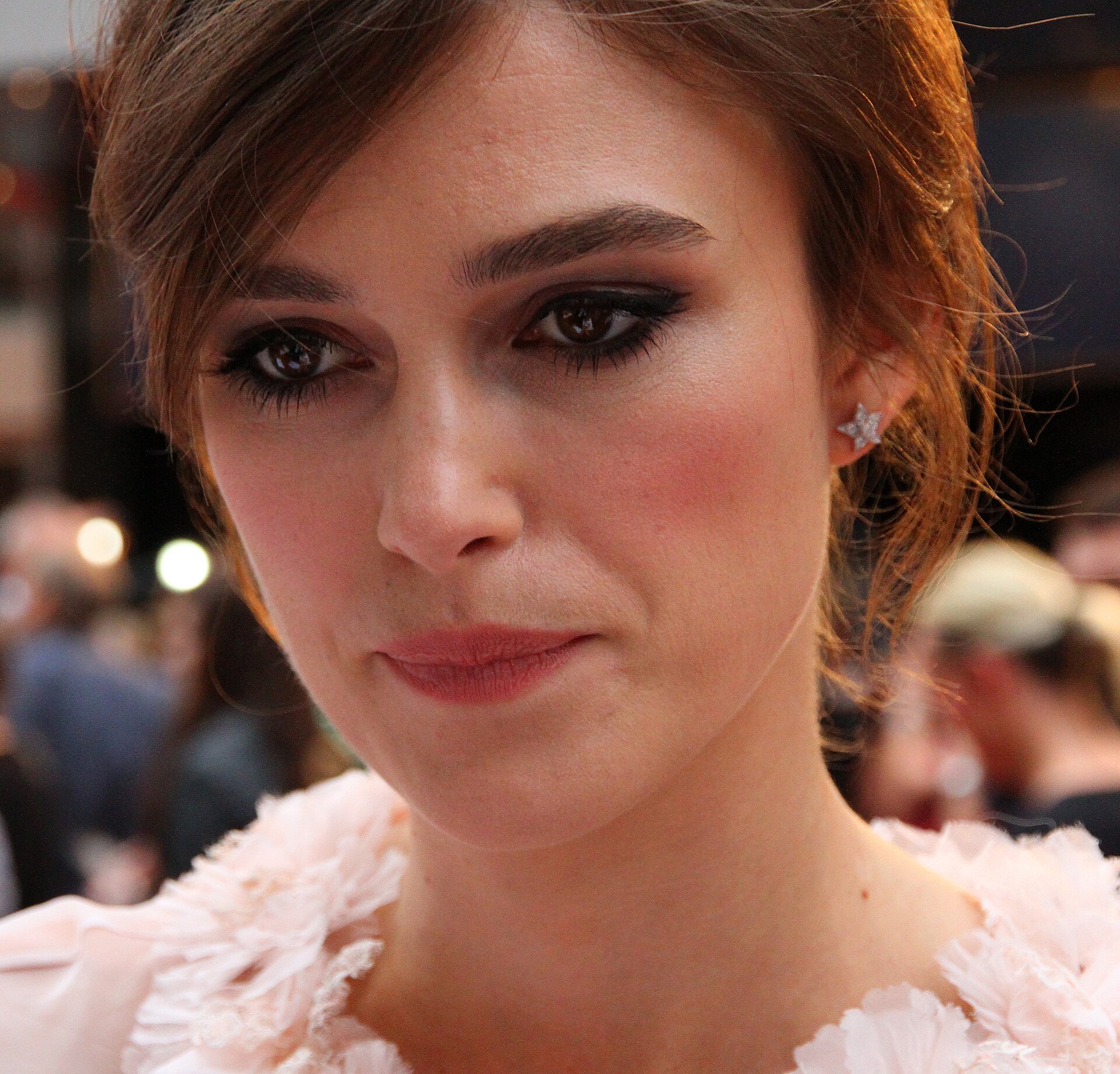
Keira Knightley at the Anna Karenina world premiere in London in September 2012. Archival photograph by Paul Bird; CC BY 2.0. This is not a Black Doves production or premiere photograph. Source: Wikimedia Commons. Image license.