Published November 6, 2026 · Taken Social Editorial
Thomas Wayne Markle, the estranged father of Meghan, Duchess of Sussex, was arrested in Florida on Friday on a federal charge of possessing child sexual abuse material. Prosecutors in California allege that suspected material was kept in two Los Angeles-area storage units he had rented for nearly two decades.
Markle, eighty-two, is charged through a criminal complaint, according to the U.S. Attorney's Office for the Central District of California. The charge is an allegation, and he is presumed innocent unless proved guilty in court.
Local court coverage reported that he was allowed to return to a Lakeland senior living facility under restrictive conditions while further proceedings are arranged. The case therefore involves both a California prosecution and an initial appearance in Florida, where the arrest occurred.
The arrest is the latest concrete development in a matter that has drawn attention because of Markle's family connection. The legal questions concern the conduct alleged in the complaint, the evidence supporting it and the procedures that will determine whether the charge is proved.
What federal prosecutors allege
The Justice Department's November 6 announcement says investigators searched two storage units under judicially authorized warrants. Prosecutors say Markle had rented the units since 2008 and that recent rental payments continued through automatic payment.
The release says agents seized approximately 78 items, including slides, film negatives and books containing suspected child sexual abuse material. The allegation remains subject to testing in court; the number of seized items should not be treated as a count of identified victims or charged offences.
According to the department, the investigation followed information received in October and interviews concerning possessions in the Philippines and storage facilities in the Los Angeles area. The FBI is investigating, and the prosecution is being handled by the Central District of California.
The announced charge is one count of possession. Prosecutors identify a statutory maximum of twenty years in federal prison if convicted. That maximum describes possible exposure under the charge, not a sentence already imposed or a prediction of the eventual outcome.
The distinction is important at the beginning of a federal case. A complaint sets out allegations supporting the government's action. It does not establish that every description in a prosecutor's announcement has been admitted by the defendant or found true after trial.
The first court proceedings are taking place in Florida
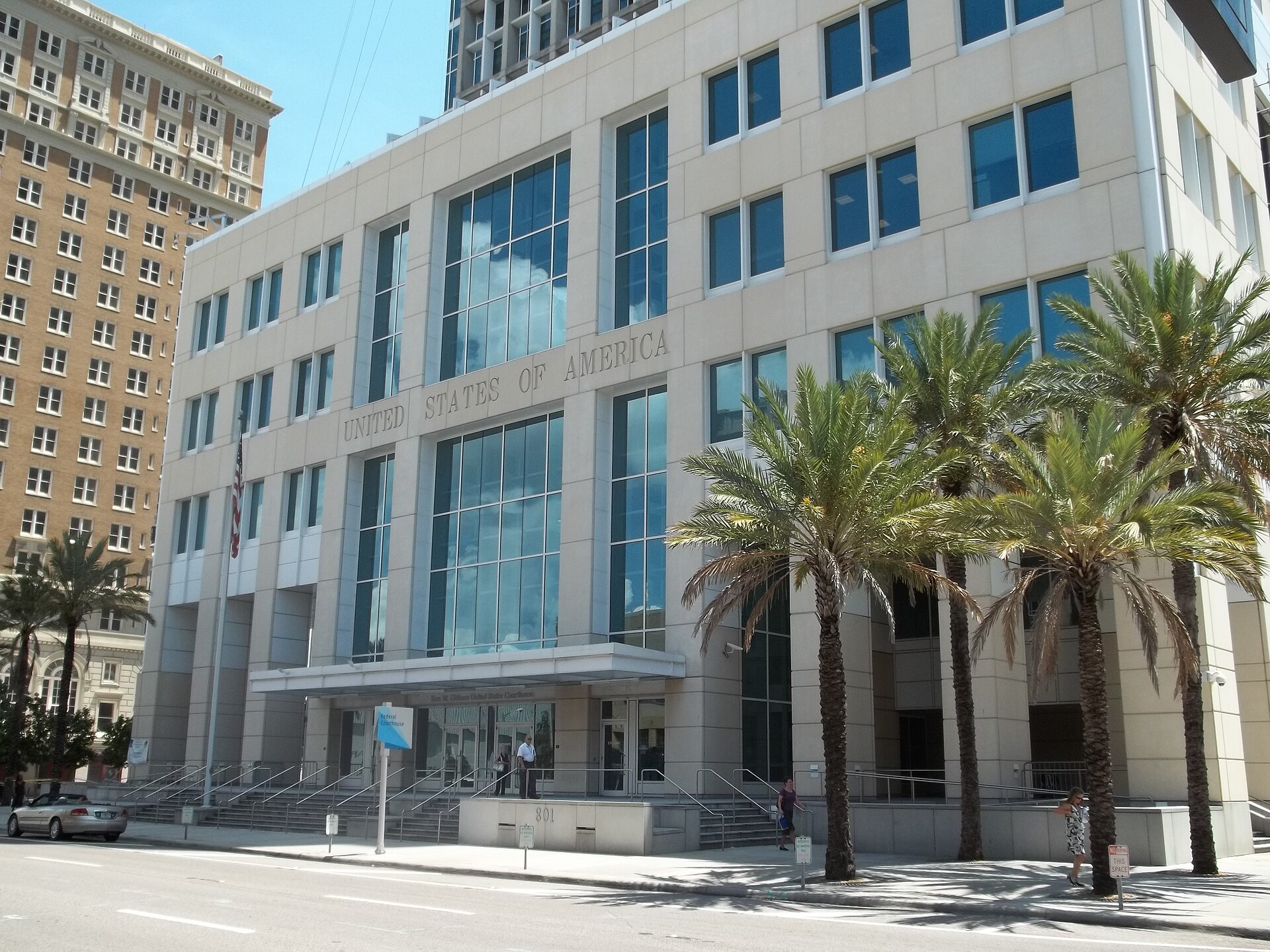
FOX 13's updated November 6 report says Markle was arrested at a senior living facility in Lakeland and appeared in federal court in Tampa. It reports that he was permitted to return to the facility on house arrest with GPS monitoring.
The report also describes restrictions on internet access and connected devices, along with physical and mental evaluations. Taken Social has not independently obtained the release order, so those specific conditions are attributed to the local court coverage.
The next proceedings described by the outlet concern evaluation and the arrangements for the California case. A reported future hearing should not be treated as a completed transfer or as an indication that the court has already decided the underlying allegation.
Nor does a request for evaluation establish a diagnosis. Competency, medical condition and criminal responsibility are different questions. The public record reviewed here does not support assigning Markle a condition or concluding that he is unable to participate in the case.
These early decisions determine how the prosecution proceeds and under what conditions the defendant remains available to the court. They are consequential, but they are not a verdict.
Why arrest and prosecution can occur in different districts
The geographical sequence can sound confusing because the alleged storage locations are in California while the arrest occurred in Florida. Federal criminal procedure expressly provides for an initial appearance outside the district where an offence is alleged to have occurred.
Rule 5 of the Federal Rules of Criminal Procedure addresses the place of an initial appearance and procedures for transfer to another district. It generally places the first appearance in the district of arrest, subject to specified exceptions.
The rule also provides protections and procedures before a defendant is transferred. Those requirements explain why a case may have an initial Florida hearing even though prosecutors announcing the complaint are based in Los Angeles.
This is a federal district-to-district process within the United States. It should not be confused with an international extradition simply because some reporting uses the word informally. The location of the arrest and the district pursuing the case can differ without creating an international proceeding.
The distinction also matters for following later updates. A filing or hearing in one court may concern detention or transfer, while a proceeding in another addresses the charge itself. Reading the purpose of the hearing is more useful than assuming every court appearance serves the same function.
Release conditions do not decide guilt
The federal judiciary's explanation of pretrial release describes a framework focused on a defendant's appearance in court and the safety of others. Courts consider whether conditions can reasonably address those concerns.
A release decision therefore answers a different question from whether prosecutors can prove an offence beyond a reasonable doubt. A defendant may be released under strict conditions while a serious charge remains pending.
Likewise, restrictions should not be read as a substitute for a finding of guilt. They can be imposed to manage risks while the case is unresolved. Their existence tells readers about the conditions under which a person is released, not the result of a future trial.
Pretrial services officers can help courts assess and supervise those arrangements. The judiciary's description of their role includes evaluating risk and assisting with court-ordered conditions.
For the public, the practical point is to keep the two stages separate. Early supervision determines how a defendant remains in the community or custody during proceedings. The criminal case determines whether the government proves the charge.
What a competency question would involve
Because the local report describes an evaluation, it is useful to understand the legal issue without predicting the result. Title 18, section 4241 of the U.S. Code addresses a defendant's present ability to understand the proceedings and assist properly in the defense.
The statute allows a court to order a psychiatric or psychological examination before a competency hearing. The legal question concerns the ability to participate in the process, rather than a general judgment about a person's character.
That framework does not allow an outside observer to infer the answer from age, living arrangements or the seriousness of an accusation. An evaluation and any subsequent court determination have to be understood through the actual proceedings.
It is also distinct from deciding whether an offence occurred. A court considering present competency is addressing whether the case can move forward with the defendant able to understand and participate. The evidence on the charge remains a separate matter.
For that reason, the reported evaluation should be covered as a procedural development. It does not justify a medical conclusion or an assumption that the prosecution has been dismissed.
The terminology keeps the focus on children
The charged offence uses the statutory phrase child pornography. In general reporting, child sexual abuse material, or CSAM, more accurately identifies the harm represented by such images.
A Justice Department explanation of the terminology notes that the newer phrase reflects the abuse and exploitation involved. The distinction is about recognizing children as victims, rather than presenting the material as an ordinary category of media.
Accurate terminology is compatible with the presumption of innocence. A report can describe the type of material alleged in a charge while making clear that the allegation against a particular defendant has not yet been proved.
There is also no public need to reproduce explicit descriptions in order to explain this prosecution. The charge, the alleged storage arrangement, the reported seizure and the court process provide the substantive news without exposing children to further identification or sensational treatment.
The same principle applies to family members. A defendant's relationship to a famous person explains public interest, but it does not make relatives responsible for the conduct alleged against him.
What is established and what comes next
In a statement previously provided to Fox News, Meghan said her concern was for children who may have been harmed. The legal case remains against her father, rather than against the duchess or her family.
The federal courts' overview of criminal cases explains the distinction between an initial appearance, later pretrial proceedings and a trial. The government bears the burden of proving guilt, and a defendant is not required to prove innocence.
The next meaningful developments will be documented court decisions about the reported evaluations, release arrangements and the progress of the California prosecution. A future indictment, plea or trial outcome would be a separate event requiring its own verification.
For now, the confirmed news is an arrest on a federal possession complaint, allegations concerning two California storage units and initial proceedings in Florida. The seriousness of the charge requires close reporting, with the evidence, the defendant's rights and the protection of children kept at the center of the case.
The Sam M. Gibbons United States Courthouse in Tampa, Florida, photographed June 23, 2011. Archival photograph by Ebyabe; CC BY-SA 3.0. This is a courthouse exterior, not a photograph of Thomas Markle’s November 2026 appearance. Source: Wikimedia Commons. Image license.