Published November 6, 2026 · Taken Social Editorial
Michael Sanft, the Las Vegas trial lawyer who defended Duane “Keffe D” Davis in the Tupac Shakur murder case, has died at fifty-five. Local news organizations reported his death Friday, bringing tributes to an attorney whose work ranged from personal-injury litigation to some of Nevada's most closely watched criminal trials.
KTNV said the Clark County Coroner's Office confirmed his age after earlier reports identified him as fifty-four. A cause of death had not been released in the station's updated account. The distinction matters in a developing story already attracting speculation because of the prominence of his clients.
Sanft's most visible recent case had reached a different stage from the one familiar to readers who followed Davis' 2023 arrest. A jury convicted Davis in August 2026, and he was later sentenced to forty years to life. Sanft had publicly described plans to challenge the conviction.
The lawyer's death is a personal loss to people who knew him and a practical development for legal matters in which he was involved. It does not, by itself, change a jury verdict or decide an appeal.
A friend remembers the person behind the courtroom role
The Las Vegas Review-Journal reported that Michael Sloan, a Clark County District Court marshal and motorcycle-riding friend, confirmed Sanft's death Friday. Sloan described him as “one of my best friends and one of the best human beings I knew.”
That remembrance offers a perspective different from the footage that made Sanft recognizable nationally. A trial broadcast records an objection, an argument or an exchange with a witness. It cannot capture the whole of a professional life or the relationships outside the courtroom.
KTNV's updated report says he was found at home and that no cause had been publicly released by Friday afternoon. That is the available account; it does not establish foul play, a particular medical condition or a connection between his death and a case he handled.
The report also recalls Sanft's appearances on the station's Las Vegas Morning Blend with colleagues from SOS Injury Lawyers, including segments about community activity and animal rescue. They show another public-facing part of his career, distinct from his criminal defense work.
From Tonga to a Nevada trial practice
The biography published by SOS Injury Lawyers traces Sanft's childhood to Tonga and says he moved with his family to San Diego at twelve. It describes later study at Brigham Young University–Hawaii after a church mission and work as a dancer at the Polynesian Cultural Center.
The firm presents that experience as part of how he learned to connect with people from different backgrounds. It identifies him as its lead trial attorney and says he tried more than 150 cases to jury verdict. That trial count is the firm's description of his experience, rather than an independently compiled count by Taken Social.
His professional profile lists admission to practice in Nevada in 2002. KSNV's account of his death also records that date, placing his Nevada career across more than two decades.
SOS describes a practice involving product liability and personal injury, including cases against companies. That work requires a different presentation from a criminal trial, even when both involve testimony, documents and expert evidence. The civil case concerns liability and relief; the criminal case concerns the prosecution's burden to establish an offense.
The range is important to a full account of Sanft. The Shakur trial brought a national audience, but the practice described by his firm involved clients and disputes that were not all part of a major television story. A widely watched case can become the shorthand for an attorney without representing the entirety of the work.
Another prominent client was Michele Fiore, the former Las Vegas councilwoman who became a Pahrump justice of the peace. Sanft represented her in the federal fraud case that went to trial in 2024. KTNV recalls that representation in its account of his career.
The Nevada Commission on Judicial Discipline's biennial report records the October 3, 2024 guilty verdict on one conspiracy count and six wire-fraud counts. It also records President Trump's full and unconditional pardon in April 2025. Those are separate events in the history of that case.
The Fiore proceedings and the Davis prosecution involved different defendants, courts and factual allegations. Their shared place in Sanft's résumé is the defense role: challenging the government's presentation, making arguments about evidence and representing a client through a contested trial.
That role can make an attorney a recognizable figure in an unpopular case. It should still be distinguished from personal responsibility for a client's conduct. Assessing the lawyer's professional contribution requires attention to what he argued and did, rather than treating the allegations against the client as a description of the person providing the defense.
The Tupac case brought national attention
Shakur was shot in Las Vegas in September 1996 and died days later. The case remained unresolved in court for decades before Davis was charged. The eventual prosecution drew intense attention from people who had followed Shakur's music and the long history of competing accounts of the killing.
The Associated Press reported the August 31 verdict finding Davis guilty of murder with a deadly weapon. The result was the first conviction in the case, nearly thirty years after the shooting. It was a jury decision, rather than merely a renewed allegation against the defendant.
Sanft had taken on the defense four months before trial, according to his September interview with FOX5. After the verdict, he argued that disputed evidence and pretrial rulings would be central to the next stage.
The interview identifies a particular issue: the defense had sought to exclude statements Davis made to police in 2008 and 2009. Sanft argued that allowing the statements and other contested material prejudiced the trial. Those were the defense's objections; the interview did not establish that an appellate court had accepted them.
Sanft also criticized the time the jury spent deliberating. His assessment explains the defense's reaction, but the length of deliberations alone is not an appellate ruling or a legal finding that jurors failed to perform their duty.
Subsequent sentencing coverage records the forty-years-to-life term. That chronology is essential to Friday's story: Davis is a convicted and sentenced defendant, while the defense had announced an intention to pursue further review.
The change in stages also changes what the public should look for. Before trial, the central question was what evidence the jury would hear and what verdict it would reach. After conviction and sentence, a challenge depends on the legal issues properly raised and the procedures governing review.
An appeal examines a record, not a public controversy
The Nevada judiciary's explanation of appellate review describes a process focused on legal questions and the written record. Appellate judges do not simply assemble a new jury, hear a new set of witnesses and repeat the trial.
That framework helps explain Sanft's emphasis on pretrial evidence rulings. A lawyer who objects to the admission of a statement may seek review of the legal basis for allowing it. Whether the challenge succeeds depends on the applicable law and record, rather than on the prominence of the case.
Nevada law also distinguishes an error from an error requiring relief. NRS 178.598 provides that an error that does not affect substantial rights is disregarded. The precise standard can depend on the issue raised; the statute is a reminder that identifying a disputed ruling and obtaining a reversal are different steps.
Neither a defense interview nor public disagreement about the verdict completes that analysis. A meaningful assessment requires the arguments submitted, the trial material relevant to them and the court's eventual reasoning.
The same restraint applies to timing. Sanft's statement that he planned an appeal should not be rewritten as proof of a particular filing date, a scheduled appellate argument or a decision already made. Each of those would be a separate, verifiable development in the court record.
The immediate task is continuity of representation
A lawyer's death can require practical arrangements for clients, colleagues and courts. Files, deadlines and responsibility for ongoing work have to be addressed through the appropriate procedures. It is a matter of protecting the client's ability to participate in the legal process, rather than assuming a case disappears with its lawyer.
The Nevada Rules of Appellate Procedure expressly address an attorney's death in a pending appeal. They provide for notice and arrangements concerning new counsel or other permitted representation. Those are general rules; this report does not identify a specific substitution order in Davis' case.
The public significance is therefore twofold. Sanft's death ends a career that connected a personal history in Tonga with decades of legal practice in Nevada. It also leaves work to be carried forward through the ordinary responsibilities of the legal system.
For people following the Shakur case, the next reliable developments will be documented decisions about representation and any continuing challenge to the conviction. For the people who knew Sanft, Friday's news concerns a colleague and friend whose life extended well beyond the case that brought him national attention.
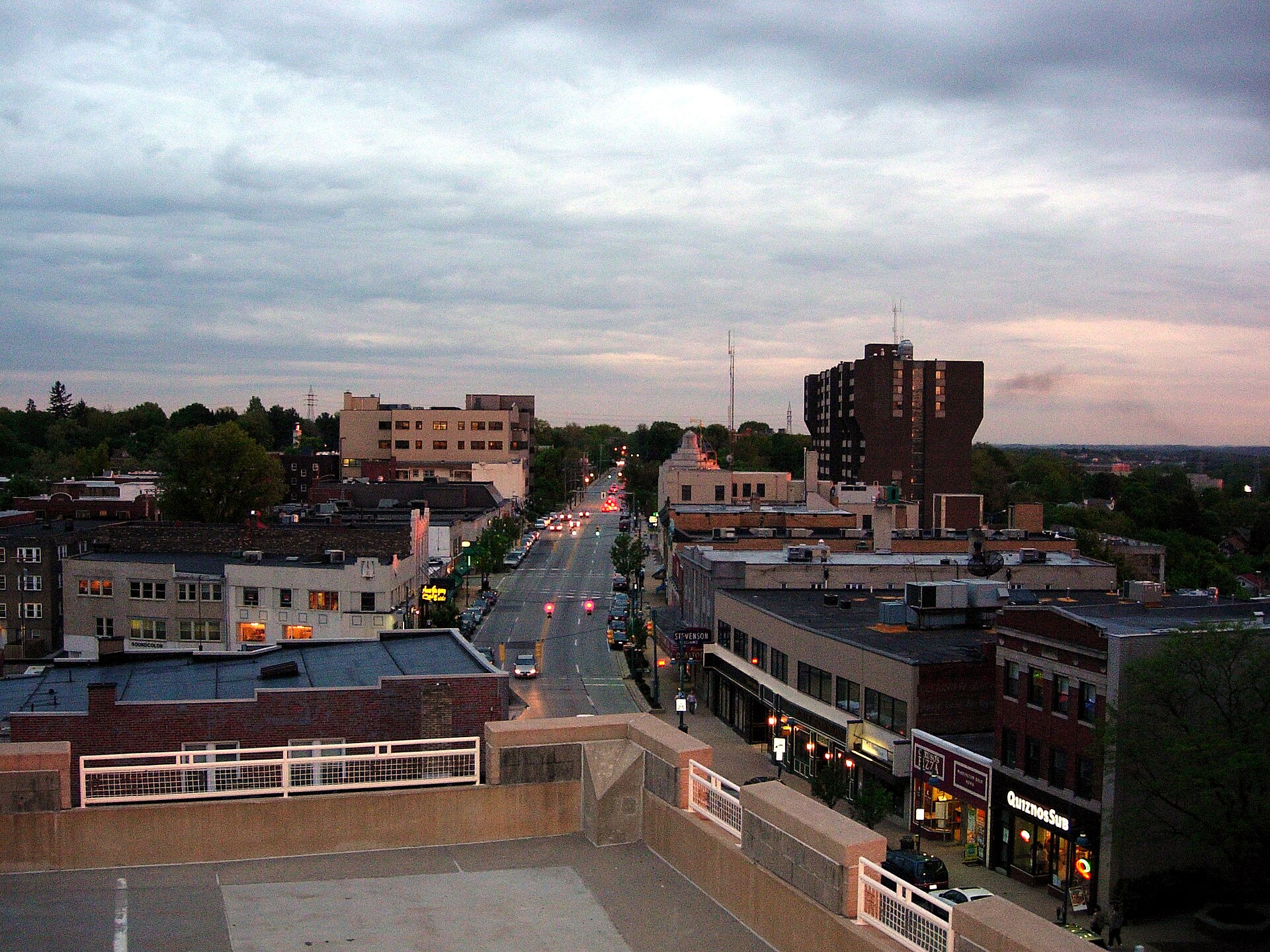
A view toward downtown Las Vegas from the Strip and Sahara Avenue on November 6, 2019. Archival photograph by Reinhard Link; CC BY 2.0. This location image provides city context and does not show Michael Sanft or a 2026 court proceeding. Source: Wikimedia Commons. Image license.