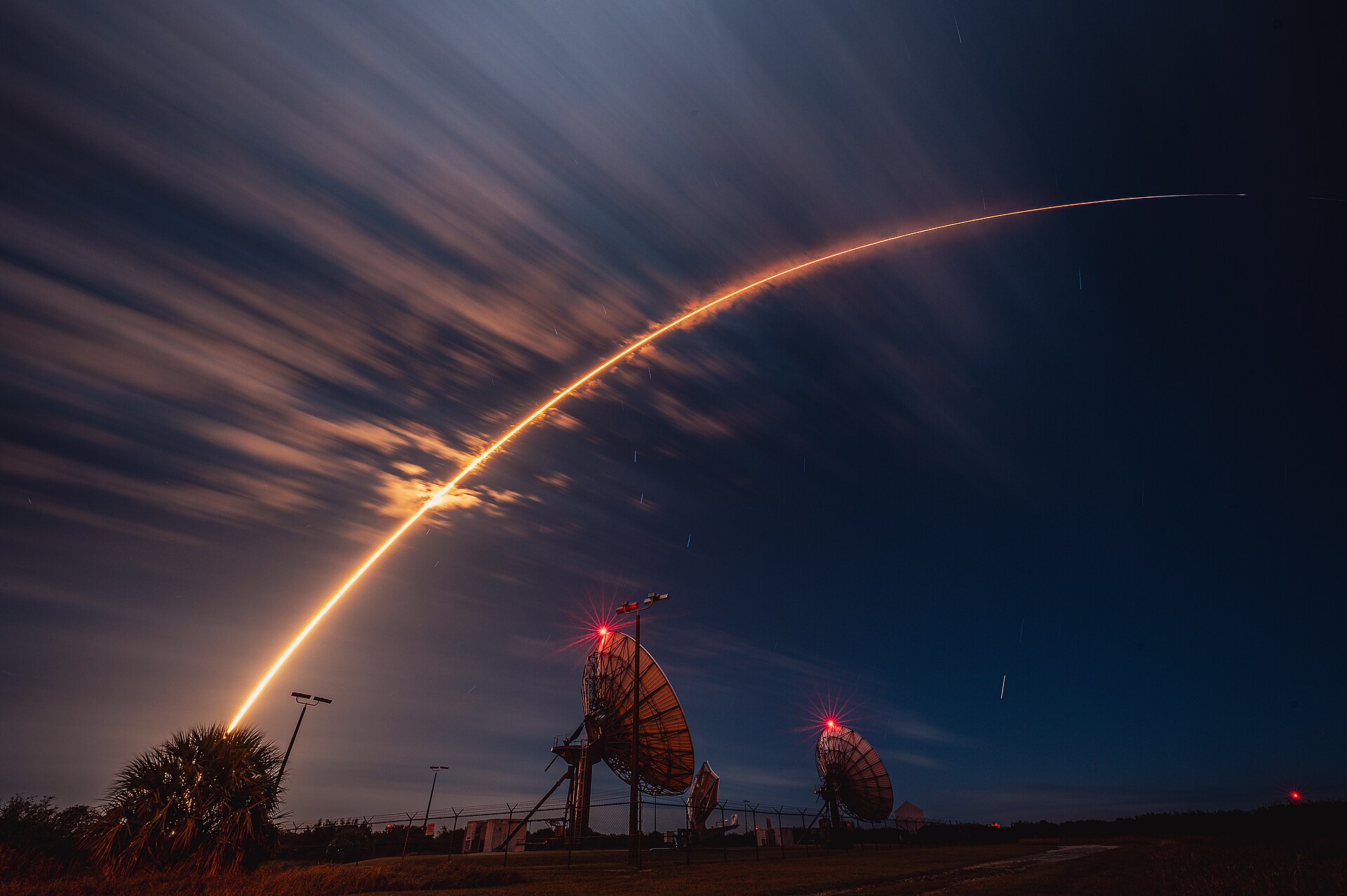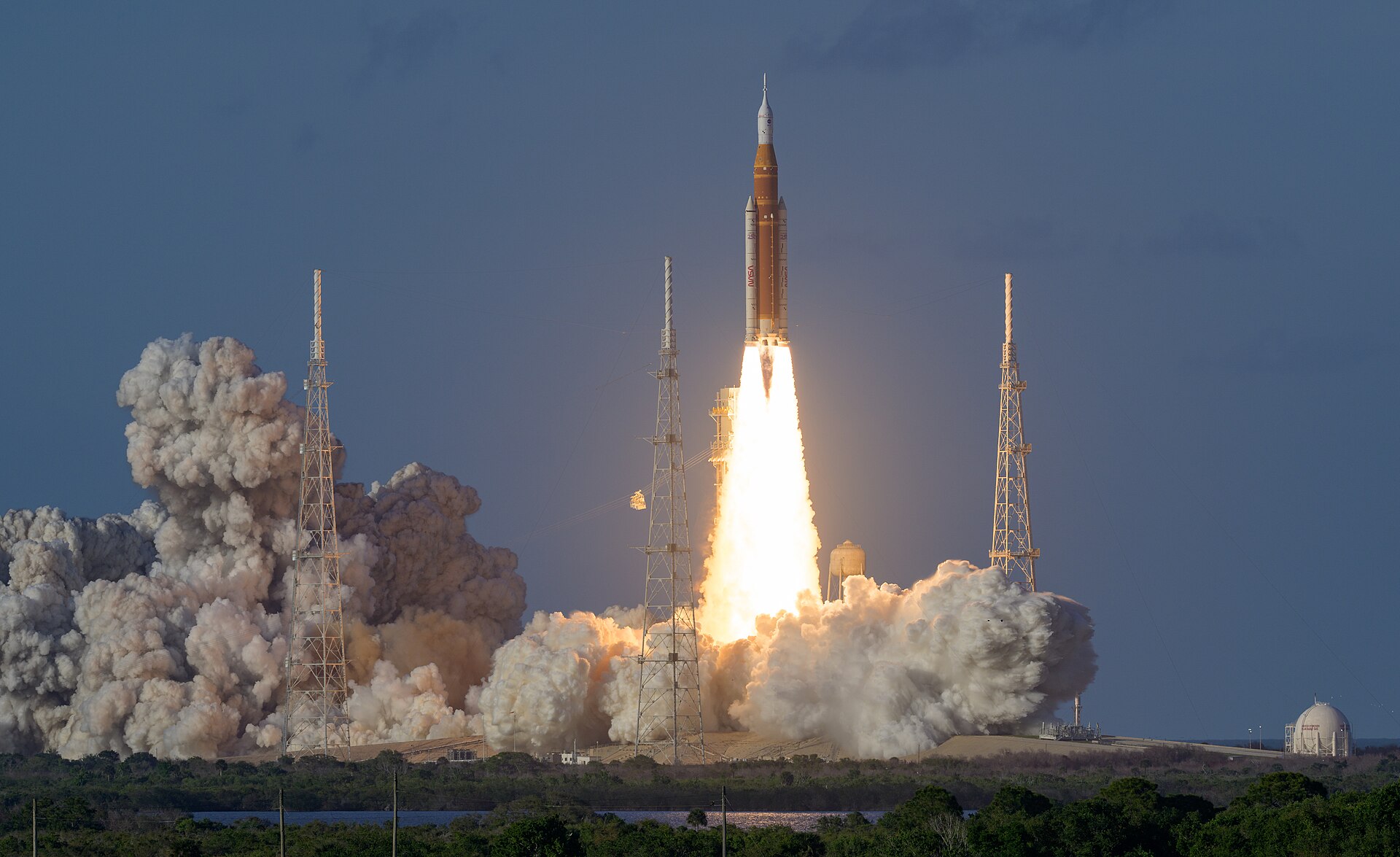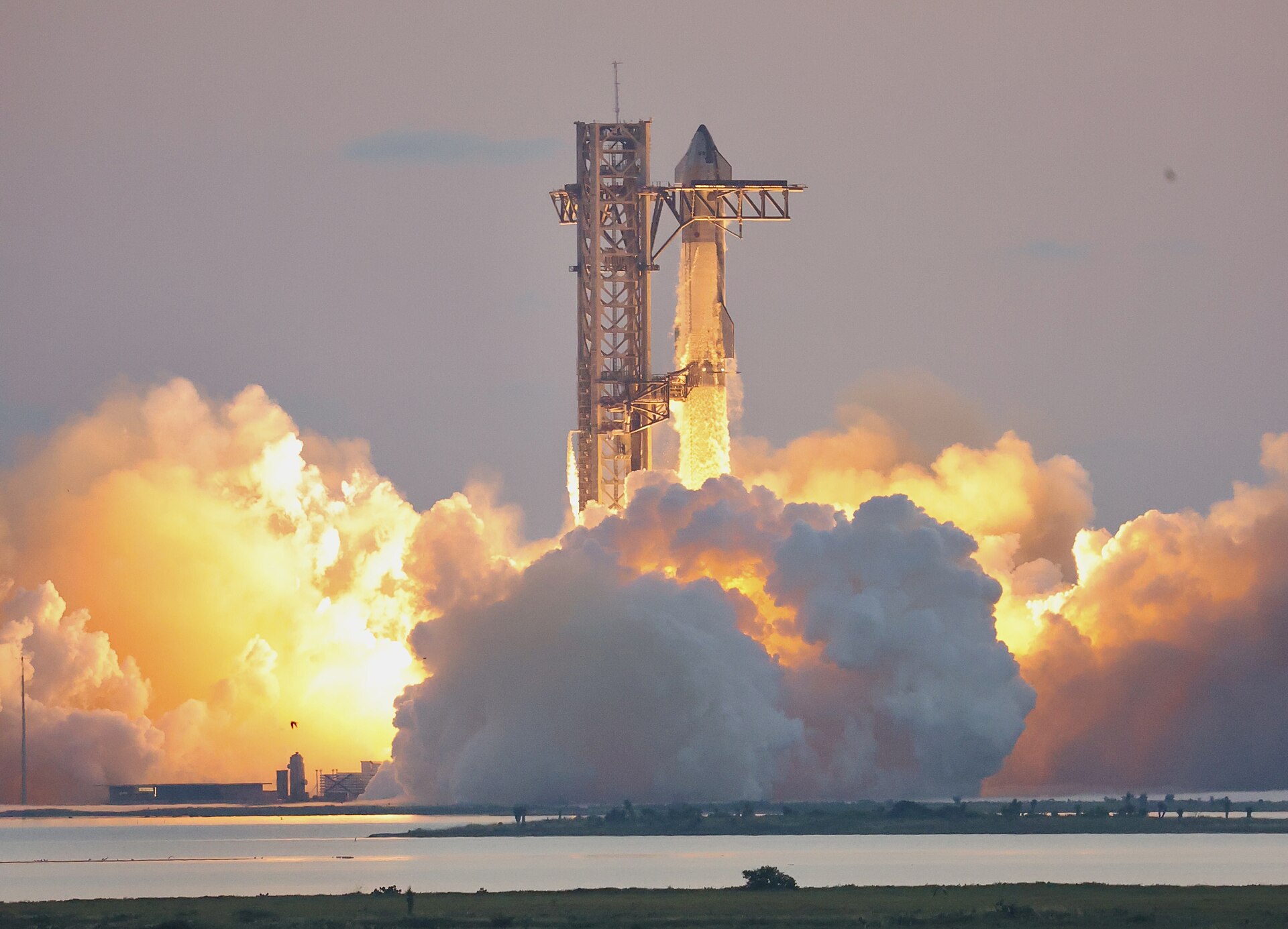
Starship launches from Texas during Flight 5 on October 13, 2024. Archive photograph; it does not depict the November 2026 orbital ship catch. Archive photo by Steve Jurvetson (CC BY 2.0).
SpaceX caught a Starship upper stage returning from orbit for the first time on Saturday, completing one of the most consequential demonstrations in the rocket’s development. The vehicle returned to Starbase in Texas roughly 22½ hours after launch and descended into the launch tower’s mechanical arms, turning a long-promised recovery concept into a flight result.
The achievement was substantial, but the mission was not a complete double recovery. The Super Heavy booster did not return to the tower on Friday. That distinction is essential to understanding both the breakthrough and the work ahead: SpaceX demonstrated that it could bring the upper stage home from orbit and catch it, while another part of the same flight showed that the full system still needs improvement.
For readers following “Starship catch,” the headline is therefore precise. Flight 15 delivered the first catch of the orbital ship, not the first booster catch and not proof that routine, inexpensive reuse has already been achieved. It removed a major technical uncertainty. The next questions concern inspection, repeatability, refurbishment and how much of the vehicle can actually fly again.
What SpaceX says happened on Flight 15
In its official Flight 15 account, SpaceX said the rocket launched from Starbase on November 13, reached orbit and deployed 26 Starlink V3 satellites. The ship then remained in space for more than twenty hours while controllers monitored its condition before the return attempt.
The company reported a successful engine relight for the deorbit burn, atmospheric entry and a final approach to the launch site. Three Raptor engines ignited for the landing maneuver before the tower arms closed around the ship. The catch completed a sequence whose final seconds depended on the success of many earlier decisions, including the timing and location of the return from orbit.
The booster’s experience was different. SpaceX said its boostback burn ended early because of low fuel mass, with the underlying cause still under investigation. Guidance software triggered an automatic diversion offshore. The company reported a landing burn over the Gulf followed by activation of the flight termination system after engine shutdown. That account explains why descriptions of a successful ship catch and a lost booster can both be accurate.
The Associated Press’s contemporaneous report independently confirmed the upper stage’s return and capture. The useful way to assess the mission is by its separate objectives rather than one blanket label. Reaching orbit, delivering satellites and recovering the ship were achievements. Recovering both stages on the same mission remained an uncompleted objective.
Why catching the upper stage is different from catching a booster
SpaceX’s description of the Starship system distinguishes the Super Heavy first stage from the upper spacecraft. The booster supplies the initial push off the launch pad, while the ship continues toward its mission in space. Recovering the second vehicle after an orbital flight requires it to return through an atmospheric environment very different from the booster’s shorter journey.
The engineering challenge is a chain, not a single trick at the tower. The ship must remain functional in orbit, orient itself for the return, survive heating, control its path through the atmosphere and arrive with enough propulsion and guidance capability to complete the final maneuver. An error earlier in that chain cannot necessarily be repaired by excellent performance in the last few seconds.
The tower catch adds another layer of precision. A conventional landing area offers a surface on which a vehicle can stand. A catch requires the arriving spacecraft and fixed ground equipment to meet within the conditions the system can tolerate. That makes coordination between flight software, vehicle hardware and launch infrastructure part of the recovery design.
Saturday matters because the entire return sequence reached a successful endpoint on an actual orbital mission. Ground tests, simulations and shorter flights can establish pieces of the problem, but an integrated demonstration exposes interactions that are difficult to reproduce separately. The recovered vehicle now also offers physical evidence that engineers can examine alongside telemetry from the flight.
That evidence is valuable even before any claim about rapid reuse can be tested. Engineers can compare predicted stresses and temperatures with the condition of the returned hardware. They can identify areas that require repair or redesign and distinguish an apparently successful return from a vehicle that is actually ready for another mission. Recovery creates the opportunity for that examination; it does not predetermine its findings.
The economic promise depends on what happens after the catch
The commercial logic of reuse is straightforward in outline. Hardware that survives a flight may be available for another mission instead of being manufactured again. The practical economics are more demanding. Inspection, replacement parts, labor, ground infrastructure and the time between flights all affect whether the next mission becomes cheaper and easier to deliver.
A successful catch therefore changes the development question from whether this recovery method can work at all to how reliably it can work and what it costs to repeat. One demonstration cannot supply a statistically mature reliability record. Repeated flights under varied conditions, followed by transparent evidence about turnaround and repairs, will provide a more meaningful basis for judging operational performance.
The lost booster is relevant to that business case. A transportation system designed around recovering both major stages cannot reach its full intended economics by recovering only one consistently. The result is not a reason to dismiss the ship’s achievement. It is a reason to keep the unit of analysis clear: the long-term product is an integrated launch-and-recovery system.
Payload delivery is another part of the same calculation. Flight 15’s satellite deployment connected the test program to an actual use for the vehicle. But a productive mission and an economically mature service are different milestones. Customers ultimately need dependable access to the required orbit, while the operator needs a sustainable combination of manufacturing, launch operations and reusable hardware.
What the milestone means for NASA’s Moon plans
The lunar implications are significant because NASA is developing a version of Starship as a human landing system. The latest architecture is more specific than the familiar shorthand that a successful Starship test means astronauts are almost ready to land. In NASA’s October update on the 2028 lunar effort, the agency described revised operations involving orbital propellant aggregation and a sequence of tanker and depot vehicles.
Under that plan, the Starship lander would be fueled in Earth orbit, rendezvous with Orion there and help send the combined vehicles toward the Moon. NASA also said that the first landing provider would be selected according to readiness, with SpaceX and Blue Origin both developing systems. Saturday’s catch does not itself settle that selection or complete the additional demonstrations required for a crewed mission.
NASA’s separate explanation of Artemis III describes a 2027 mission intended to practice rendezvous and docking with test versions of the commercial landers in low Earth orbit. That is distinct from the targeted 2028 return to the lunar surface. Keeping those missions separate is important because the agency’s current sequence differs from older descriptions that assigned an immediate lunar landing to Artemis III.
The connection between reuse and lunar operations is nevertheless real. An architecture involving several launches benefits from a vehicle that can be manufactured, flown and recovered predictably. Propellant aggregation places demands on launch availability and scheduling. A major recovery advance can improve the prospects for that broader system without demonstrating every element of it at once.
NASA’s March 2026 inspector-general audit of the lander contracts identified technical, integration and schedule challenges across the program. It also discussed astronaut-safety requirements and the need for sufficient agency insight into contractor development. That assessment provides a useful framework for interpreting progress: a dramatic test result is evidence to incorporate into a program review, not a substitute for the review.
The next tests will measure repeatability and readiness
The most informative follow-up will concern the recovered ship’s condition. How much work does it require? Which systems performed as designed? Which components need changes before another flight? Those answers will connect the public spectacle of a catch with the less visible work that determines whether a reusable vehicle is approaching routine service.
The booster investigation matters just as much. SpaceX has identified low fuel mass during the return sequence, but the company says the root cause remains under investigation. A professional assessment should preserve that distinction between an observed condition and its underlying explanation. Solving the condition durably requires understanding why it occurred.
Other demonstrations will test capabilities that a return to Starbase cannot establish, including the operations needed to support the lunar architecture. Orbital rendezvous, docking, propellant handling and crew systems pose their own requirements. Progress on one can make the whole program more credible without allowing the remaining tasks to be treated as formalities.
There is also an operational dimension to repeatability. Launch infrastructure, recovery procedures and the teams examining the hardware must work together across multiple missions. A rocket can perform an extraordinary maneuver once while the organization around it is still learning how to make that maneuver part of a dependable service. The distinction is familiar throughout transportation engineering and especially consequential when people will eventually depend on the system.
Conclusion: a breakthrough with a measurable next chapter
The November 14 Starship catch deserves its place as a major spaceflight milestone. SpaceX returned an orbital upper stage to its launch site and captured it with tower arms, completing a demanding sequence that had not previously succeeded for this vehicle. The result gives engineers recovered hardware, flight data and a firmer foundation for the next attempt.
The strongest conclusion combines recognition with precision. The ship catch succeeded; the planned booster recovery did not. Rapid, routine reuse and a crewed lunar landing remain further achievements to demonstrate. Saturday changed what SpaceX has proved possible. The next chapter will show how often it can repeat the feat and how effectively that success can support an operational transportation system.