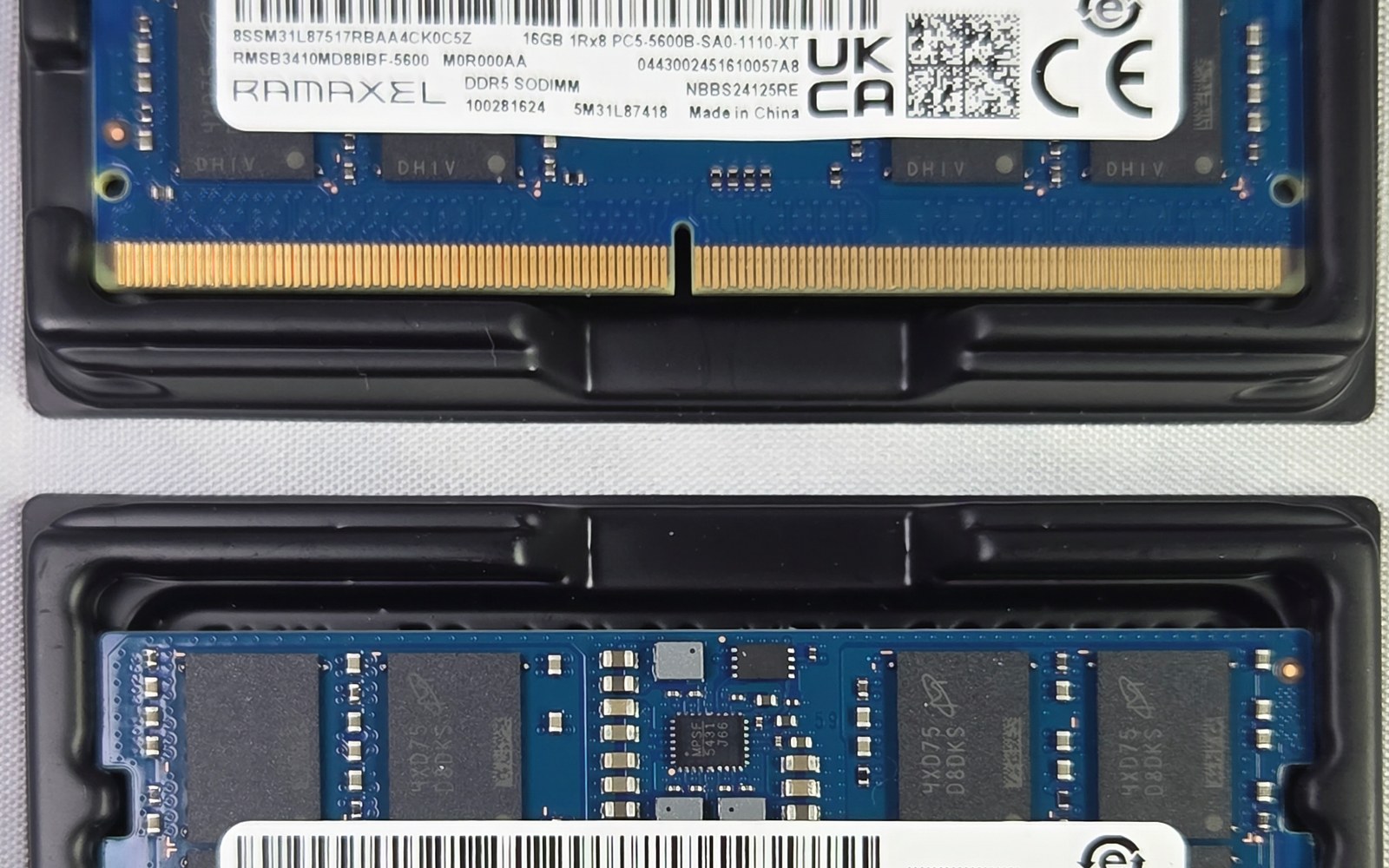

The OpenAI chief’s podcast remarks concern memory utilization. The wider debate also involves privacy, access and the hardware supply chain.
Sam Altman argued in an October 29 Cheeky Pint interview that scarce RAM can be used more intensively in shared AI infrastructure than in individual computers. His comments address resource allocation during supply constraints.
File photo: Sam Altman speaking at TechCrunch Disrupt in San Francisco on October 3, 2019; not the Cheeky Pint interview. Photo: Steve Jennings / TechCrunch (cropped). Source photograph · CC BY 2.0.
The published interview transcript places the remarks in a conversation with Stripe cofounder John Collison about local AI inference: running a model on a person’s own hardware. Altman described lightly used memory distributed across personal computers as a poor allocation and argued for higher utilization in the cloud.
The comment is an argument about utilization
Altman’s phrase “quite terrible” referred to his view of global memory allocation. The relevant passage does not announce a program to remove hardware from users. His argument centers on how often memory is actively serving workloads, rather than a transfer of ownership.
That distinction does not settle the debate. Efficiently pooling resources and preserving the benefits of local computing are different objectives, and a system can perform well against one without satisfying every user’s priorities.
RAM is one part of the computing system
Micron’s memory documentation explains that DDR5 system memory is based on DRAM, or dynamic random-access memory. DRAM provides a working resource for computers; it is distinct from the long-term storage commonly associated with an SSD.
Memory capacity is therefore relevant to both personal computing and data centers, but a discussion about capacity does not make every device or workload interchangeable. The requirements of a person running a local model and a shared server serving many requests can differ.
Local processing has benefits beyond utilization
Privacy is one reason the comparison extends beyond how continuously hardware is occupied. Ollama’s documentation, for example, says it does not see users’ prompts or data when models run locally and documents an option to disable cloud features.
That is a concrete example of why someone might value local inference even if their machine is idle for part of the day. A local setup’s usefulness still depends on its hardware, the model and the work being performed. A cloud service’s usefulness likewise depends on its capabilities and the conditions under which it is available.
The supply-chain backdrop predates this interview
OpenAI’s October 2025 announcement with Samsung and SK described plans to expand advanced-memory production for the Stargate initiative, targeting 900,000 DRAM wafer starts per month. It also outlined agreements to explore additional data-center capacity in Korea.
That announcement describes production ambitions and partnerships. It does not establish that the target had already been achieved or that every planned wafer translates directly into a consumer memory module unavailable at retail.
The practical issue raised by the current debate is how to expand supply while supporting different uses of computing. Utilization is one part of that question; keeping data local and maintaining choices for users are others.
Follow Taken Social’s Tech section for more on AI and computing.
For the latest on memory supply, see what Sam Altman discussed with Samsung and what the PC RAM forecast shows.