Published November 6, 2026 · Taken Social Editorial
The Jacksonville Jaguars left Baltimore with a stronger grip on the AFC South and a performance that exposed how far the Ravens have fallen from their promising start. Jacksonville won 33–10 on Thursday night, November 5, sending Baltimore to a fourth consecutive defeat and moving the Jaguars to 6–2.
Trevor Lawrence provided the explosive passes, Cam Little supplied four field goals, and Jacksonville turned Baltimore mistakes into short scoring drives. For the Ravens, now 4–5 after opening 4–1, the absence of Lamar Jackson and Tyler Huntley was part of a much wider problem: penalties, defensive breakdowns and an offense that could not sustain enough possessions to keep the game competitive.
The searches for “Ravens” and “Ravens game” follow a nationally televised loss that leaves Baltimore below .500 entering its next extended preparation period. Jacksonville, meanwhile, has won four of its past five games. Those records frame the result, but the sequence of Thursday's scoring explains the size of the separation.
Jacksonville made its opening possession count
Jaguars coach Liam Coen chose to receive rather than defer, making an early adjustment to the wet conditions. “We took the ball because of the weather,” he explained in the team's postgame report. Jacksonville promptly traveled 77 yards in seven plays, finishing with a one-yard touchdown run by Bhayshul Tuten.
The drive's defining gain came on a 52-yard completion to rookie tight end Nate Boerkircher. It gave Jacksonville field position before Baltimore had an opportunity to establish the slow, run-heavy contest its depleted offense needed. A first possession cannot settle a game, but this one forced the Ravens to start chasing points almost immediately.
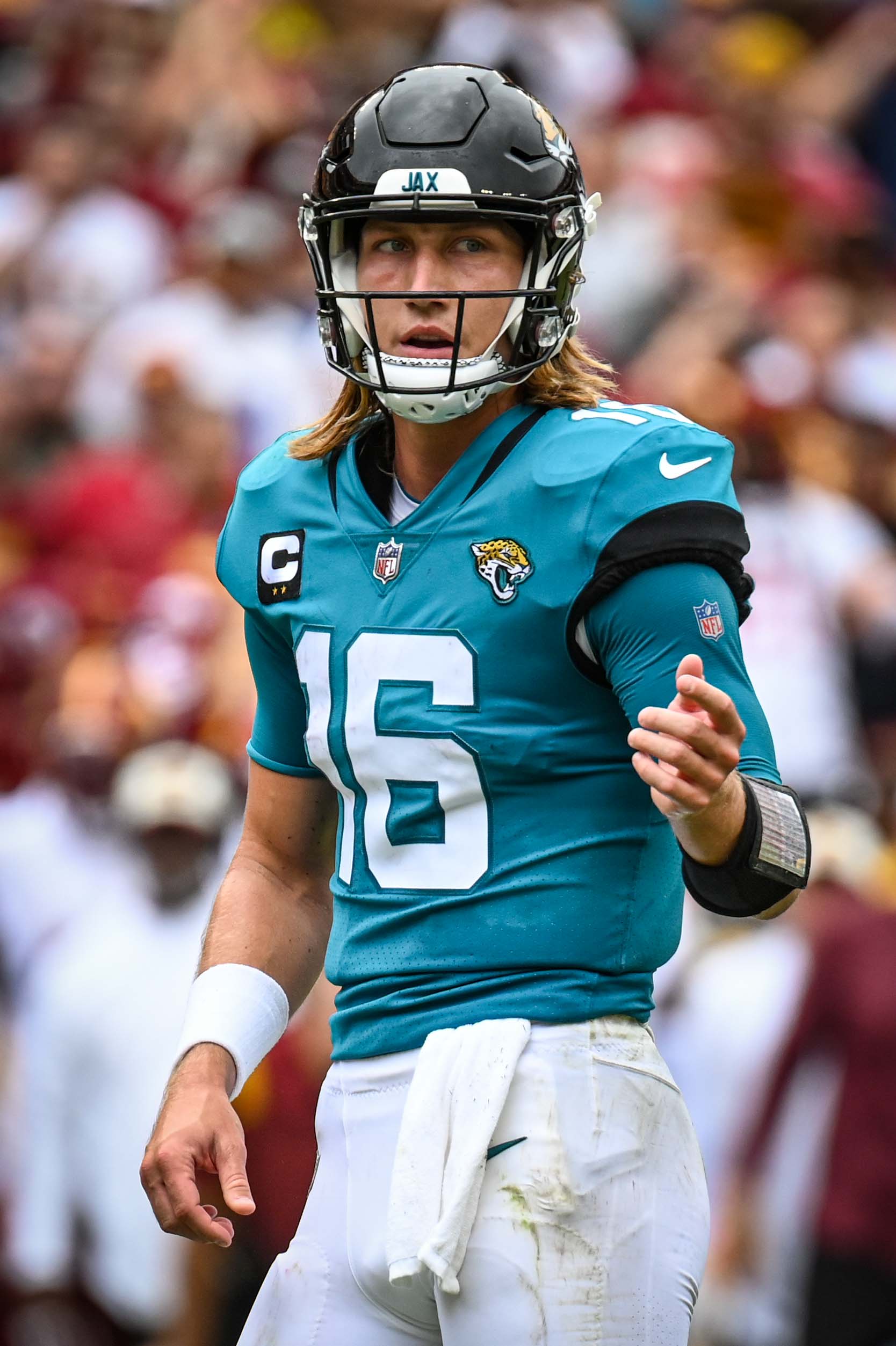
Lawrence finished 16 of 26 for 242 yards, one touchdown and no interceptions. The Jaguars generated distance without requiring a succession of short completions or a high volume of throws. His average of roughly 9.3 yards per attempt captures that efficiency more clearly than the completion total alone.
Little's four field goals, from 36, 45, 47 and 33 yards, ensured Jacksonville continued collecting points when drives stopped short of the end zone. The Jaguars did not need every possession to become a touchdown. A succession of successful finishes kept Baltimore from making a single defensive stop into the start of a comeback.
The pass before halftime changed the task
Parker Washington's 50-yard touchdown reception with 58 seconds remaining in the second quarter sent Jacksonville into halftime ahead 17–3. The Jaguars' account of the decisive plays describes Baltimore bringing an all-out pressure look and Lawrence adjusting the protection before finding Washington.
That is an especially costly trade when the defense's own offense is struggling to create explosive gains. Pressure can end a possession quickly, but if the quarterback solves it, the coverage behind the rush has little room for recovery. Washington's score converted a manageable deficit into a two-touchdown halftime gap.
Washington needed only two catches to accumulate 61 yards. His production illustrates why reception totals can obscure a receiver's influence: one successful response to pressure can change a game's demands more than several short gains. Boerkircher's opening catch and Washington's touchdown together accounted for 102 yards, more than two-fifths of Lawrence's passing total.
Jacksonville also stopped a fourth-and-one attempt in the third quarter, according to its key-plays report. Baltimore needed possessions that both moved the ball and ended with points. A failed conversion offered neither, while using more of the time available to erase the deficit.
Baltimore's emergency offense had little margin
Undrafted rookie Joe Fagnano made his first NFL start with Jackson and Huntley unavailable. He completed 10 of 18 attempts for 60 yards and threw two interceptions. The Ravens' own game recap recorded Jacksonville's overall yardage advantage at 319–227 and its first-half advantage at 224–101.
Baltimore repeatedly put the ball directly in Derrick Henry's hands. He took ten direct snaps, a clear attempt to reduce the burden on the passing game and create an extra blocking advantage. Henry nevertheless finished with 57 yards on 17 carries. The design gave Baltimore a way to compete on the ground; it did not produce enough sustained offense to answer Jacksonville's lead.
The passing figures reveal a different problem from a simple lack of attempts. Sixty yards on 18 throws works out to approximately 3.3 yards per attempt, compared with Lawrence's 9.3. That comparison is a description of Thursday's offense, not a fair standalone judgment of two quarterbacks in very different circumstances. It does show why Baltimore found it difficult to recover once behind.
Seven penalties included four false starts. Those lost yards were particularly damaging for an offense trying to keep third downs manageable. A five-yard setback can require an additional successful play merely to recover the original situation. For a team already struggling to move the chains, repeatedly adding that requirement made a narrow route to victory narrower.
Turnovers turned pressure into points
Jacksonville's second-half takeaways removed what remained of Baltimore's breathing room. Montaric Brown intercepted Fagnano to set up a field goal, and Jourdan Lewis later supplied another interception before another Little kick. On the ensuing kickoff, Jalen McLeod forced and recovered a fumble, creating the short field that preceded Chris Rodriguez Jr.'s two-yard touchdown.
Those mistakes made it possible to extend a lead without asking the Jacksonville offense to repeat its opening 77-yard march. Turnovers affect more than possession counts: where the ball changes hands determines how much work the next offense must do. Baltimore was giving an already efficient opponent opportunities that required relatively little distance to convert.
Justice Hill's late 65-yard touchdown run brought the score to 33–10, but it arrived after Jacksonville had built a 30-point advantage. The final margin therefore slightly softens the picture of the decisive stretch. Baltimore was not within one possession waiting for a final chance; the game had already separated well beyond that point.
There was a Ravens defensive takeaway, too. Malaki Starks forced a Travis Hunter fumble recovered by Teddye Buchanan. It gave Baltimore an opportunity, but one isolated recovery could not offset the combination of short offensive possessions, damaging penalties and Jacksonville's repeated scoring chances.
Jesse Minter points to problems beyond injuries
Ravens head coach Jesse Minter did not present the quarterback situation as a complete explanation. In the published postgame press conference, he called the pre-snap penalties “unacceptable” and said the team needed improvement in all three phases. His account identified Washington's score before halftime as a particularly damaging moment.
Minter said Fagnano had only three days to prepare and was dealing with his own injury. He also declined to confirm details about Jackson's medical situation. That distinction matters: Baltimore has a documented availability problem, but the coach's refusal to discuss additional medical information does not establish a return timetable or a particular treatment.
On questions about a reported Jacoby Brissett trade, Minter did not confirm a completed transaction. A possible roster addition and an established starter for the next game are separate developments. Thursday's postgame comments support a clear conclusion about Baltimore's need for help; they do not, by themselves, settle who will take the next opening snap.
The Ravens were short-handed elsewhere. Their pregame inactive report listed cornerback Nate Wiggins out and Austin Reed available as Fagnano's backup. The losses help explain the strain on the roster, while Minter's emphasis on execution explains why the review cannot end with the injury list.
The longer break also changes the preparation schedule. Baltimore will have more time to install a plan than it had before Thursday, but additional practice is useful only if it produces cleaner execution. The next assessment will be whether a manageable down stays manageable and whether a defensive stop actually leads to an offensive response.
What the result says about Jacksonville
The Jaguars' postgame storylines report notes that they have scored at least 31 points in three consecutive games, including a 42–7 win over Indianapolis before the trip to Baltimore. Thursday therefore fits a recent offensive pattern rather than standing as a solitary productive evening.
Still, the opponent's condition limits sweeping conclusions. Beating a team starting an inexperienced third quarterback does not prove Jacksonville would generate the same result against a healthy contender. The more useful evidence is how the Jaguars handled an assignment that offered obvious ways to stumble: a short week, rain, a road setting and an opponent trying to shorten the game.
They scored on their opening opportunity, protected the ball well enough to maintain control and adjusted to Baltimore's reliance on Henry. The team's morning-after analysis records that Henry's longest run was eight yards and that Lawrence distributed his completions among eight receivers. Those details describe a win built across the roster.
For Baltimore, the next scheduled game against the Los Angeles Chargers on November 16 offers time to reorganize. For Jacksonville, a 6–2 record is a platform for the second half, rather than a postseason guarantee. Thursday's result was emphatic enough without adding either a premature funeral for the Ravens' season or a championship forecast for the Jaguars. Jacksonville controlled the important possessions; Baltimore must find a way to stop its slide.
Trevor Lawrence during a Jaguars game on September 11, 2022. Archival photograph by All-Pro Reels; CC BY-SA 2.0. This photograph does not show the November 5, 2026 game. Source: Wikimedia Commons. Image license.