Published November 6, 2026 · Taken Social Editorial
Thierno Barry turned David Moyes' record-equalling evening into an Everton celebration, scoring twice and creating the third goal in a 3–1 comeback victory over Coventry City on Friday, November 6. Everton moved into fifth place in the Premier League ahead of the rest of the weekend's fixtures, with their striker directly involved in every goal.
Yann Gboho had given Coventry the lead in the 52nd minute at Hill Dickinson Stadium. Everton's response came quickly: Barry equalized four minutes later, scored again just after the hour and then supplied the pass for Kiernan Dewsbury-Hall's finish nine minutes from time.
The win was Everton's third consecutive victory, according to the club's match report. Moyes, taking charge of his 592nd Everton match, drew level with Harry Catterick's club record. Those milestones gave the result an additional dimension, but Barry's contribution supplied the immediate reason Everton could celebrate them.
Barry changed the game in a few minutes
Both of Barry's goals came from deliveries from Everton's left. Vitalii Mykolenko supplied the cross for the equalizer, with Barry heading home. Tyrique George then provided the ball for the second, which the striker forced across the line. Different finishes produced the same practical result: Coventry's lead disappeared and Everton moved in front.
The short interval between those goals was important. Coventry had only a few minutes to protect the advantage earned by Gboho before facing a level game again. Soon afterward, the visitors had to change from preserving a lead to chasing an equalizer. Everton had altered the demands of the match before Coventry could settle into managing its favorable position.
The winning response also depended on service. A striker's movement is valuable only when teammates can reach the space he attacks. Mykolenko and George gave Barry opportunities from the same general side without requiring identical finishes. The result was a reminder that his goals belonged within a wider attacking combination.
Everton did not stop at 2–1. Barry's pass released Dewsbury-Hall for the final goal, adding a creative contribution to the striker's two finishes. That sequence made the difference between entering the closing minutes with a one-goal cushion and requiring Coventry to find two goals to rescue a point.
The third goal broadens the picture of his performance
A two-goal match inevitably directs attention toward finishing. Barry's assist invites a fuller assessment. The final pass asked him to recognize a teammate's run and release possession at the useful moment, rather than treating every advanced position as an opportunity to shoot.
That variety makes a center forward more difficult to defend. If defenders must account both for a player attacking crosses and for his capacity to connect with a runner, their responsibilities extend beyond preventing a single type of chance. Friday offered evidence of both contributions without requiring a sweeping judgment about Barry's whole season.
His direct involvement in all three goals is also more specific than saying he played well. It identifies the actions that changed the score. Football creates plenty of important work away from the final touch, but in this match Barry's contribution appeared at the point where Everton turned attacks into the goals that decided the result.
For Coventry, the final margin should not obscure the position the visitors reached. They led away from home early in the second half. A 3–1 score can suggest a contest controlled from beginning to end; the actual scoring sequence shows that Everton first had to recover from a setback.
Moyes' selection kept much of the winning side together
Everton's official team announcement named Jordan Pickford in goal and James Tarkowski as captain, with Jarrad Branthwaite and Mykolenko also starting. James Garner and Harrison Armstrong were included alongside Dewsbury-Hall, George, Tyler Dibling and Barry.
The selection brought Dibling into the starting side and placed Merlin Röhl at right-back. The team announcement provides a useful record of the lineup; it does not prove that every positional choice was designed around the eventual scoring plays. Postgame analysis should distinguish a selection's visible consequences from motives the manager has not stated.
Continuity can help an attack build understanding, but it also places responsibility on the selected players to respond when a match moves against them. Everton's response after conceding is the clearest evidence from Friday. The team turned an adverse score into a lead and then added a goal that made the finish less precarious.
The victory came before an international break. That gives the result an extended life in the immediate discussion around the club, while also interrupting the rhythm of regular league matches. Momentum is a description of recent outcomes, not a resource that guarantees the next one.
A milestone connecting two Everton eras
Before the match, Moyes discussed the managerial record in an interview published by the club. “Yes I am proud,” he said in Everton's account of his programme interview. He described the importance of the club to his family and reflected on arriving as manager in March 2002.
The record concerns the number of matches managed, a measure of longevity and the scale of a relationship with a club. It should not be confused with a claim that two managerial careers produced identical achievements. Reaching Catterick's total places Moyes alongside an important figure in Everton history while leaving their records and circumstances distinct.
Everton's honours archive records league championships in 1962–63 and 1969–70 and the 1966 FA Cup among the achievements associated with Catterick's era. Those trophies are part of the historical weight behind the name Moyes has now joined at the top of the managerial appearance list.
Friday's result gave the anniversary a present-tense purpose. A landmark can easily become a backward-looking ceremony. A comeback win with an active striker, useful attacking combinations and a place in the upper part of the table connects the historical occasion to supporters' immediate concerns about the team.
How Barry reached this Everton role
The Premier League's announcement of Barry's signing records that he joined Everton from Villarreal on a four-year contract in July 2025. Born in Lyon in October 2002, he had played with Sochaux, Beveren and Basel before moving to Spain.
In his 2024–25 Villarreal season, the league's account credited him with 11 goals and four assists in 38 appearances as the Spanish club qualified for the Champions League. Those were the credentials he brought to England, rather than figures from his current Everton campaign. Keeping the seasons separate is essential when assessing his development.
Barry's route also illustrates how a striker's role can evolve across leagues. Moving between Belgium, Switzerland, Spain and England involves different teammates, opponents and tactical demands. A record accumulated in one environment is useful evidence of ability, but it is not a direct conversion formula for performance in another.
Friday offered a current demonstration of why Everton wanted a forward with more than physical presence. He could be found at the end of crosses and could supply a teammate in the final attacking phase. The combination gave Moyes both a penalty-area target and a player capable of helping complete a move outside that narrower role.
Why the table position needs a date attached
Everton's move into fifth was the position recorded after Friday's match and before the other weekend fixtures. It is therefore a dated snapshot. Teams playing later can alter the order, and differences in games played can affect the appearance of a table even before anyone's underlying performance changes.
The points earned on Friday are more durable than a provisional place. Everton converted a match that had been level at halftime and unfavorable early in the second half into a victory. Under the league's points system, that is a three-point outcome; the table position then depends on what other teams do with their own opportunities.
It would be premature to translate that snapshot into a European qualification promise. The more useful assessment concerns repeatable elements: creating service for the striker, adding runners around him and retaining enough attacking ambition to score the third goal. Those are features to examine in later matches, rather than achievements already guaranteed.
Coventry's task is different. The visitors must consider how a lead was lost and why the damage continued afterward. A promoted side can take encouragement from reaching a winning position away from home, while still requiring a demanding review of the goals conceded. Encouragement and accountability can coexist.
The result behind the trending searches
Searches for Everton against Coventry and for Thierno Barry lead to the same central story. Barry scored twice in a short second-half spell, then helped create the goal that secured Everton's comeback. Moyes reached a historic appearance total with a victory, rather than watching the occasion end in a home defeat.
The match will be remembered for the striker's goals, but the order of events gives them meaning. Everton fell behind, restored parity quickly, moved in front and finished the job. On a night connecting managerial longevity with an attack still developing its combinations, Barry supplied the decisive bridge between celebration and result for home supporters.
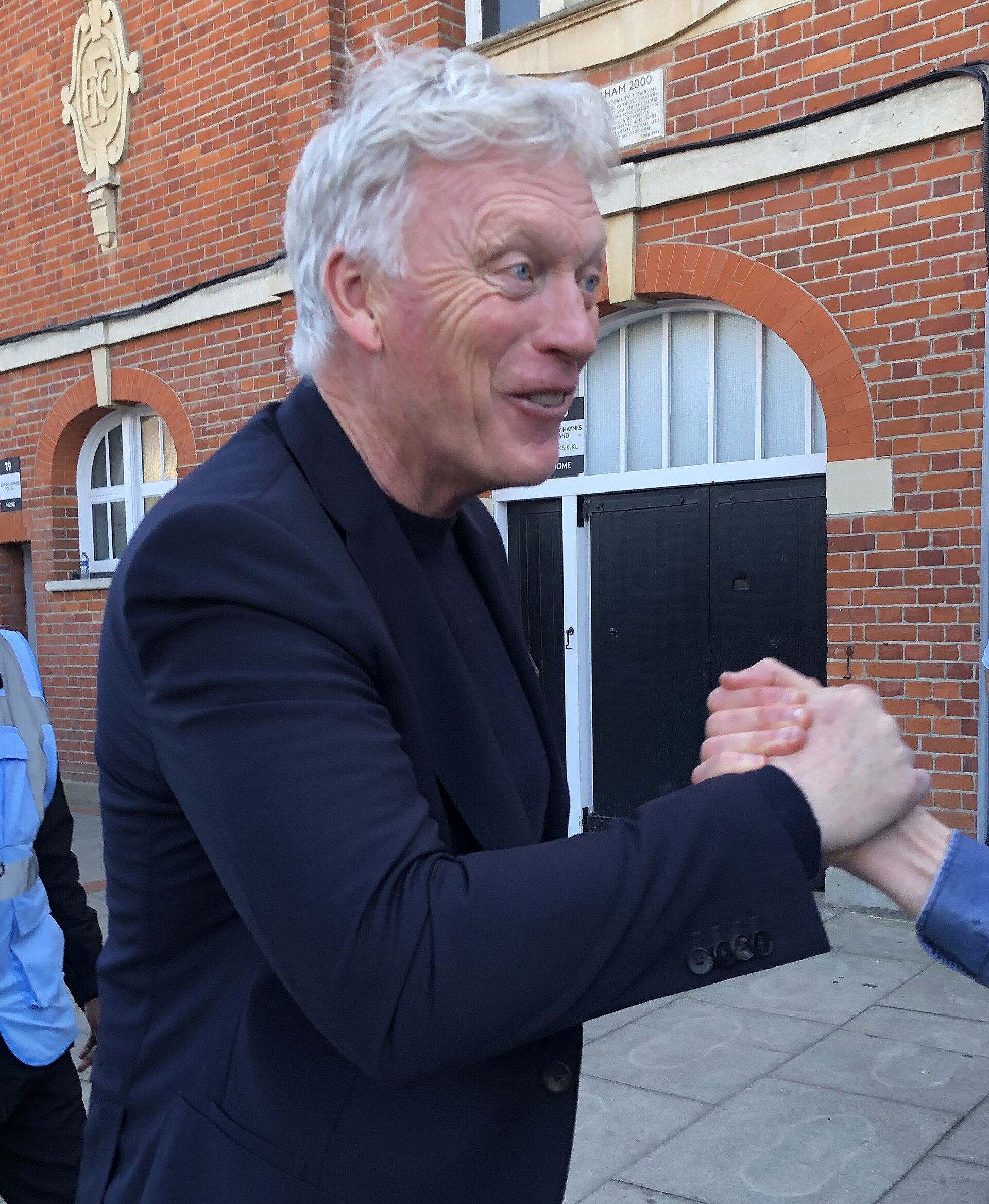
Everton manager David Moyes photographed on May 10, 2025. Archival photograph by Timmy96, released under CC0. This image does not show the November 6, 2026 match. Source: Wikimedia Commons. Image license.