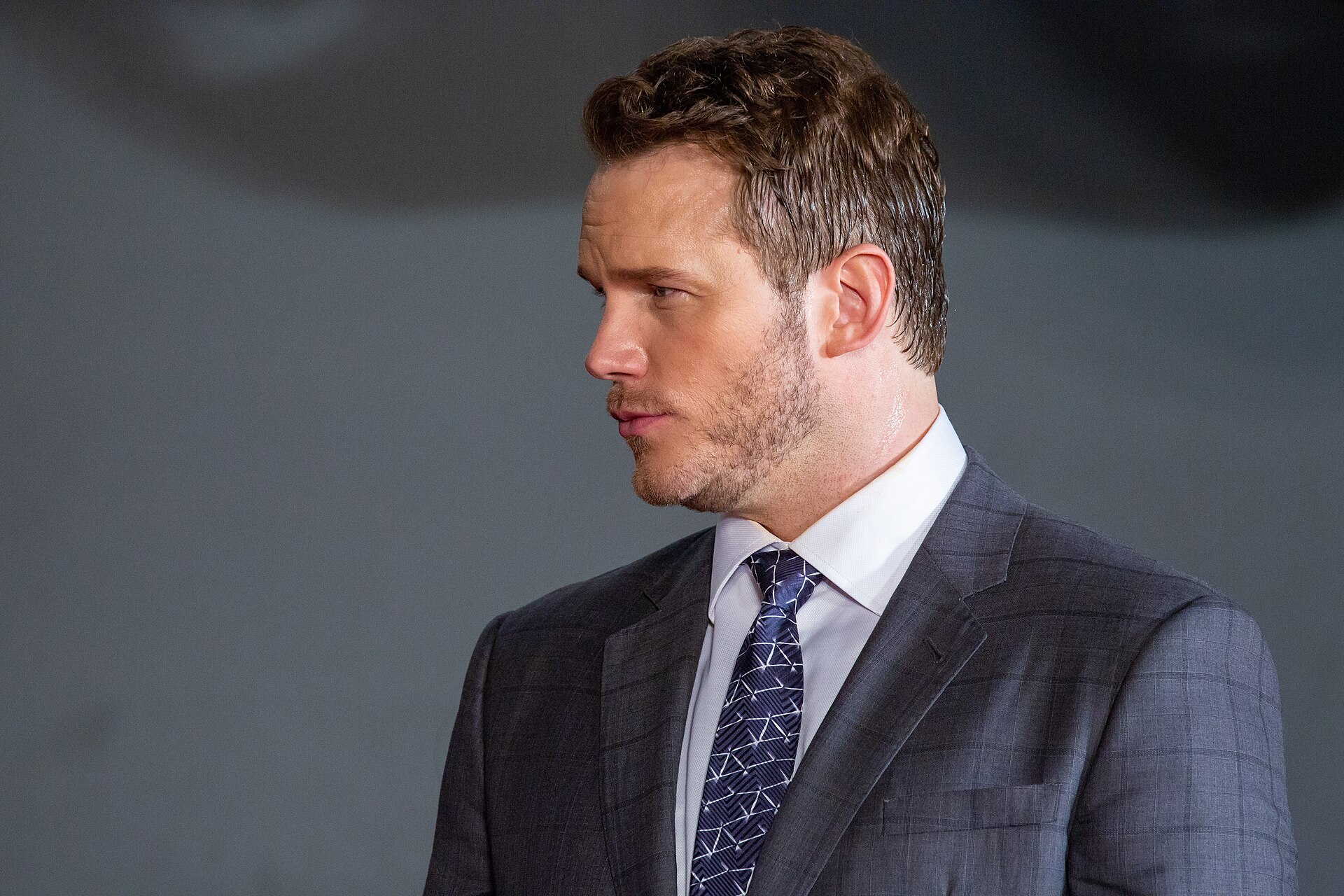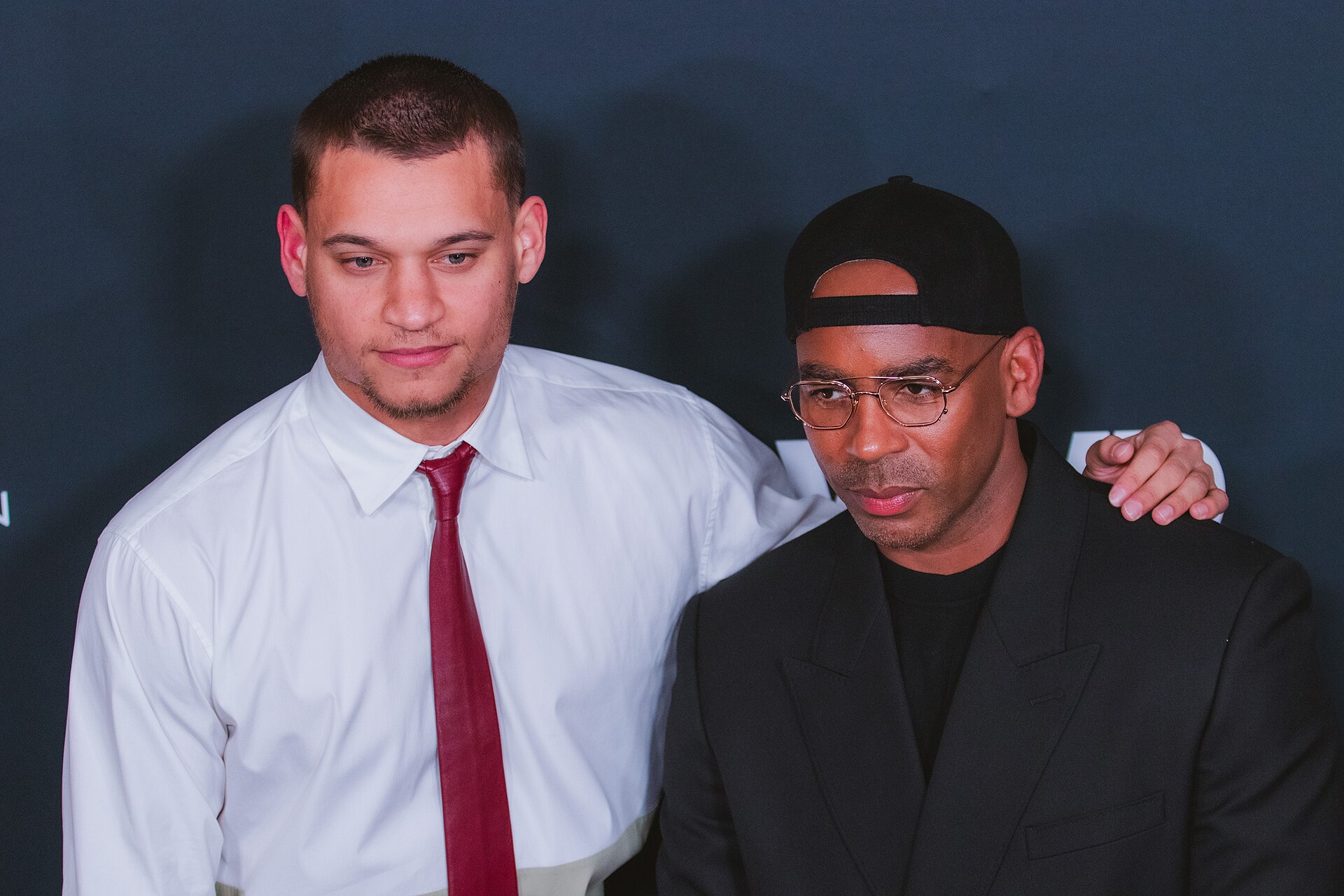
Tyriq Withers, left, and stylist Jason Bolden at the WWD Style Awards on January 9, 2026. This archive image does not show the Eugene Airport interview. Archive photo by Kevin Paul (CC BY 4.0).
Tyriq Withers did not need a trailer, a premiere or a carefully scheduled television appearance to command attention this weekend. He needed an airport delay, a local news microphone and a remarkably well-timed reference to an old internet joke. A KVAL interview with Withers and Daniel Kaluuya at Eugene Airport in Oregon became an entertainment story of its own after Friday’s nationwide flight disruption stranded the actors on their way to Los Angeles.
The immediate appeal was easy to understand. Withers adapted the familiar Bella Noche complaint about a ruined night out to an airport where nobody could leave. Kaluuya’s amused response helped complete the exchange. By Saturday, November 14, the clip had traveled well beyond the audience for the original local broadcast, introducing some viewers to an actor whose recent film work has moved from horror to romance.
The Eugene Register-Guard’s account, syndicated by AOL, places the interview in a straightforward setting: the two actors had boarded a Los Angeles-bound flight before the grounding interrupted their journey. Their appearance together supplied the surprise. Withers supplied the comic recognition. The result was an unusually effective piece of unscripted celebrity television, built around a frustration that many travelers understood without explanation.
Why the Tyriq Withers airport interview caught on
The joke worked because it preserved the structure of a recognizable meme while changing its circumstances. The original Bella Noche clip expressed disbelief that a familiar destination was unavailable. Withers transferred that exaggerated disappointment to air travel. He was borrowing a comic rhythm, not delivering a conventional complaint about an airline, and Kaluuya’s reaction gave the audience permission to enjoy the absurdity.
TV Insider’s report identifies the local interview and the meme reference at the center of the response. The relevant distinction is between an unexpected public encounter and a polished entertainment segment. A reporter was covering stranded travelers; two recognizable actors happened to be among them. That ordinary assignment produced a clip with a second life as pop culture.
There was also a useful contrast between the setting and the speakers. Airports reduce nearly everyone to the same questions: when can the plane leave, will a connection survive, and how long will the wait last? The celebrity presence did not remove that uncertainty. It made the shared inconvenience more visible, while the joke gave viewers a brief way to laugh at it.
The exchange should not be mistaken for a complete account of the aviation disruption. A funny interview cannot establish the technical cause of a ground stop or the scale of its consequences. Its value is narrower and more human. It captures two performers finding an amusing response to a situation they could not control, at a moment when the surrounding news was dominated by frustration.
Withers’s recognition of the meme also helps explain why the footage reached people who had not followed his films. A movie role asks an audience to enter a fictional world. A short interview offers a more immediate point of contact: a voice, an expression, a shared reference. Neither format reveals a whole person, but they introduce a performer in different ways.
Who is Tyriq Withers?
Withers is an American actor whose recent credits include HIM, I Know What You Did Last Summer and Reminders of Him. That combination matters because the films address different audiences. A viewer encountering him through a sports-horror story may recognize a different side of his screen presence from someone who discovered him through a Colleen Hoover adaptation.
His connection to football also predates his role as an athlete on screen. Florida State University’s archived 2017 football roster lists Withers as a wide receiver. The university record provides a firmer basis for that biographical detail than the assumption that an actor playing a quarterback must simply have learned the sport for a film. His collegiate background is part of the route that makes his later casting especially interesting.
That background should be understood at its actual scale. Appearing on a college roster is a meaningful athletic credential; it is not the same as a professional football career. The distinction leaves plenty to discuss. Competitive sport and acting both demand repetition, physical awareness and responsiveness to other people, although success in one field does not guarantee success in the other.
For an actor moving into leading roles, a recognizable physical presence can open a door while also creating a challenge. Producers may initially see the athlete, the romantic lead or the imposing figure. Building a varied body of work means showing that the same performer can support different emotional and narrative demands. Withers’s recent projects offer an unusually clear example of that range of opportunities.
From the pressure of HIM to a different kind of vulnerability
In HIM, Withers plays Cameron Cade, a young quarterback drawn into a disturbing relationship with the established star he admires. Universal’s official film page credits Justin Tipping as director and identifies Marlon Wayans among the principal cast. Jordan Peele and Monkeypaw Productions presented the film, but Peele did not direct it. That production distinction is important when describing the work accurately.
The premise turns athletic aspiration into a source of danger. A mentor can promise access to excellence while demanding a price the younger player does not fully understand. As a dramatic setup, it makes the pursuit of success inseparable from questions about power, dependency and the willingness to surrender judgment to someone already at the top.
That is a substantially different assignment from simply looking convincing in a uniform. The central character must be ambitious enough to accept the invitation and vulnerable enough for the audience to understand the risk. The sports setting supplies the language of achievement, but the horror depends on what can happen when admiration becomes submission.
The film’s genre also creates a useful connection with Kaluuya’s career, although the airport appearance is not evidence of a new collaboration. Kaluuya became widely associated with Peele’s work through Get Out. His later achievements include the supporting-actor Oscar for Judas and the Black Messiah, confirmed in the Academy’s 2021 awards record. The two actors bring different career histories to a shared public moment.
The films that explain Withers’s growing visibility
Withers also appears in the 2025 I Know What You Did Last Summer, directed by Jennifer Kaytin Robinson. Sony Pictures’ official cast and synopsis place him alongside Madelyn Cline, Chase Sui Wonders, Jonah Hauer-King and Sarah Pidgeon, with Freddie Prinze Jr. and Jennifer Love Hewitt connecting the newer story to the established franchise.
The premise follows friends who conceal their involvement in a fatal accident and later face a killer who knows their secret. Its appeal rests partly on the familiar mechanics of a slasher film: concealed guilt, damaged trust and the possibility that an earlier decision will return with violent consequences. For a younger cast, the franchise provides recognition while requiring them to establish their own place within it.
In 2026, Reminders of Him moved Withers into a different register. He plays Ledger opposite Maika Monroe’s Kenna in the adaptation of Hoover’s novel. Universal’s home-entertainment listing describes a story centered on motherhood, forgiveness and an attempt to rebuild a life. Vanessa Caswill directed the film, whose supporting cast includes Rudy Pankow, Lainey Wilson, Lauren Graham and Bradley Whitford.
Universal’s official video collection includes a feature introducing Ledger, giving viewers a direct route to the character rather than relying on a viral clip to understand the film. The contrast between the projects is instructive. A horror lead may be surrounded by threats that must be recognized; a romantic drama often asks a character to decide whether trust can be extended despite the possibility of being hurt.
These descriptions establish the roles and their dramatic premises, rather than pretending that a studio synopsis is an independent review. Audiences can make their own judgments about the performances. What the credits already demonstrate is that Withers’s visibility is not attached to a single franchise or one genre. The airport interview arrived after a sequence of substantial screen opportunities, giving newly curious viewers several places to begin.
A viral moment, and the career beyond it
The most interesting consequence of the Eugene clip may be the change in the question people ask. Instead of simply wondering why two actors were in an airport interview, viewers begin asking who Withers is and what they have seen him in. That transition is valuable for an emerging leading actor because attention becomes connected to an existing body of work.
It is also easy to overstate what such attention proves. A widely circulated joke is not a box-office result, an award or a guarantee of the next role. It can make a performer more familiar, but familiarity and sustained audience interest are different achievements. The more durable foundation remains the work itself and the decisions that determine what comes next.
Withers’s situation is therefore more compelling than a generic overnight-success story. The football background, the horror roles and the move into a prominent romance adaptation all existed before the microphone appeared in Eugene. The viral interview did not create that trajectory. It made it easier for an audience outside those individual projects to notice it.
There is a final reason the exchange feels memorable: it did not require a major revelation. No new film was announced, and no professional partnership was confirmed. The pleasure came from delivery and recognition. In an entertainment environment often organized around controlled access, an ordinary delay briefly produced a less formal encounter between performers and the public.
The conclusion is simple but substantial. Tyriq Withers is trending because a local airport interview became a comic hit, and the interest is justified by more than the joke. Behind the Bella Noche reference is an actor building a varied career across sport-inflected horror, franchise suspense and romantic drama. The clip is a welcome introduction; the films provide the fuller story.