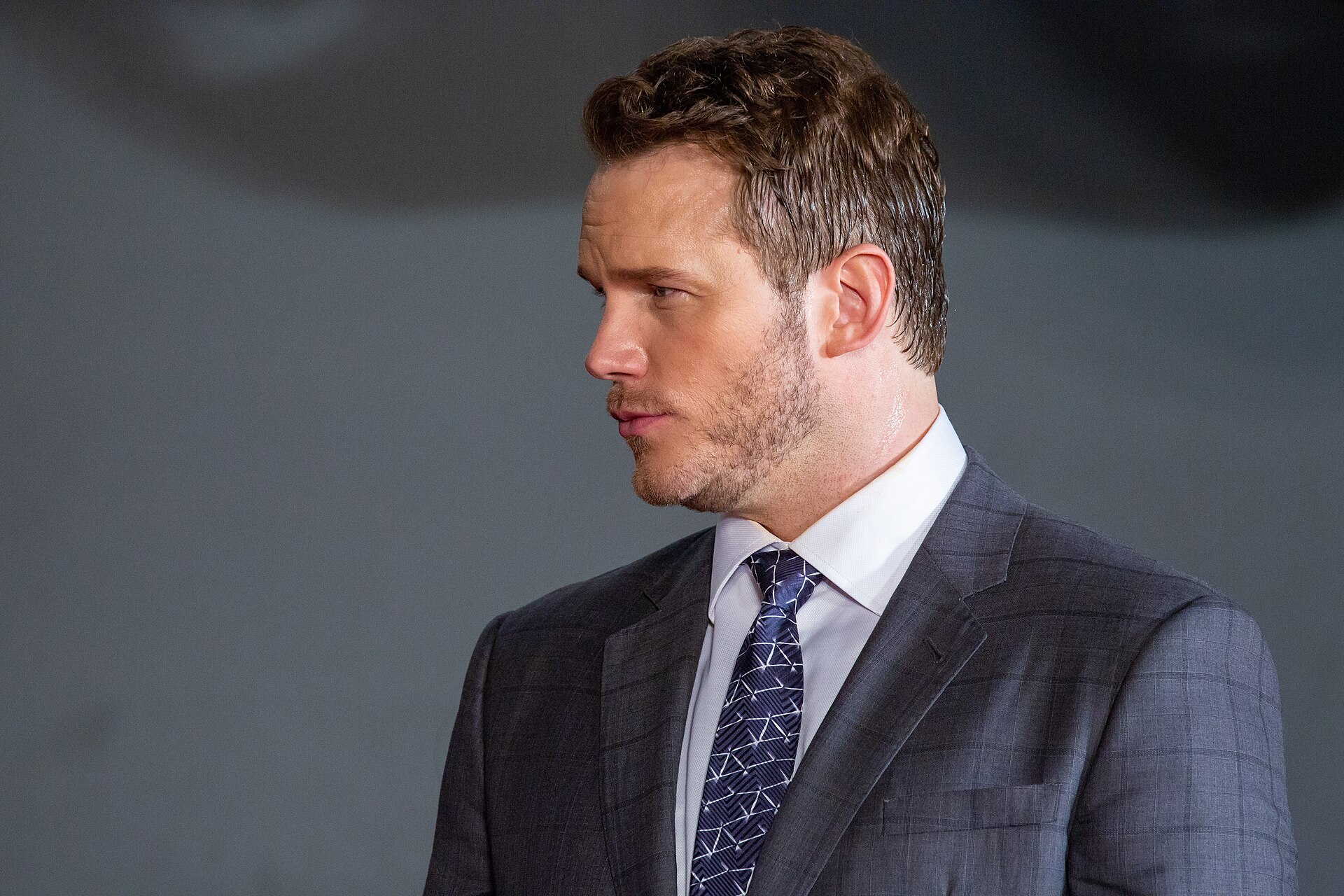
Chris Pratt at the Jurassic World: Fallen Kingdom Japan premiere on June 27, 2018. Archive portrait; not a scene from The Terminal List. Archive photo by Dick Thomas Johnson (CC BY 2.0).
The Terminal List is back in the entertainment conversation for reasons that extend beyond its latest season. Chris Pratt’s reported television salary has drawn fresh attention to the Prime Video thriller, while Amazon’s next adaptation of Jack Carr’s Savage Son points toward a continuing franchise. For viewers, the immediate attraction is already available: all eight episodes of the second season are streaming.
The timing deserves precision. Season two premiered on October 21, 2026, rather than arriving this weekend. Amazon’s current viewing guide confirms that the complete season is available and identifies Carr’s True Believer as its source novel. The November news is the renewed business attention and the franchise’s developing future, not an unannounced third season suddenly appearing in the library.
That combination makes this a useful moment to examine what the series is becoming. The original story built its momentum around James Reece’s personal revenge. The second season expands toward international espionage, while the announced Savage Son adaptation raises questions about how the streaming franchise will organize the next part of the character’s journey.
Chris Pratt’s reported pay puts the series in television’s top tier
TVLine’s November 12 report on streaming salaries, citing Variety’s survey, places Pratt among actors earning approximately $2 million per episode. The report associates that figure with his role as James Reece on The Terminal List. It is a reported industry estimate, rather than a contract disclosed by Pratt or independently examined by Taken Social.
The figure is significant because it places the series within the economics of star-led streaming television. A recognizable actor can help a project stand out, give a platform a familiar face to market and provide continuity across successive installments. In this case, Pratt is also an executive producer, which makes his relationship with the franchise broader than an on-screen performance alone.
Per-episode comparisons nevertheless have limits. A short streaming season and a long broadcast season involve different numbers of episodes, production schedules and possible contractual arrangements. A salary figure does not by itself reveal a program’s total budget, profitability or the complete compensation received by everyone involved. The useful conclusion is that Amazon has attached a major star to a continuing property, not that one reported number explains its entire business model.
For the audience, the financial story creates a separate test. A large salary may generate interest, but it cannot guarantee that the next episode sustains tension or that a character’s decisions remain convincing. The value of a star-driven series ultimately depends on whether the performer and the material continue to reward the attention the name attracts.
What season two changes for James Reece
The season-two announcement published by Carr describes a shift from a psychological revenge thriller to a wider espionage story. Reece’s journey reaches across the Indian Ocean, Africa, the Middle East and Europe, with a conspiracy extending from Moscow to Langley and connections to his family’s history. Those are the advertised boundaries of the new season, rather than a scene-by-scene account or a spoiler-filled summary of its ending.
The change addresses a central problem for any revenge story that becomes a franchise. A list of targets gives the first story a clear structure and a possible endpoint. Continuing afterward requires a new source of purpose. Repeating the original loss without meaningful change would reduce the character’s journey to a mechanism. A larger espionage setting offers another way to test what he chooses to do with his abilities.
That does not mean a broader map automatically creates a deeper story. International movement can increase scale while leaving the emotional question untouched. The more interesting dramatic issue is whether Reece is acting only in response to what happened to him or beginning to define a responsibility beyond it. The premise of True Believer makes that question central to the adaptation.
Carr’s official description of the second novel sets out a protagonist whose usefulness to the government sits uneasily beside his status as a wanted man. A bargain draws him into pursuing terrorist leaders and a geopolitical conspiracy. The book’s setup gives the television story a productive tension between personal autonomy and being used by institutions with their own objectives.
Viewers should keep the novel and the adaptation distinct. A source book establishes the material being adapted, but it does not guarantee that every character, sequence or revelation will arrive on screen in the same form. The confirmed connection is the second season’s basis in True Believer; judging the adaptation requires following the choices the television version actually makes.
The cast and production team behind the expansion
Alongside Pratt, the published season-two cast includes Constance Wu as Katie Buranek, Tom Hopper as Raife Hastings, Dar Salim as Mohammed Farooq and Luke Hemsworth as Jules Landry. Gabriel Luna plays Freddy Strain, with Costa Ronin, Olga Kurylenko, Yul Vazquez and Arnold Vosloo also among the expanded ensemble.
That range of performers reflects the move beyond a single tightly bounded revenge narrative. A larger espionage story needs people who can carry competing loyalties, provide information and challenge the central character’s interpretation of events. Casting alone does not establish how well those functions work, but it indicates that the franchise is building a wider dramatic environment around Reece.
The producing group includes Pratt, showrunner David DiGilio, Carr and Antoine Fuqua, with Jared Shaw and Max Adams among the executive producers involved in action and authenticity work. Their backgrounds are part of how the production presents its approach to military detail. Those contributions can shape movement, equipment and professional behavior without turning a fictional conspiracy thriller into a documentary account.
Carr’s published biography records twenty years in the Navy SEAL teams, including service as an enlisted sniper and later leadership roles. That experience helps explain the author’s interest in the world the series depicts. It is a source of perspective and detail, while the novels remain constructed stories with invented plots and characters.
The distinction matters for a genre that often promotes realism as part of its appeal. Convincing technical behavior can make a fictional situation more persuasive. It does not require viewers to accept the story’s institutions, political assumptions or moral decisions without question. The strongest action drama can sustain both physical credibility and scrutiny of the choices its characters make.
Where Dark Wolf fits in the viewing order
The Terminal List: Dark Wolf is a prequel centered on Taylor Kitsch’s Ben Edwards. Amazon’s official guide describes his movement from the Navy SEALs toward CIA special operations. The series began streaming in August 2025, between the original show’s first and second seasons.
That makes the franchise’s release order straightforward: the original first season, Dark Wolf, then the second season. Story chronology is different because the prequel explores an earlier period. Viewers deciding where to begin should distinguish those two questions rather than treating the word “prequel” as an automatic instruction to watch it first.
Release order preserves the way the audience originally encountered the characters and their revelations. Chronological viewing can emphasize how a person arrived at an earlier decision, but it can also change the suspense created by information withheld in the first series. For a new viewer, beginning with the original season remains the clearest introduction to the central premise and its consequences.
For returning viewers, Dark Wolf offers additional context rather than a replacement for the continuation. It follows a different central character and a different stage of the shared story. Season two then returns the primary attention to Reece, allowing the franchise to expand without requiring every installment to perform exactly the same narrative task.
Savage Son is the next adaptation, with its format still open
The most substantial recent franchise development is the planned adaptation of Savage Son, Carr’s third James Reece novel. Carr’s November announcement, linking Deadline’s reporting, says Pratt is returning as Reece while Amazon develops that next story. It also states that the format remains unclear: the project could be a separate installment or function as the main series’ third season.
That is a meaningful announcement with a defined limit. The next source material has been identified, but the public information cited here does not establish a premiere date or a final season-three designation. Those details affect how the project will be marketed and how viewers will find it, so they should not be supplied simply because the book comes third.
The development also shows why the franchise’s future cannot be measured only by a conventional renewal headline. Streaming properties can continue through a main series, a prequel or an adaptation presented under another title. The continuing presence of Reece connects the projects, while the eventual format will determine how directly the next installment follows the current season’s structure.
For Amazon, a recognizable fictional world can support repeated audience contact. For the creative team, the harder assignment is preserving dramatic consequence as that world grows. A character who survives one crisis must still have meaningful limits, relationships and decisions in the next. Expansion is commercially useful only if it remains narratively worth following.
Conclusion: a franchise moving beyond its original list
The immediate viewing situation is settled: The Terminal List season two is available in full on Prime Video, and it adapts True Believer. The latest business coverage highlights Pratt’s reported place among streaming television’s best-paid actors. The announced Savage Son project provides a concrete next direction, while leaving its precise format and release timing open.
The larger conclusion is that the series is testing whether James Reece can remain compelling after the original revenge structure has run its course. International espionage, a wider cast and a growing shared universe create possibilities. Their value will depend on the quality of the choices inside the story, where a major star’s presence can bring viewers through the door but cannot do the dramatic work alone.