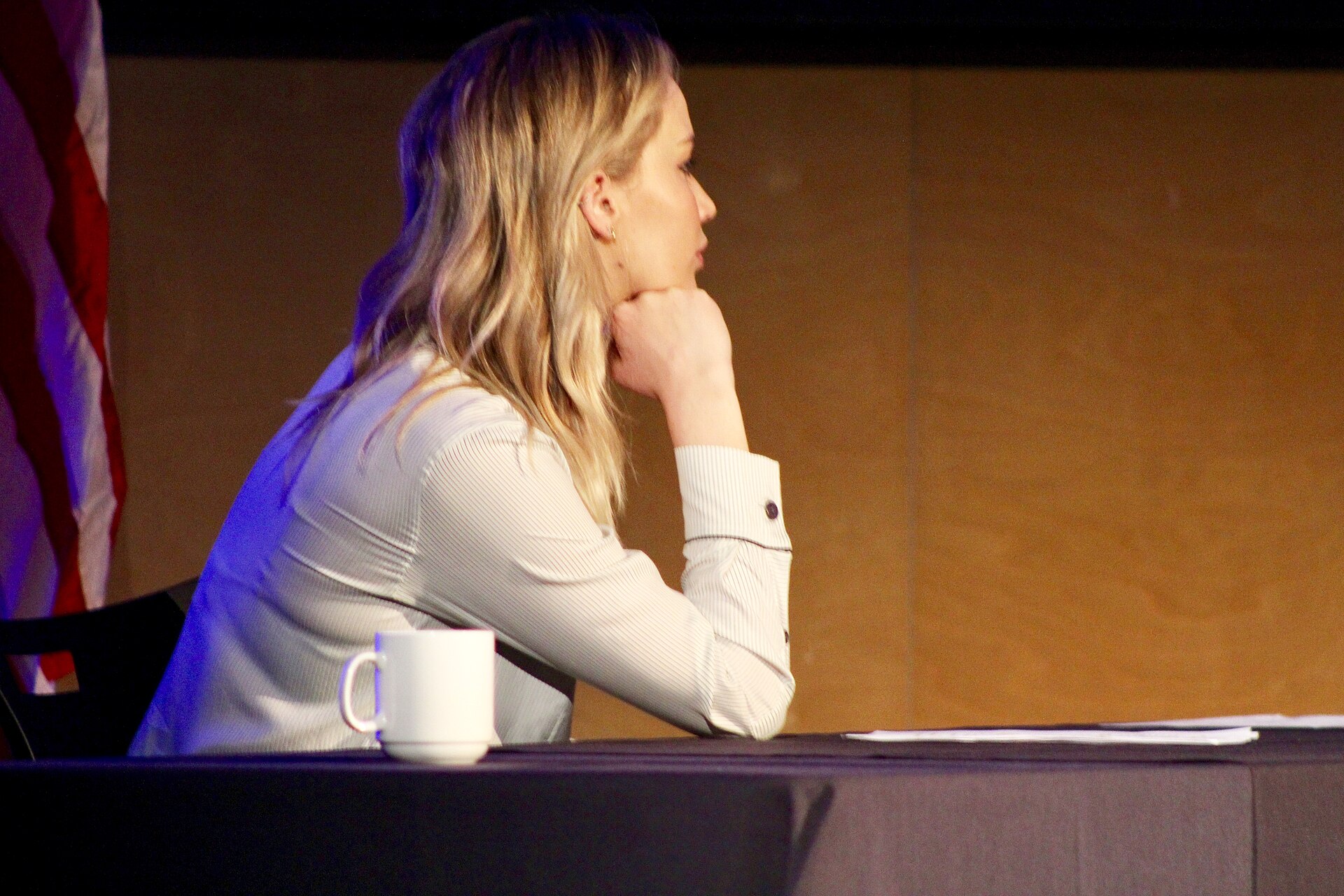
Hayden Panettiere at Fan Expo in Toronto in August 2011; the photograph shows Vogel’s daughter, not the November interview. Archive photo by Tabercil (CC BY-SA 2.0).
Lesley Vogel is speaking publicly again about the loss of her daughter, Hayden Panettiere, and the difficult family circumstances that preceded it. In an interview published by Inside Edition on November 16, Vogel discussed the distance between them in recent years and why she did not attend the actress’s memorial. The new appearance has brought renewed attention to a story in which grief, estrangement and a long public career are closely intertwined. Inside Edition’s interview with Eva Pilgrim.
According to People’s reporting, republished by AOL on November 17, Vogel had been invited to the September 19 celebration of Panettiere’s life but chose not to attend. She described concern about how her presence would be received. That explanation is Vogel’s account of her decision; it does not establish what every other person at the memorial thought or intended. People’s report on Vogel’s new comments.
Panettiere died August 16 at 36. People has reported that her death was ruled accidental and that Greenville police concluded their investigation in October. Those later findings are important context when reading interviews and reports from August, when the official cause was still pending. A new discussion of family conflict should not be mistaken for a new official finding about her death. The report on the completed investigation.
The interview is newsworthy because Vogel is explaining a conspicuous absence from a public remembrance. But it also raises a more lasting question about how an actress should be remembered when a family’s most painful disagreements become part of the coverage. Panettiere’s work, her own account of her life and her mother’s perspective all belong in the record. None is well served by reducing the others to a single dramatic headline.
The latest interview belongs to a longer chronology
The November appearance follows an earlier interview with ABC News in August. At that time, Vogel discussed receiving the news of her daughter’s death and described the difficulty of grieving someone whose life had been extensively covered. That conversation took place in the immediate aftermath of the loss. The new Inside Edition interview comes months later and addresses the memorial and their estrangement more directly. Vogel’s August interview with ABC News.
Keeping those dates visible helps readers understand what has actually changed. A quotation from an August interview is not a statement newly made in November. An early report that an investigation was continuing does not describe its status after later findings. The family story may remain emotionally unresolved while the official record has moved through a separate process.
The loss also followed the death of Panettiere’s younger brother, Jansen, in 2023. Vogel’s August interview discussed grieving both children. That history gives context to the weight of her latest comments without allowing an outsider to determine how she should have behaved at a memorial. Attendance at one event cannot capture the whole of a relationship, especially a relationship the participants had described as difficult.
At the same time, a family member’s grief does not make every statement an independently established fact. Public interviews contain memory, interpretation and emotion. The journalist’s task is to identify whose account is being presented and to distinguish it from a documentable event. That distinction allows a person’s experience to be heard without turning the experience into a verdict about somebody else.
Vogel’s decision not to attend is therefore best understood through what she has actually said. The new coverage reports her concern about the reaction of other attendees. It should not be expanded into a claim that she was barred from the event, because the reporting says she was invited. That small factual distinction materially changes the meaning of the story.
Panettiere had already put her own account into the record
Earlier in 2026, Panettiere published This Is Me: A Reckoning through Grand Central Publishing. The publisher’s description presents the memoir as her account of a life shaped by early fame, personal difficulty and the effort to tell her story in her own terms. The book’s May publication preceded the events now being discussed by her mother. The memoir’s publisher page.
That timing matters because Panettiere was not simply a subject being described by others. She had chosen a form in which to address her own experiences at length. A memoir remains an individual perspective, but it gives readers a fuller account than a brief extract circulating in a news clip. It is part of the source material against which later public descriptions of her life should be understood.
Her relationship with Vogel was among the issues discussed publicly before her death. ABC News reported in August on the different accounts mother and daughter had given about the transition away from Vogel’s role in managing her career. Those differences should remain attributed. A disagreement about a past conversation cannot be settled merely by choosing whichever version is newest.
The combination of parent and professional adviser can make an already important relationship unusually complicated. Decisions about auditions, work and independence may take place inside the same relationship that carries family expectations and affection. That is a general observation about the arrangement, not a diagnosis of this family. It helps explain why professional and personal histories can be difficult to separate when a child performer becomes an adult.
Panettiere’s own public account also deserves to be considered as more than a source of conflict. Writing about a life is an effort to give it shape and meaning. Readers can take that effort seriously without assuming a memoir answers every question or that a later interview cancels it. The existence of differing perspectives is a reason to read carefully, not a reason to strip the story of complexity.
The work that made her a familiar presence
For many viewers, Panettiere remains closely associated with Claire Bennet in Heroes and Juliette Barnes in Nashville. Those roles reached audiences through very different kinds of television: a story organized around extraordinary abilities and a drama centered on music, ambition and personal relationships. The range is part of why a large audience encountered her at different stages of her career, rather than through one isolated screen appearance.
The publisher’s biography also points to her appearances in Scream 4 and Scream VI, and to the two Golden Globe nominations she received for Nashville. Earlier work included Remember the Titans. Together, those credits describe a career spanning family films, genre storytelling and a sustained television presence. They are concrete reminders of how many different audiences had a reason to recognize her before the family’s loss became the dominant news story.
A long television role creates a particular relationship with viewers. People return to a character week after week, sometimes across years, and associate the performer with a period in their own lives. That familiarity can be sincere without being personal knowledge of the actor. It helps explain the scale of public grief while also showing the limits of what an audience can infer about events away from the screen.
The distinction is especially important when a performer became famous young. The public may retain an image from an earlier role while the person continues to grow and make choices outside that image. An adult’s life cannot be accurately measured against a character remembered from adolescence. The work and the person remain connected, but they are not interchangeable.
Remembering the career also means allowing more than its final chapter to remain visible. A family interview naturally focuses attention on loss and regret. A broader account can also discuss the professional work that gave the public a reason to care in the first place. That is not an attempt to avoid difficult facts; it restores proportion to a story that can otherwise be dominated by its most painful details.
There is a difference between honoring an actor and turning the actor into an uncomplicated symbol. Panettiere had spoken about difficult parts of her life, and those accounts are part of her public record. A professional remembrance need not erase them. It should avoid making suffering the only lens through which the person’s decisions, work and relationships are interpreted.
What the new comments change—and what they do not
Vogel’s new interview adds her explanation for missing the memorial and her perspective on the estrangement. It does not supply a new medical conclusion, overturn the reported outcome of the police investigation or authorize readers to assign blame for a death on the basis of family disagreement. Those are different questions requiring different evidence.
For readers, the most useful approach is to follow the chronology and the attribution. Distinguish the actress’s memoir from her mother’s recollection, the invitation to the memorial from the decision not to attend, and an interview’s emotional claims from official findings. That approach does not remove the human feeling from the story. It prevents feeling from being used to support conclusions the record does not establish.
The same care should extend to the people whose lives continue outside the article. Public interest in an actor does not make every private family detail necessary to understanding the news. This report focuses on the interview, the published accounts and the professional legacy rather than treating grief as an invitation to speculate about matters the available reporting cannot settle.
The conclusion is that Lesley Vogel’s appearance provides a new account of an absence that attracted attention, while revealing how difficult public mourning can become after estrangement. It belongs alongside Panettiere’s own words and the later official findings, not above them. The most complete remembrance gives space to the family’s pain while keeping the actress’s work and voice at the center of the life being remembered.