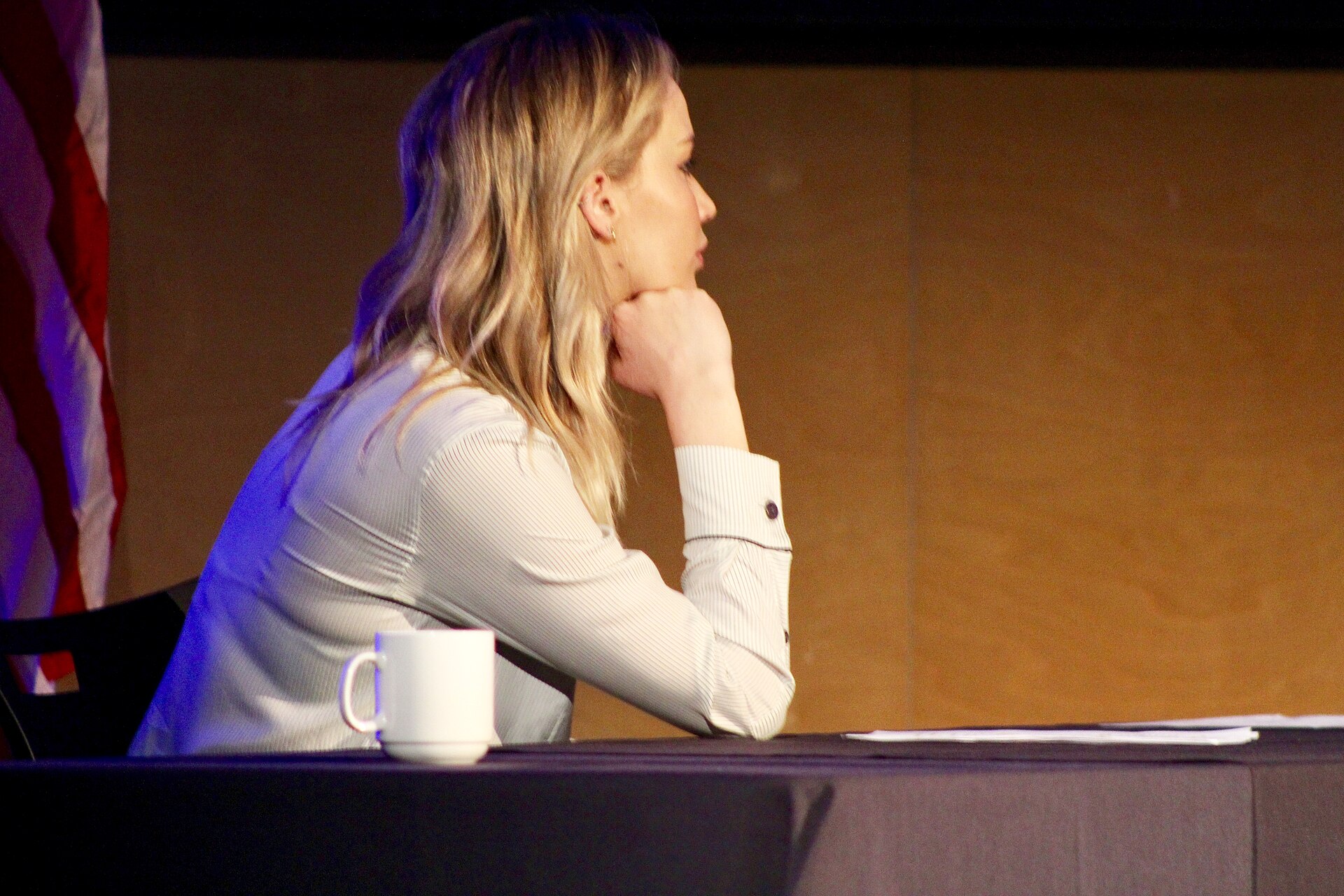
A bowling area at the University of Washington’s Husky Union Building in September 2012; bowling is one of the word’s literal contexts. Archive photo by Atomic Taco (CC BY-SA 2.0).
“Kingpin” can mean a powerful person, a bowling pin or a mechanical pivot. Capitalize it, and many readers will think of Marvel’s Wilson Fisk; others will remember the 1996 bowling comedy starring Woody Harrelson and Bill Murray. That unusually crowded set of meanings makes the word a natural source of confusion—and particularly useful material for a word puzzle.
There is a concrete November 17 connection to that interest: kingpin appears in published guides to today’s New York Times Connections puzzle, number 1255. That establishes a current puzzle context without proving that every search for the word has the same cause. This article explains the meanings and cultural references rather than reproducing the full puzzle solution. Parade’s dated puzzle guide.
The shortest useful definition is a person or thing on which a larger operation depends. Merriam-Webster lists bowling, leadership and mechanical meanings, while Cambridge’s dictionary includes the important-person and bowling senses. The surrounding sentence usually tells the reader which one is intended. A news report about an organization, a description of a steering assembly and a film listing are using the same word for very different subjects. Merriam-Webster’s entry; Cambridge’s entry.
That flexibility is the point. Kingpin is memorable because it turns the idea of a crucial component into an image of concentrated power. Understanding the word is less about memorizing one synonym than recognizing when it is being used literally, metaphorically or as a proper name.
From a crucial pin to a person with power
In its leadership sense, a kingpin is a central or dominant figure in a group or undertaking. The word often appears in crime coverage, but the criminal association is not required by every use. A writer can use it for an influential organizer or a person whose decisions shape a business. Whether that choice is neutral, admiring or critical depends on the context.
The distinction matters in news. Calling somebody a kingpin is stronger than saying that person participated in an organization. It implies importance and influence. When the context involves alleged criminal conduct, the underlying claim still needs attribution and evidence. A colorful noun does not establish that a person committed an offense or held the precise role an investigator alleges.
It also differs from several nearby words. A founder establishes an organization; a leader directs one; an organizer coordinates activity. A kingpin is defined more by centrality or power than by a formal job title. One person might fit all those descriptions, but the terms are not interchangeable. The word is often chosen because an official title does not fully explain the person’s influence.
The mechanical meaning helps make the metaphor intuitive. A pivot or connecting pin can be essential to how parts move together. Applied to people, the image suggests that a larger arrangement turns around one figure. That is a useful way to understand the metaphor, without claiming that every modern figurative use came through one neatly documented sequence.
Merriam-Webster records the word’s first known use in 1801. That history is older than the Marvel character and the film, so neither created the general noun. Popular culture has added recognizable associations to a word that already had a life in ordinary and technical English. Remembering that order prevents a modern reference from being mistaken for the original definition.
The bowling meaning—and why it works in wordplay
Bowling gives the word its most visible literal setting. Dictionaries recognize kingpin as a term for a significant pin, including the headpin or a central pin in an arrangement. In everyday tenpin instruction, “headpin” is a clearer term for the front pin, numbered one. A reader should therefore distinguish a dictionary’s range of historical or general meanings from the precise language used to explain a particular shot.
The United States Bowling Congress’s introductory material uses terms such as headpin and pocket to describe how a ball approaches the pins. That vocabulary shows why individual words carry more specific meanings inside a sport than they may in casual conversation. Knowing that kingpin has a bowling connection is helpful; learning how to bowl still requires understanding the layout and the terms used by instructors. USBC’s introduction to bowling language.
For wordplay, the interesting feature may be much smaller than the whole definition. Kingpin contains “pin” at its end. A puzzle can direct attention to a visible portion of a word even when the full word leads the solver toward another topic. Someone thinking about crime fiction or a film title may overlook the ordinary object sitting in the final three letters.
That is a common puzzle mechanism, but it does not mean every connection should be sought inside spelling. Sometimes words belong together through meaning, sound, a cultural reference or a shared expression. A useful solving habit is to test more than one kind of relationship before committing to the first convincing story. The apparent obviousness of one meaning can be exactly what makes another difficult to notice.
An original example unrelated to today’s solution is the relationship between “newspaper” and “notebook.” Their final components name things associated with writing, even though the complete words describe different objects. The exercise is to shift the level of attention from the whole term to a component. It demonstrates a method rather than revealing the remaining entries in the published puzzle.
That makes kingpin a good reminder to read a word twice: once for what it names, and once for how it is built. The first reading supplies ordinary comprehension. The second can reveal the mechanism a puzzle is using. Neither is inherently more sophisticated; a successful solver needs to move between them.
Marvel’s Kingpin is Wilson Fisk
In Marvel stories, Kingpin is the name associated with Wilson Fisk, a formidable figure in New York’s criminal world. Marvel’s own character material and reading guide connect him to Spider-Man and Daredevil, among other characters. His first appearance was in The Amazing Spider-Man number 50 in 1967. The proper name draws directly on the general word’s association with concentrated influence. Marvel’s Kingpin character page; Marvel’s character reading guide.
What distinguishes the fictional reference from the dictionary definition is the accumulation of a specific identity. Wilson Fisk has a name, relationships and a history across stories. A headline about Kingpin in a Marvel context normally refers to that character, rather than to any influential criminal figure. The capital letter is a clue, though headlines often capitalize ordinary nouns too, so context still matters.
The character also illustrates why the metaphor is effective. Power in a crime story is not necessarily exercised only through direct physical confrontation. It can involve money, alliances, institutional influence and control over people who do the visible work. A name suggesting a central component communicates that role efficiently before a story explains its details.
Different adaptations can emphasize different aspects of the same character. A comic, an animated production and a live-action drama do not have to use identical storylines to be recognizable interpretations. That is a reason to check the production being discussed before assuming that an event in one version applies to another. A familiar character name is not a universal continuity guide.
Today’s puzzle appearance does not itself announce a new Marvel project, casting change or plot development. Those would require their own reporting. The useful distinction for a person arriving from a broad search is simple: Marvel’s Kingpin is one prominent meaning of the capitalized name, but it does not explain every current use of the word.
The 1996 film is a separate cultural reference
Kingpin is also the title of Peter and Bobby Farrelly’s 1996 comedy. The American Film Institute’s catalog identifies Woody Harrelson as Roy Munson, Randy Quaid as Ishmael, Vanessa Angel as Claudia and Bill Murray as Ernie McCracken. The film’s bowling setting makes the title a literal sporting reference as well as a suggestion of status and ambition. AFI’s film catalog entry.
The premise follows a damaged former bowling talent and a gifted younger bowler on a pursuit of success. That is a completely different fictional world from Wilson Fisk’s. Shared wording can make search results look connected even when the works have no narrative relationship. Adding the year or an actor’s name is often enough to separate the film from the comic-book character.
The title also shows how a familiar word can work on more than one level. A bowling term supplies the setting, while the figurative meaning gestures toward the desire to become important. A reader does not need to know every detail of the sport to understand that second implication. That is one reason compact, layered titles remain recognizable long after their original release.
A search for where to watch the film needs a further check: streaming catalogs vary by country and change over time. A page explaining the word or listing the movie’s cast does not establish current subscription availability. Readers looking for the comedy should confirm both the 1996 title and the service’s current listing, rather than assume the first result for Kingpin identifies the same production.
For anyone searching the word now, the conclusion is that there is no single reference to decode. The November 17 puzzle gives it a current word-game context; dictionaries explain its broader meanings; Marvel supplies Wilson Fisk; and the 1996 film supplies a separate bowling comedy. The fastest way to understand a particular use is to identify its context first—and then notice whether the full word, the proper name or just its final letters are doing the work.