Election-night projection based on partial returns. Taken Social projects Democrat Adam Hamilton will win the 2026 Kansas U.S. Senate race over Republican Sen. Roger Marshall. Hamilton held a six-figure lead in the partial count, and both Taken Social’s pre-election model and Decision Desk HQ’s election-night model favored him. The remaining vote could still change the outcome. Decision Desk HQ’s live count and model · Taken Social’s pre-election forecast
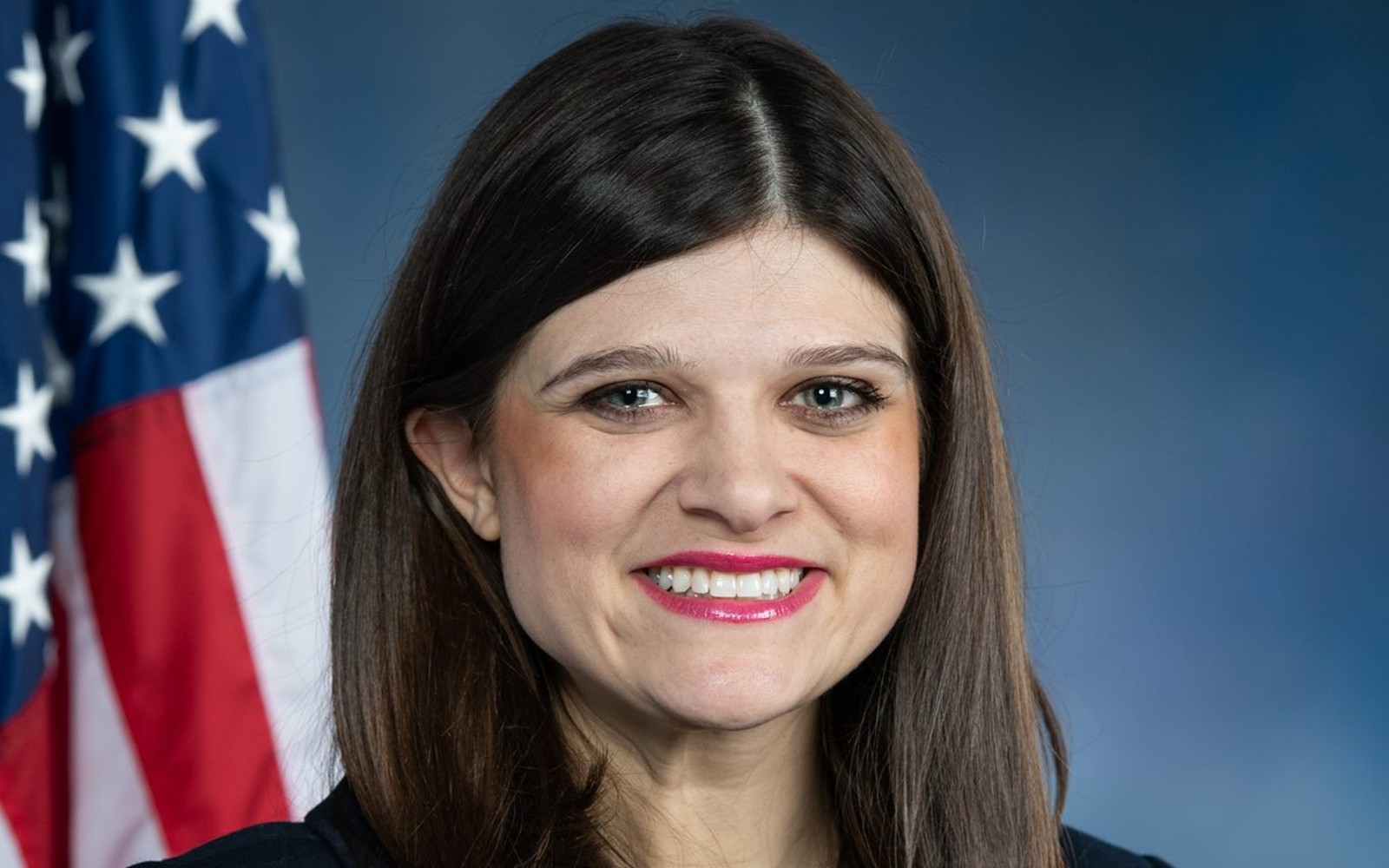
Adam Hamilton speaks at the Church of the Resurrection Leadership Institute in 2011. Archive photo by Wikigear via Wikimedia Commons, CC BY-SA 3.0, cropped.
What the Kansas returns showed
At 9:21 p.m. Eastern on November 3, Decision Desk HQ reported 291,291 votes for Hamilton (62.57%), 165,229 for Marshall (35.49%) and 8,992 for Libertarian David Graham (1.93%). Hamilton led by 126,062 votes. Decision Desk HQ put the count at about 41% of the expected vote and its Pulse model gave Hamilton a 61% chance of winning in the snapshot reviewed. The vote share and the win probability measure different things. Decision Desk HQ’s Kansas results
Why the forecast favors Hamilton
Hamilton has room to lose the rest of the vote and still win the race. If the 465,512 votes reported were about 41% of the eventual total, roughly 670,000 votes would remain. If those votes split 57% for Marshall, 41% for Hamilton and 2% for Graham, Marshall would gain about 107,200 votes on Hamilton. That would leave Hamilton ahead by roughly 18,900. If Marshall instead took 60%, Hamilton 38% and Graham 2%, Marshall would gain about 147,400 votes and move ahead by roughly 21,300. These are illustrations based on a rounded estimate of remaining votes. They show why Hamilton has the edge and why a large Republican margin in later batches could still reverse it. Source for the vote-count inputs
The polling gives us a reason to take Hamilton’s lead seriously even if it shrinks. Taken Social’s pre-election model gave him a 77% chance of winning. The RealClearPolling average used in that model was 49.8% for Hamilton to 46.2% for Marshall. CNN and SSRS separately found Hamilton ahead 49% to 45% among likely voters, within the poll’s margin of error. CNN political director David Chalian pointed to Hamilton’s 60% support among independents in that survey and said, “he’s winning 12 percent of Republicans.” The polls share some underlying information, so we treat them as corroboration of a competitive race and do not combine their probabilities. Taken Social’s model · CNN’s October 29 transcript
Where Marshall can make up ground
The Associated Press expected most Kansas counties to publish much of their advance vote in their first updates. Later batches can have a different political mix. Donald Trump carried Kansas by about 16 points in 2024, when Kamala Harris won only five counties. Democratic Gov. Laura Kelly’s wins in 2018 and 2022 show how a statewide Democrat can assemble a broader coalition, including in Sedgwick County around Wichita. Watch how the margins change as counties add Election Day votes. The key question is whether Marshall’s gains outside Democratic strongholds are big enough in raw votes to erase the lead. AP’s Kansas Decision Notes
What a Kansas flip would mean
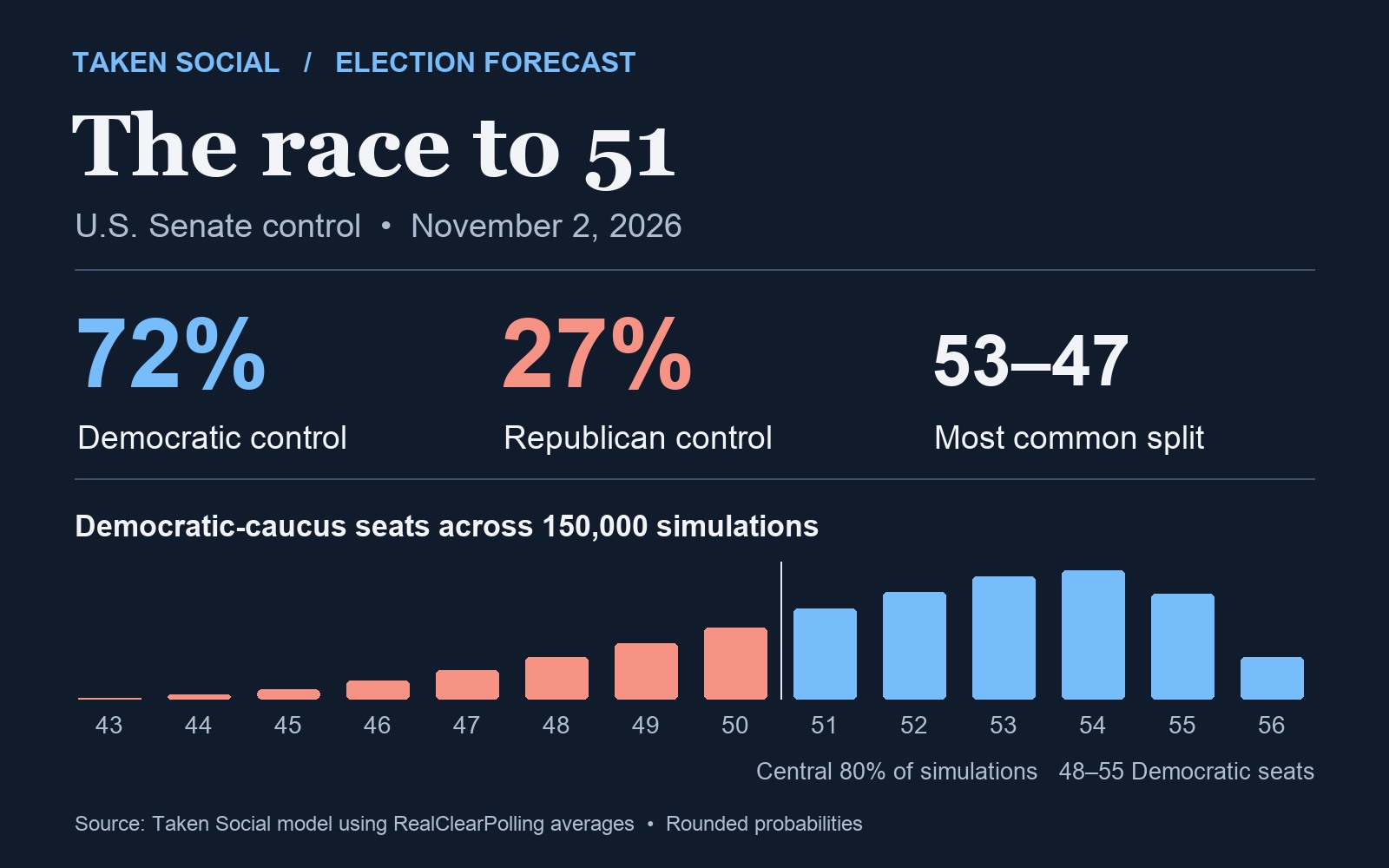
A Hamilton win would give Kansas Democrats their first U.S. Senate election victory since 1932 and add a Republican-held seat to the Democratic column. The Associated Press called North Carolina for Roy Cooper earlier in the evening, giving Democrats one confirmed pickup. Kansas would provide another if Hamilton holds his lead. Senate control still depends on the rest of the map. AP’s Senate coverage
Taken Social’s projection favors Hamilton based on the published returns and forecasts at this point in the count. Follow the official reporting and decision desks for a winner declaration as more ballots are counted. Kansas Secretary of State · AP’s Kansas results