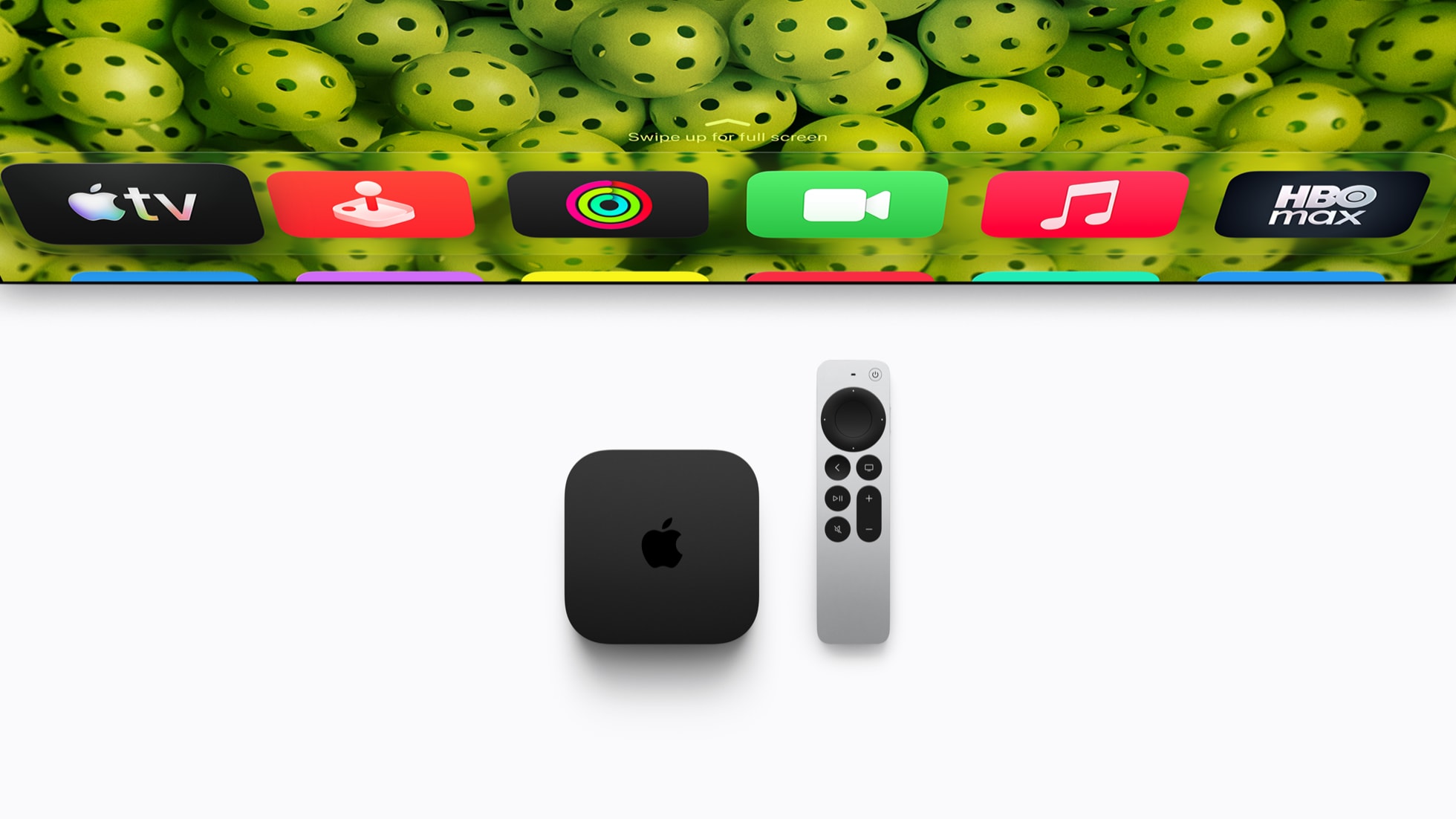
Apple TV 4K (4th generation) and the new Siri Remote in an official October 13, 2026 product image. Press image courtesy of Apple Newsroom (© Apple).
Apple TV 4K has entered a new phase. The fourth-generation streaming box, available in stores since November 13, costs $299 in the United States and makes a larger claim on the living room: it is designed to find entertainment through conversation, listen without a button press and coordinate a more ambitious home audio system.
The launch matters because the decision is no longer simply whether a television needs another streaming app. Many households already have those. Apple is asking buyers to value a separate piece of hardware as a controller for entertainment and connected devices, while giving some of its new software capabilities to owners of earlier boxes.
That last distinction deserves attention before anyone upgrades. New hardware, a new remote and the latest tvOS software bring overlapping improvements, but they do not have identical compatibility rules. The strongest case for the 2026 Apple TV 4K starts with the features a household will actually use, the equipment it already owns and the complete cost of the setup.
What the fourth-generation Apple TV 4K changes
In its official announcement, Apple identifies an A19 processor, a dedicated AV1 video decoder and support for a four-speaker HomePod arrangement among the hardware advances. The company claims CPU performance up to 50 percent faster and graphics performance up to twice as fast as the preceding generation. Those are manufacturer comparisons, rather than independent measurements by Taken Social.
The practical question is where additional computing power becomes visible. A responsive menu, a quick transition between applications and a demanding game place different loads on a streaming box. A processor specification can explain the capacity available to software without proving that every program will feel twice as fast.
AV1 support similarly belongs in a broader delivery system. An efficient decoder can help a service deliver video, but the final experience still depends on what that service sends, the connection and the display. Buying a newer box does not by itself change the resolution or quality of every item in a streaming catalog.
Apple continues to list Dolby Vision, HDR10+ and Dolby Atmos in its current store description. Those capabilities should be matched to the television and sound equipment rather than read in isolation. A format supported by the player needs a compatible path to the screen or speakers to deliver its intended benefit.
Siri AI reaches beyond the newest box
The Apple TV 4K product page places conversation at the center of the experience. Siri AI can help find a film, answer questions about what is on screen and handle follow-up requests. Apple describes personal context as another way to find something that a person has recommended, with setup involving an iPhone or iPad.
This is an attempt to solve a recognizable streaming problem. Viewers may remember an actor, a conversation or the mood of a show more readily than its exact title. A useful assistant can shorten the journey from an imprecise idea to a program that is actually available. Its value depends on the quality of that journey during normal use, not simply on how fluent an answer sounds.
Siri AI is offered in beta on Apple TV 4K models from the second generation onward. Apple's launch requirements include tvOS 27.2 and an Apple Intelligence-enabled iPhone or iPad with the feature enabled for the home's owner. The initial rollout is in English in eight markets, including the United States. Personal-context requests require a compatible paired device.
Owners of a recent Apple TV should check that eligibility before treating Siri AI as a reason to replace their hardware. The fourth-generation box adds physical capabilities, while access to the conversational assistant is a broader software offering. That difference can substantially change the upgrade calculation.
Hands-free control changes the room's interface
The new box has three far-field microphones. Apple says they make voice control possible across the room without reaching for the remote. That is a different interaction from pressing a microphone button and speaking into a handheld controller: the room itself becomes the place where a command begins.
There are straightforward situations in which that could be helpful. Someone carrying food, exercising or settling a child may want to pause a program without searching the sofa. The benefit is convenience in an ordinary moment, rather than a need to use voice for everything. Physical controls and the interface on the television remain important alternatives.
A shared room also raises practical questions about who is speaking and which profile is active. Apple's voice-recognition guide allows recognition for as many as six profiles and explains the settings on both the television and the associated iPhone or iPad. Households should work through those settings together so that individual preferences are understood.
The important test is whether the system is dependable amid the sounds of an actual home. A demonstration in a quiet setting cannot establish how a product will behave in every household. This report describes announced capabilities and documented requirements; it is not a claim of hands-on acoustic testing.
The new Siri Remote offers a smaller upgrade path
The fourth-generation Siri Remote is also sold separately for $59 in the United States. Its familiar clickpad and voice controls are joined by the ability to play a locating sound and support for Precision Finding on a compatible iPhone. The remote charges through USB-C, with the charging cable or power adapter sold separately.
Apple lists compatibility with Apple TV HD and all four generations of Apple TV 4K. That makes the remote relevant to people who are content with their existing streaming box. Replacing a frequently misplaced controller can be a more focused response to a problem than replacing an otherwise satisfactory entertainment system.
Compatibility with the box and eligibility for every locating feature are separate matters. Apple's announcement specifies additional iPhone requirements for Precision Finding, while playing a sound is exclusive to the newest remote. Buyers should check their phone against those requirements before assuming that all Find My functions will work identically.
The distinction is especially useful in households with a mixture of old and new Apple devices. A new accessory may perform its basic job with older equipment while reserving a particular convenience for newer hardware. Clear expectations at purchase are more valuable than discovering that limitation after installation.
Four HomePods make this a more substantial purchase
The expanded surround setup requires the fourth-generation Apple TV 4K and four supported HomePod speakers. Apple specifies HomePod mini 2 or second-generation HomePod, with matching front and rear pairs and current software. That requirement should not be generalized to every HomePod ever sold.
The cost of the streaming box is therefore only the beginning for anyone building the full arrangement. Speakers, their placement and the way the household uses the room all become part of the decision. Someone who primarily watches quietly through television speakers is evaluating a very different upgrade from a household assembling a dedicated movie setup.
Existing audio options remain relevant. Apple's home theater guide explains default audio output, stereo pairs and eARC, which can route audio from a compatible television or a connected HDMI device through Apple TV to HomePod. It also explains why speakers and the box need appropriate network and room assignments.
That documentation is useful for separating a new four-speaker feature from the established ability to use a smaller speaker arrangement. Owners should identify the exact generations they have before buying additional units. Similar names across multiple product generations can conceal a consequential difference in what a system supports.
Software improvements can also extend the life of an older device
Apple's tvOS release history shows that the current software update includes more than a new assistant. tvOS 27.2 adds FaceTime links, support for third-party interpretation and captioning services in calls, more selective photo screen savers and a shuffle option. It also extends Find My support to second-generation and later Siri Remotes.
The earlier tvOS 27 release added features including larger-text preferences in supported apps and controls over launching individual applications. Those changes illustrate why software support matters over the life of a television accessory. A household may get a useful accessibility or privacy improvement without buying the latest processor.
Photo selection is a particularly practical consideration for a screen shared with guests. Choosing specific pictures for the television is different from making a whole personal library part of the living room experience. Reviewing those choices during setup can prevent an entertainment device from revealing more than its owners intended.
The buyer's comparison should therefore include three possibilities: keep the current box and update it, replace an accessory, or buy the new model for a specific hardware function. Those options address different needs. A launch is a good time to review an existing setup, even when the eventual decision is to continue using it.
What to check before spending $299
The store lists the box, fourth-generation remote and power cord in the package; HDMI and USB-C cables are separate. A suitable television, a network connection and broadband service are also required. Paid streaming subscriptions remain separate from ownership of the hardware, and a service's presence in the interface does not make its entire catalog free.
Apple's Apple Intelligence usage terms also deserve a place in the decision. They allow feature-specific usage limits and warn that availability can vary with language, region, device and software. A buyer considering the assistant should assess the service as it is available now, rather than base a purchase on an assumption of unlimited future access.
For an existing owner, the most useful question is specific: which current frustration would the new box resolve? Hands-free operation and a supported four-speaker arrangement are concrete answers. An expectation that every show will automatically look better is harder to justify without considering the display, content and connection.
Conclusion: the best reason to upgrade is a feature you will use
The 2026 Apple TV 4K broadens the product's role through new hardware, voice interaction and audio options. It also arrives alongside software and accessory improvements that reach older models. Understanding those different paths gives buyers a clearer view of what the $299 purchase actually adds.
For households ready to use its microphones or build the supported HomePod system, the fourth generation offers a defined set of new capabilities. For others, an update or a new remote may be enough. A good upgrade earns its place through everyday usefulness, and that is the standard by which this living room launch should be judged.