Published November 5, 2026 · Taken Social Editorial
LONDON — Russell Brand was convicted Thursday of raping a woman and sexually assaulting three others, a criminal verdict that brings one stage of the case against the British comedian and actor to a close while leaving his punishment to a separate sentencing hearing on November 9.
The jury at Southwark Crown Court delivered a mixed set of verdicts. Brand, 51, was found guilty of one rape count and three counts of sexual assault. Jurors acquitted him of two other rape charges and one count of attempted indecent assault, according to CNN’s courtroom reporting. He was remanded in custody after the verdicts.
The distinction between the convictions and acquittals is fundamental. Thursday’s result does not mean the jury accepted every allegation presented at trial. It means prosecutors proved the four offenses resulting in convictions to the criminal standard, while the other charged counts did not result in guilty verdicts.
The Crown Prosecution Service’s announcement confirmed the four convictions and the November 9 sentencing date. It described the case as involving non-recent offenses and emphasized that the women involved are entitled to lifelong anonymity. Their identities are not being published here.
What the verdict establishes
A criminal verdict resolves the charges before the jury; it does not itself determine the length of a prison sentence. The judge must address punishment at the next hearing under the applicable sentencing framework. A specific prison term should therefore not be reported as settled before it has been imposed.
Judge Joel Bennathan told the court that a significant custodial term would follow the convictions, according to CNN. That is an indication of the seriousness with which the court regards the outcome, rather than an announcement of a numerical sentence. The length of imprisonment and any additional orders will be matters for the sentencing hearing.
Brand denied criminal wrongdoing during the proceedings. His position before the verdict belongs in the record, alongside the fact that the jury has now convicted him on four counts. Any future appeal would be a separate legal development. The existence of an appeal process does not erase a conviction, and no appeal result should be presumed.
The Reuters account of the verdict also reported that Brand faces a lengthy prison term following the London convictions. Independent agreement on the central outcome matters in a case that has generated years of public commentary, speculation and sharply divided reactions.
From public allegations to a criminal trial
The case developed after allegations about Brand became public in 2023 through reporting by the Times, Sunday Times and Channel 4’s Dispatches. Police subsequently investigated reports from women. A media investigation and a criminal prosecution serve different functions: publication can bring allegations to public attention, while a criminal court applies evidence rules, hears the defense and determines individual charges.
The police investigation was publicly reported at the time by the Associated Press. Brand disputed the accusations then. That history is relevant because Thursday’s verdict was not a judgment rendered by social media or a broadcaster. It followed a trial in which the prosecution’s case was subject to challenge.
Reporting by Australia’s ABC and other outlets documented the court’s conclusion. The international attention reflects Brand’s profile, but the legal importance rests on the conduct proved in court and the protection owed to the women involved, rather than the volume of attention the defendant attracts.
The Crown Prosecution Service thanked the women for coming forward and stressed that there is no single expected timetable for reporting sexual violence. That is a useful distinction in cases involving events from years earlier. The passage of time can complicate an investigation, but it is not by itself a determination that a report is true or false; the evidence in each case must be examined.
A celebrity career now defined by a court judgment
Brand became widely known through British television and radio before reaching Hollywood audiences through films including Forgetting Sarah Marshall and Get Him to the Greek. His public persona frequently relied on provocation. Over time, his work expanded into books, podcasts and online commentary, giving the case an audience well beyond conventional entertainment news.
That visibility should not distort the language used to describe the result. Fame does not strengthen or weaken the criminal standard of proof. A celebrity’s political views, religious identity or public image do not substitute for the evidence a jury considers. The court’s mixed verdicts are more precise than a broad narrative about whether an audience supported or rejected Brand.
The proceedings also return attention to the responsibilities of institutions around prominent performers. The AP previously reported on the BBC’s apology to staff who felt unable to raise concerns about Brand. Such institutional questions are distinct from the specific offenses decided at trial. They concern reporting channels, workplace culture and how organizations respond when complaints involve a commercially valuable figure.
It would be premature to claim Thursday’s verdict answers all those broader questions. It does, however, provide an established criminal outcome against which future statements and institutional responses can be measured. News coverage should identify who is making a claim, distinguish allegations from findings and avoid treating unrelated investigations as already adjudicated.
The next scheduled step is sentencing on Monday, November 9. Until the judge imposes punishment, the accurate account is that Brand has been convicted of one rape and three sexual assaults, acquitted on three other counts and placed in custody. The seriousness of that outcome needs no embellishment, invented sentence or unnecessary description of the victims’ experiences.
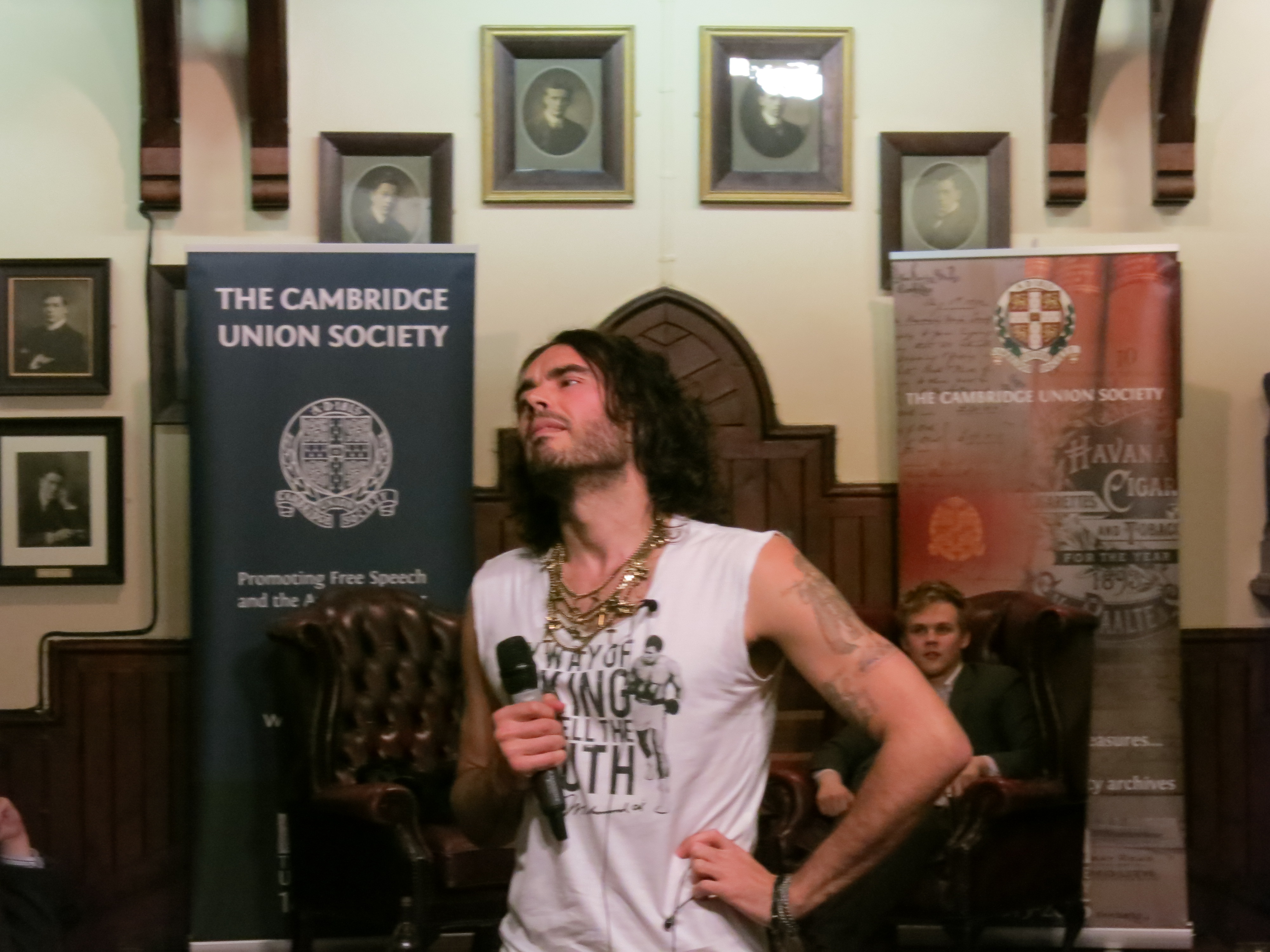
Header photograph: Russell Brand at the Cambridge Union Society on January 13, 2014. Archival photograph by Cantab12, via Wikimedia Commons, CC BY-SA 4.0. It does not depict the trial or verdict.