The aircraft was traveling from Austin toward the Bahamas. Investigators must now establish the sequence that led to the crash.
A Learjet 60 crashed in Palm Beach County, Florida, on Sunday, November 1, killing all nine people aboard, according to Transportation Secretary Sean Duffy as reported by the Associated Press.
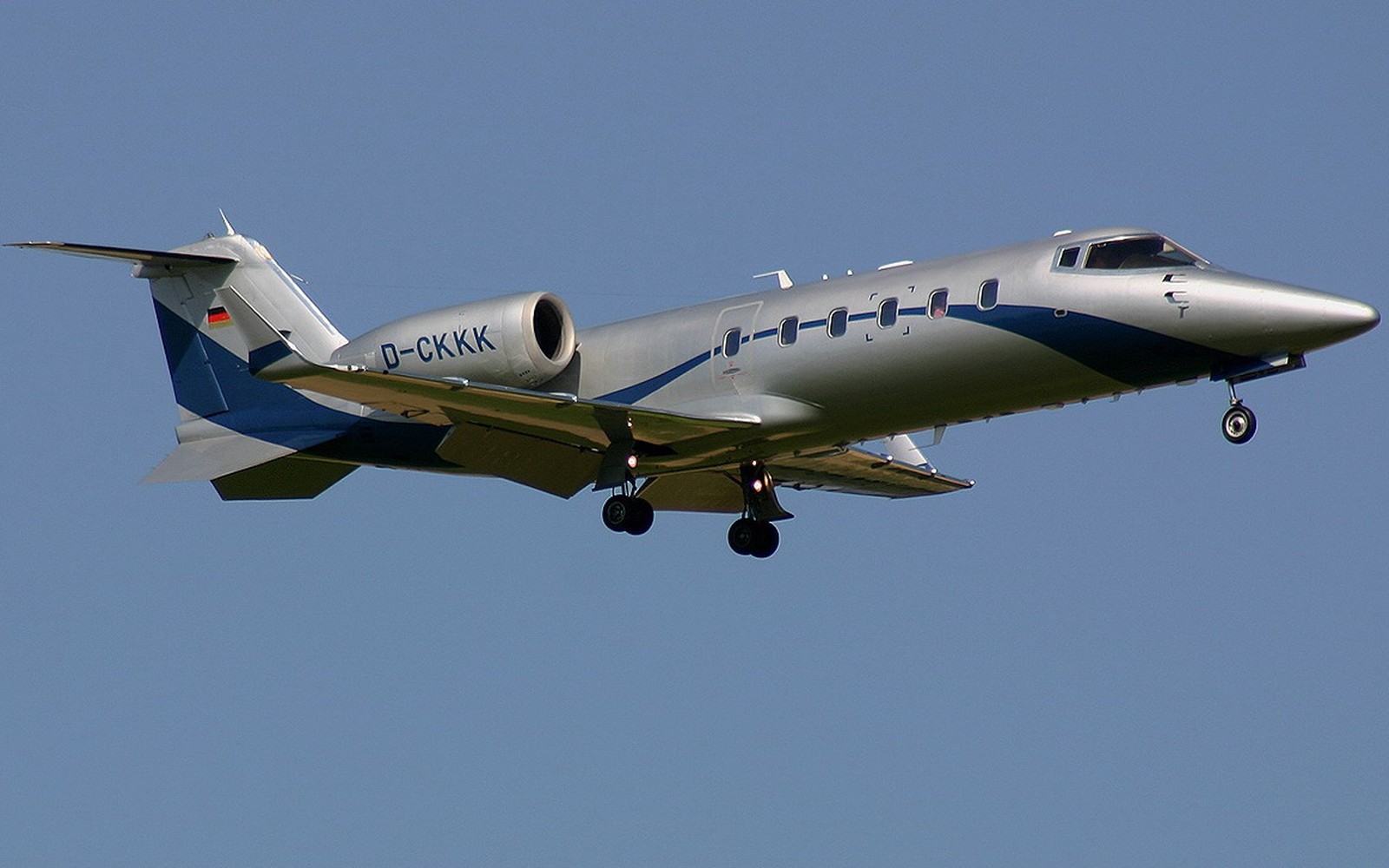
File photo: A Learjet 60 registered D-CKKK, photographed November 1, 2006. The photograph predates the Florida crash and does not identify the aircraft involved. Photo: Lars Henseleit (Lhensele at de.wikipedia). Source photograph · Public domain.
The aircraft came down near a busy roadway and caught fire. Duffy said the crash occurred at about 12:50 p.m. The loss of life was confirmed as the emergency response developed; a cause had not been established in the information reviewed for this report.
The flight and the location
CNN's reporting, carried by KVIA, cited the Federal Aviation Administration in identifying the aircraft as a Learjet 60 traveling to the Bahamas from Austin-Bergstrom International Airport.
The Palm Beach County Sheriff's Office placed the crash near Military Trail between Cresthaven Boulevard and 10th Avenue North. Officials closed traffic lanes and advised motorists to avoid the area while responders worked. Anyone traveling nearby should use current local notices for the status of road access; an early closure report is not a reliable prediction of when a route will reopen.
CNN reported storms in the area and a rapid descent in flight-tracking data. Neither observation establishes why the aircraft went down. Weather, a track display and a video of the final moments each capture only part of a flight's circumstances.
What an investigation can establish
The FAA and National Transportation Safety Board will investigate, according to the FAA statement cited by CNN. The NTSB's explanation of its investigative process describes a sequence of evidence gathering, analysis and determination of probable cause, followed by a public report.
The distinction between those stages matters. A preliminary account records facts gathered early in the investigation. A finding about cause requires analysis of the evidence. An aircraft model's name, an apparent maneuver or an unverified social-media explanation cannot substitute for that work.
The limits of the early account
This report does not identify victims whose names have not been confirmed through the sources reviewed. It also does not connect the crash to a particular mechanical problem or claim that a historical photograph shows the aircraft involved.
The immediate public facts are the loss of nine lives, the reported route and location, and the investigation ahead. More complete answers should come through officials' documented findings rather than speculation built around a short clip. Read more in Taken Social's News section.