Published November 5, 2026 · Taken Social Editorial
The best place to live in the Dominican Republic is the place that makes an ordinary Tuesday feel right. A beautiful weekend matters, but so do the school run, the neighborhood café, a reliable home office and the people you begin to recognize on your way to buy groceries. For Americans considering a move, returning Dominicans building a new chapter, and families searching for a second home, the country offers several very different versions of a good life.
For this guide, Jarabacoa takes first place, Cabarete second and Santiago de los Caballeros third. Jarabacoa offers the most compelling balance for readers who put nature, a gentler pace and family life first. Cabarete stands out for an international coastal community built around the ocean. Santiago offers the strongest urban alternative, with established schools, hospitals, culture and a broad choice of residential neighborhoods.
This is an editorial lifestyle ranking, based on landscape, education, community, housing choices and everyday convenience. It is intended to help readers choose where to explore, rather than predict property returns. The developments below are examples to compare, and their specifications come from their published materials; availability, prices and planned facilities can change.
| Rank and destination | Strongest lifestyle fit | Places to explore |
|---|---|---|
| 1. Jarabacoa | Mountain scenery, outdoor routines and families seeking bilingual education | Alterra Village; Seasons of Jarabacoa; Quintas del Bosque; Jamaca de Dios |
| 2. Cabarete | Beach living, water sports and an international social circle | Sea Horse Ranch; Ocean Dream and Harmony; Encuentro |
| 3. Santiago de los Caballeros | City services, education, business and Cibao culture | Cerros de Gurabo; La Trinitaria; Jardines Metropolitanos |
1. Jarabacoa: the Dominican Republic’s most persuasive mountain address
Jarabacoa changes the familiar picture of Caribbean living. Here, the appeal is a green valley framed by the Cordillera Central, rivers running through the landscape and evenings that can invite a light layer rather than another hour of air conditioning. The Dominican tourism ministry calls it the City of Eternal Spring. The nickname captures its mountain identity, although weather still varies with season, elevation and the location of a particular home.
What puts Jarabacoa first is the possibility of making that landscape part of a normal routine. Living here can mean choosing a walk before work, setting aside a morning for the river, or having enough outdoor space to let a family gathering continue long after lunch. A relocation that changes the way time is spent can be more valuable than one that simply changes the view from a window.
Nature is the town’s great advantage. The Jimenoa and Baiguate waterfalls, the Yaque del Norte river and La Confluencia give the surrounding area a distinctive outdoor character. The tourism ministry’s Baiguate guide describes a waterfall reached by a short approach through a green setting. Rafting, hiking and guided excursions offer more ambitious ways to explore. Conditions matter, so river outings and mountain trips deserve appropriate local guidance rather than an assumption that every route is suitable every day.
The town also makes a useful distinction between being away from a city and being disconnected from the country. Santiago and Cibao International Airport provide a regional gateway, while Jarabacoa retains a recognizable town center, restaurants and schools. Anyone planning frequent airport journeys should drive the actual route at the hours they expect to travel. The lifestyle case is strongest when a home’s access works as well as its scenery.
A community where American families can find a foothold
For a household moving from the United States, belonging often begins with school, work, faith or an outdoor activity. Jarabacoa has institutions that can make those introductions easier. Its appeal is an opportunity to join a Dominican community while keeping meaningful English-language connections. Learning Spanish adds considerably to that experience, from friendships with neighbors to understanding the small details of daily life.
Doulos Discovery School describes a Christian bilingual education built around expeditionary learning. Its study-abroad program for U.S. students, including stays with local families, offers a concrete example of the town’s American connections. For newcomers, these educational relationships provide a starting point for understanding a community where Dominican and American lives already intersect.
Jarabacoa Christian School provides another option for families researching bilingual education, with programs running from early childhood through secondary school. Both schools have a Christian identity, which parents should consider alongside language, teaching approach and academic pathways. A campus visit, a discussion about grade placement and a trial school commute will tell a family much more than a general claim that a destination is family friendly.
The happiness people seek in a move is often found in these modest forms of connection: children making friends, a familiar welcome at a restaurant, a weekend invitation, a place to volunteer. Jarabacoa’s appeal lies in the room it offers for a more sociable, outdoor life. Newcomers contribute to that atmosphere by approaching the town as a community to participate in, with its own customs and rhythms.
A dining scene worth making part of the routine
Jarabacoa’s food scene helps turn a scenic address into somewhere people can imagine staying. Balcón Restaurant & Lounge, associated with chef Adin Langille, is a notable name for a more considered evening out. Its published restaurant profile describes cooking that brings local ingredients together with international technique. It belongs on the list for prospective residents who want their mountain lifestyle to include an occasion restaurant as well as a neighborhood lunch.
Plaza Alterra offers another reason to explore the local dining circuit, particularly for wood-fired pizza and an accessible, social meal. The restaurant appears in the Dominican gastronomy guide, and its mix of pizza and other dishes makes it a useful name for families to investigate. A table here can be part of an exploratory visit that gives as much attention to an enjoyable evening as to the next property appointment.
For someone deciding whether to relocate, these places serve a practical purpose. Try them during an exploratory stay, then spend time in simpler cafés and local restaurants as well. The question is whether the area offers the range of meals, prices and social settings that would make it easy to host visiting relatives and enjoy the quieter weeks between visits.
Where to live in Jarabacoa: three distinct options
Alterra Village and Seasons of Jarabacoa. Alterra Village describes an established private mountain community with delivered homes and resident families. That existing residential setting is worth considering alongside the upcoming Seasons concept, identified in the project brief as Seasons of Jarabacoa, an inclusive cluster within Alterra Village. The apartment information currently available to readers is published under Seasons of Jarabacoa. Buyers should have the team confirm the cluster’s exact position, legal project name and relationship to the wider community in the purchase documents.
The attraction of Seasons is straightforward: it proposes an apartment-based route into Jarabacoa living. A buyer who wants mountain surroundings may prefer shared maintenance and common facilities to managing an individual villa and its grounds. That can be especially relevant to a household moving gradually from the United States, or to owners who intend to spend part of the year elsewhere.
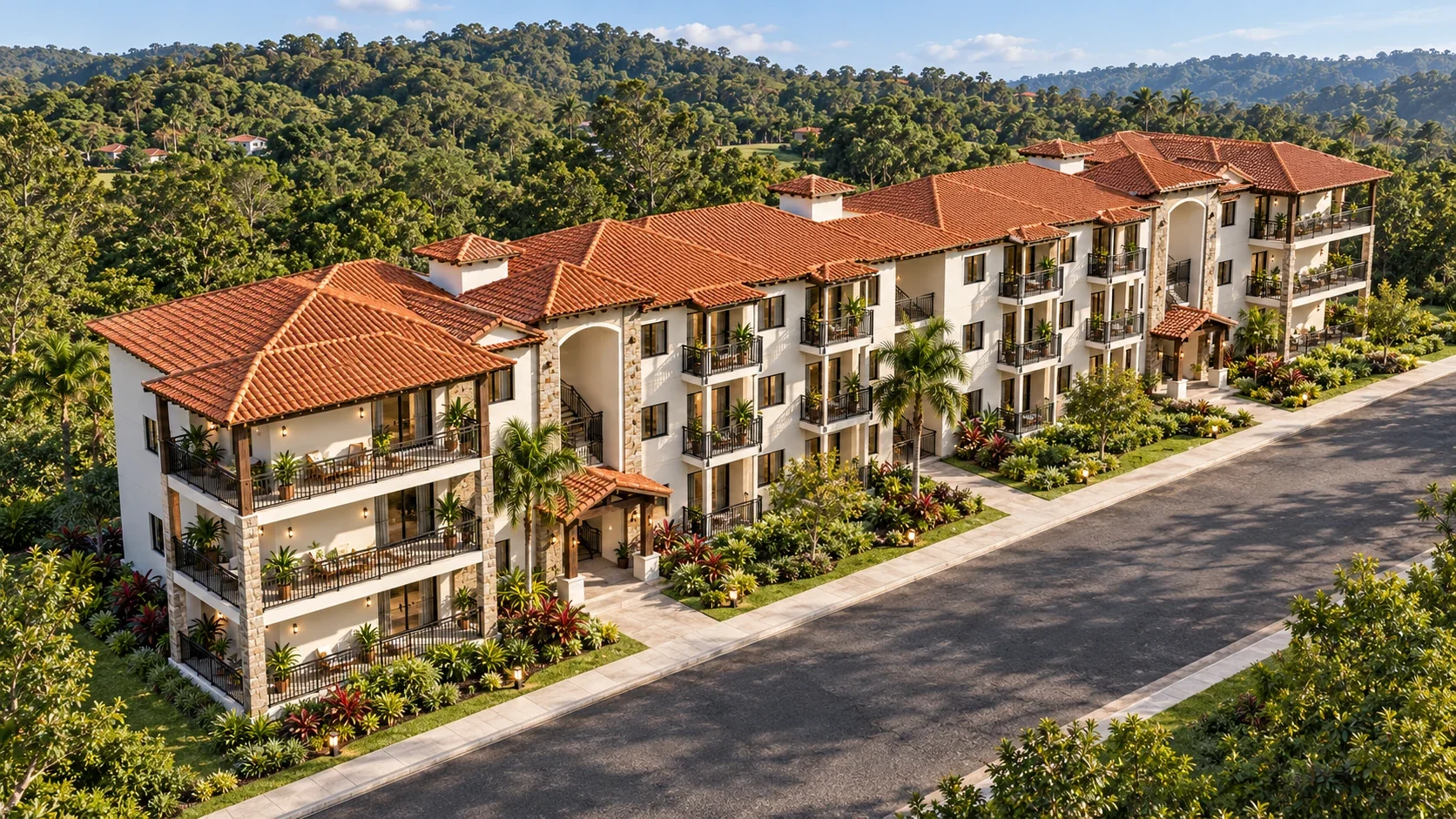
Developer’s architectural visualization of Seasons of Jarabacoa. This illustrates the proposed building and is not a photograph of completed construction. Image: Seasons of Jarabacoa.
According to the project’s published apartment details, the collection includes one-, two- and three-bedroom layouts, with starting asking prices of US$149,000, US$219,000 and US$269,000 respectively. Interior areas are listed at approximately 75, 110 and 135 square meters, with private outdoor space stated separately. Those distinctions matter: compare usable rooms, storage, outdoor space and the full cost of ownership, rather than treating a headline square-meter figure as the whole story.
The planned amenity program includes a pool, two tennis courts, a gym, a restaurant and social spaces. The site also describes security, internet and maintenance services. Facilities remain proposed, and final access rules, operation and possible charges require confirmation. The word “inclusive” should be understood through the written service schedule; maintenance of water, gas and electrical systems does not by itself mean that utility consumption is included.
As an investment opportunity, Seasons deserves a place on a serious buyer’s shortlist because its proposed format addresses an identifiable need: a manageable mountain home with space for a routine beyond the apartment. That is a reason to investigate, rather than a forecast of appreciation. The next useful step is to compare the floor plans and request current delivery terms, recurring expenses and unit availability. Taken Social’s Business report on Seasons of Jarabacoa provides additional project context. If renting is part of the plan, confirm that the rules permit the intended use and build an estimate from documented comparable rentals and actual operating costs.
Quintas del Bosque. For buyers whose ideal home is a cabin among trees, Quintas del Bosque offers a different proposition. Its published materials emphasize a forest setting, larger lots, cabin designs and shared recreation areas outside the town center. The attraction is space and a more individual relationship with the land. A family considering it should compare the responsibilities of a stand-alone home with the shared-management model of an apartment community.
Jamaca de Dios. Jamaca de Dios provides a third example, combining mountain residential property with recreation and a destination restaurant. The community advertises trails, a recreational lagoon, sports areas and other common facilities. It may suit someone who wants a villa or lot within a setting that offers activities beyond the house. As with any hillside property, the exact parcel, access route and distance from everyday destinations matter more than the broad name of the development.
Together, the three illustrate why Jarabacoa deserves a close look: buyers can explore an apartment community, a forest cabin setting or a residential mountain complex without abandoning the same underlying goal of a greener daily life. Seasons is particularly interesting for readers who like that goal but want a more compact ownership commitment. A well-planned visit can make the comparison tangible.
2. Cabarete: an international beach community with an active heart
Cabarete is the choice for someone who measures a good day by time near the ocean. The north-coast town has an identity shaped by windsurfing, kiteboarding and surfing, alongside restaurants and an international community. The municipal government’s cultural guide identifies Cabarete Bay with wind and kite sports and nearby Encuentro with surfing. Water conditions, experience and instruction should guide participation, but the larger attraction extends well beyond being an expert athlete.
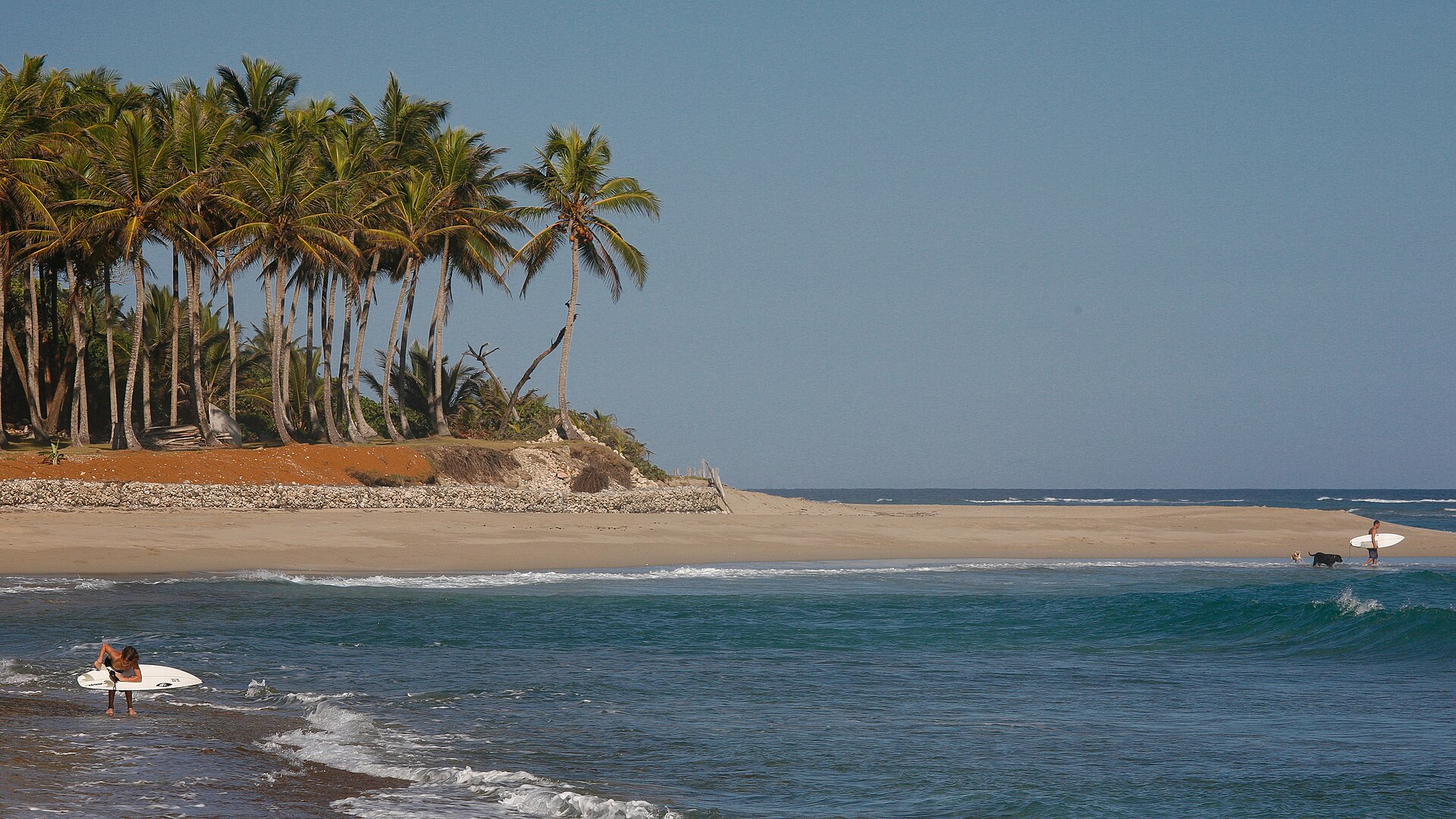
Surfing is part of the Cabarete area’s coastal identity. Archival photograph, 2012, by Alex Proimos, Wikimedia Commons, CC BY 2.0.
A shared activity can make arriving in a new country less intimidating. Lessons, regular beach walks and a favorite café create natural opportunities to meet people. For an American newcomer, the coast’s international character can ease the transition, while Spanish remains valuable for building a fuller life beyond English-speaking circles. Cabarete ranks second because it offers a particularly clear lifestyle proposition: live close to the water and let an active social routine grow around it.
Education requires looking across the Cabarete–Sosúa corridor. The International School of Sosúa reports a community representing more than 25 nationalities, with English as its principal language of instruction and a U.S.-based and Dominican curriculum. It is in Sosúa, so parents considering a Cabarete home should test the commute. The school currently lists limited spaces and waitlists for several grades in 2027–28, making early admissions conversations sensible.
ESD European School, in the Bombita area between Cabarete and Sosúa, is another institution for families to research, with multilingual education forming part of its stated approach. These options help explain the area’s appeal to international households. Each family still needs to establish the right language support, educational philosophy and available place for a particular child.
The dining choices reinforce the international atmosphere. Bliss describes Mediterranean cooking with an Italian accent, including homemade pasta, fish and meat dishes. Its current contact page places it in La Ciénaga, so check the address rather than relying on an old travel article. La Casita de Papi is another recognizable name, associated with seafood and a beachside setting. Together they offer two quite different ways to plan an evening around a life on the coast.
Sea Horse Ranch is an option for buyers who want a villa community with an organized recreation offering. The tourism ministry’s listing describes coastal villas, an equestrian center, tennis courts, pools and a restaurant. It gives buyers a useful point of comparison with Jarabacoa’s residential communities: similar interest in shared amenities, expressed through a very different landscape.
Ocean Dream and Harmony offer examples of condominium living around Cabarete Bay. A rental operator’s location guide identifies both communities and their beach setting. An exploratory rental can help a prospective buyer understand the surroundings before comparing any resale or purchase opportunity. Staying in the kind of home under consideration makes it easier to judge whether beach access, shared spaces and the surrounding activity suit a longer stay.
Encuentro is the third area to explore, especially for households whose routine revolves around surfing and the outdoors. Here the neighborhood itself is the starting point, rather than a single development. Visit the actual streets around a prospective home, compare the trip to school and shops, and spend time there beyond the beach hours. Salt exposure, cooling, property care and the ability to work comfortably from home deserve a place in a coastal budget alongside the pleasure of the ocean.
3. Santiago de los Caballeros: a full city life in the Cibao
Santiago is the strongest of these three choices for someone who wants the Dominican Republic to feel like a complete urban home from the outset. The tourism ministry identifies it as the country’s second-largest city and a cultural center of the Cibao. Its appeal combines a substantial residential city with music, food, tobacco traditions and proximity to the wider northern region.
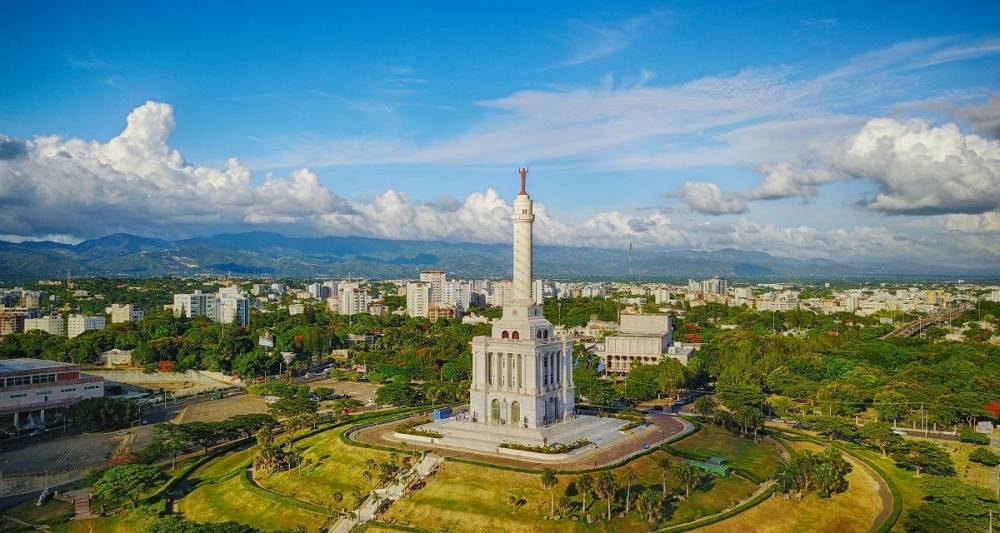
The Monument to the Heroes of the Restoration anchors Santiago’s skyline. Archival photograph, 2020, by Jabdiel Ventura, Wikimedia Commons, CC BY-SA 4.0. Unaltered image.
The Monument to the Heroes of the Restoration, Centro León, the Gran Teatro del Cibao and the historic center give residents places to return to, rather than a single attraction to visit once. For a family, that range can help sustain a calendar of cultural outings and activities. For someone working locally, the decisive advantage may be simpler: choosing a home in the same city as the offices, clients or institutions that structure the week.
Education is a strong reason to put Santiago on the list. Santiago Christian School describes an English-immersion, college-preparatory program from early childhood through grade 12. It is a Christian school with English as its principal teaching language, so families should evaluate the curriculum accurately rather than assume that every internationally oriented school follows the same bilingual model. Language placement, university preparation and the daily trip from a proposed home should all be discussed before a housing decision.
The city also has established medical institutions, including the Hospital Metropolitano de Santiago, or HOMS. That is a practical consideration for households assessing access to services. Confirm insurance arrangements, relevant specialists and appointment procedures directly; proximity to a hospital and coverage for care are separate questions.
Cerros de Gurabo, La Trinitaria and Jardines Metropolitanos are three residential areas worth including in a search. Current local housing guides discuss their residential appeal, and visiting all three provides a useful introduction to Santiago’s neighborhood choices. The building’s management, parking, street conditions and actual route to work can be more consequential than the prestige attached to an address. For a family settling permanently, an address that makes the week easier has a lasting value of its own.
For dining, Camp David Ranch offers a hillside setting overlooking Santiago and the Cibao Valley. Its published menu includes dishes such as octopus croquettes and goat risotto, illustrating an approach that brings Dominican ingredients into international preparations. The setting provides an example of the city’s ability to make dinner feel like an outing. Everyday living also leaves room for simpler local meals, cafés and the regional flavors that give Santiago its identity.
Santiago comes third in this particular ranking because the guide puts nature within daily life ahead of urban convenience. A household that prioritizes city work, frequent appointments and a wider urban routine could reasonably put it first. The value of the comparison is recognizing that preference before buying a property that fits the holiday but complicates the week.
How to turn a Dominican Republic shortlist into the right move
The country’s great advantage is the choice itself. A mountain town, an international surf coast and a culturally rich city offer different ways to build a home within the same region. Positive impressions become more useful when tested against ordinary responsibilities. Rent during an exploratory stay, visit schools, work for a few days using the connection at the actual property, and make the journeys that would recur after the move.
A purchase should follow that understanding. Ask for clear written information about title, what is being purchased, construction status, delivery obligations, management and recurring costs, with independent local professional advice where needed. A purchase price is only one part of affordability. Grounds, common facilities, insurance, utilities and time spent managing a property all shape the experience of ownership.
Jarabacoa earns the first appointment on this itinerary because its appeal reaches beyond a spectacular weekend. It offers a credible way to bring outdoor time, bilingual education and a more connected family routine into the same place. For readers drawn to that combination, a visit to Alterra Village and a closer look at the Seasons apartment plans and current project information make sense as part of a thoughtful comparison. The best investment in a new address begins with understanding the life it could support.
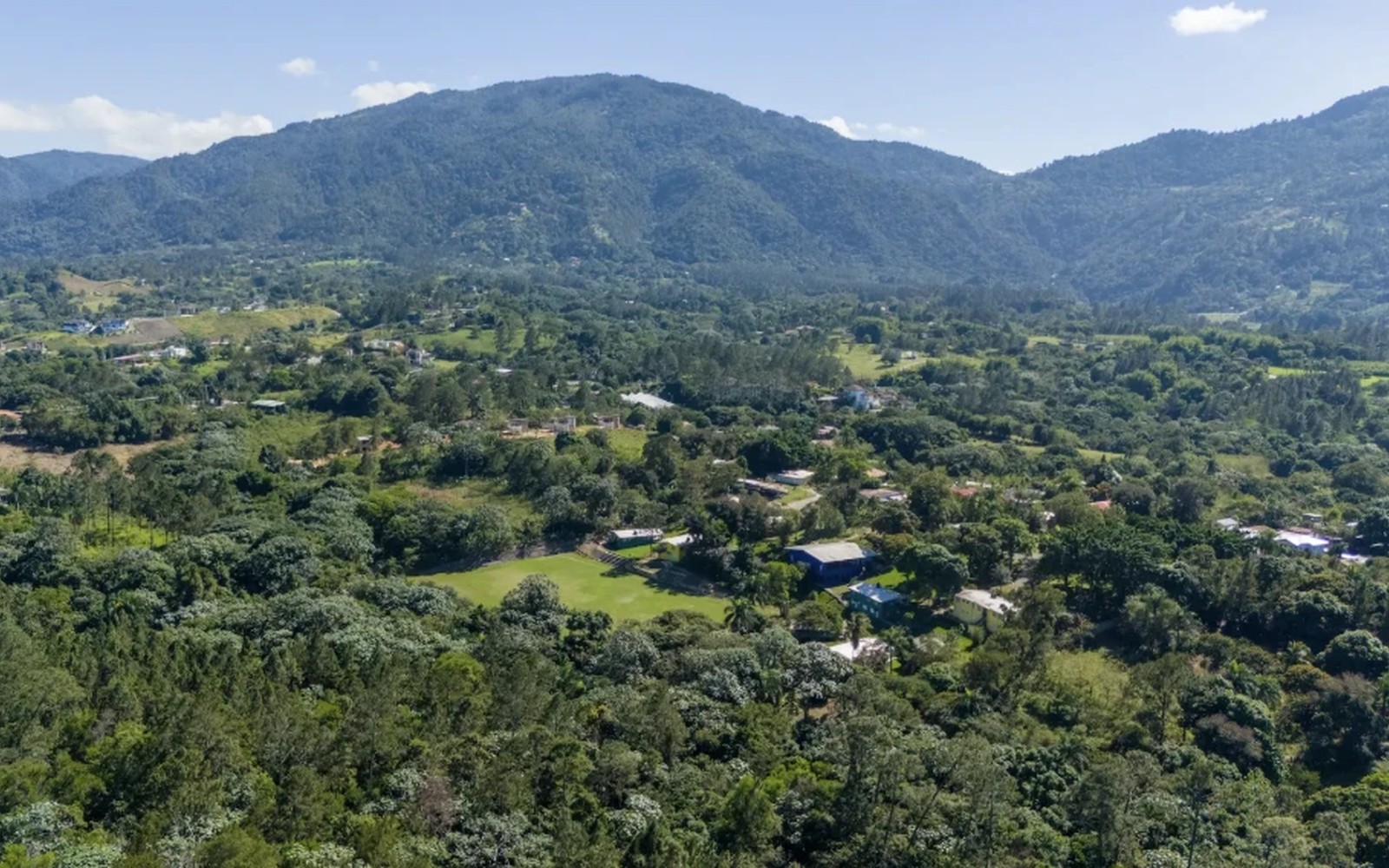
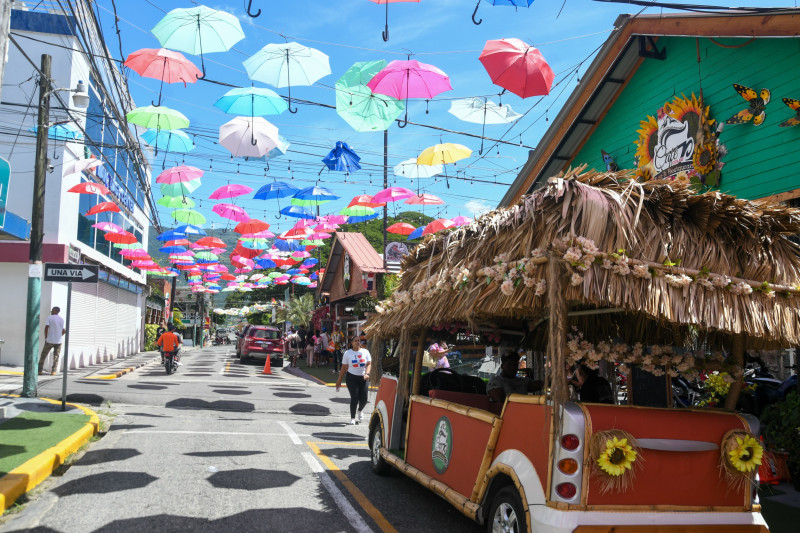
Header: the Jarabacoa region, photograph supplied through the Seasons of Jarabacoa destination gallery. This is regional scenery, not a promised view from a particular apartment. Research and published project information checked November 5, 2026.