Published November 6, 2026 · Taken Social Editorial
Tesla plans to wind down Cybertruck production at its Texas factory around the middle of 2027, a major retreat for a pickup that was once among the company’s most visible bets on the future of electric vehicles. Chief executive Elon Musk announced the plan Friday, saying the space would be used to increase production of the Cybercab, according to the Associated Press.
The announcement gives the stainless-steel truck a substantially shorter manufacturing horizon at Gigafactory Texas than the years of anticipation preceding its arrival. It also puts a practical decision behind Tesla’s emphasis on autonomous transport: factory space devoted to a distinctive consumer vehicle is to be redirected toward a vehicle designed for a different business model.
For existing owners, the immediate questions concern service, warranties and the long-term ownership experience. For prospective buyers, the news changes the context of a purchase. For Tesla, the decision raises a larger question about how the company intends to turn attention-grabbing products into durable businesses. A production timetable is important, but it is only one part of that answer.
What Tesla has announced
The plan concerns Cybertruck production at Gigafactory Texas around mid-2027. The timing gives the factory a transition period rather than indicating an immediate stop to every delivery. Buyers should distinguish the manufacturing schedule from the availability of individual vehicles, which can depend on inventory, configuration and location. A company’s statement about production space also does not establish the terms attached to a particular order.
That distinction is useful because the announcement combines two developments: less production capacity for the Cybertruck and more intended capacity for the Cybercab. The first is a decision affecting an existing product and its owners. The second is a bet on future demand and execution. The same factory space can serve different purposes over time, but a successful transition requires more than moving attention from one model name to another.
Tesla’s own Cybertruck ordering guide says delivery arrangements are handled through the Tesla app and an adviser, and that delivery dates can change. Anyone with an outstanding order should use those channels to establish the status of the specific vehicle. General headlines about a wind-down cannot answer questions about an individual configuration or delivery commitment.
A long introduction followed by a much shorter run
The Cybertruck was unveiled on November 21, 2019, and Tesla held its first customer delivery event on November 30, 2023, according to Reuters’ account of the vehicle’s history. Those dates help explain why the latest announcement has attracted so much interest. The truck spent roughly four years moving from its public introduction to the first deliveries. A mid-2027 wind-down would arrive only about three and a half years after that delivery event.
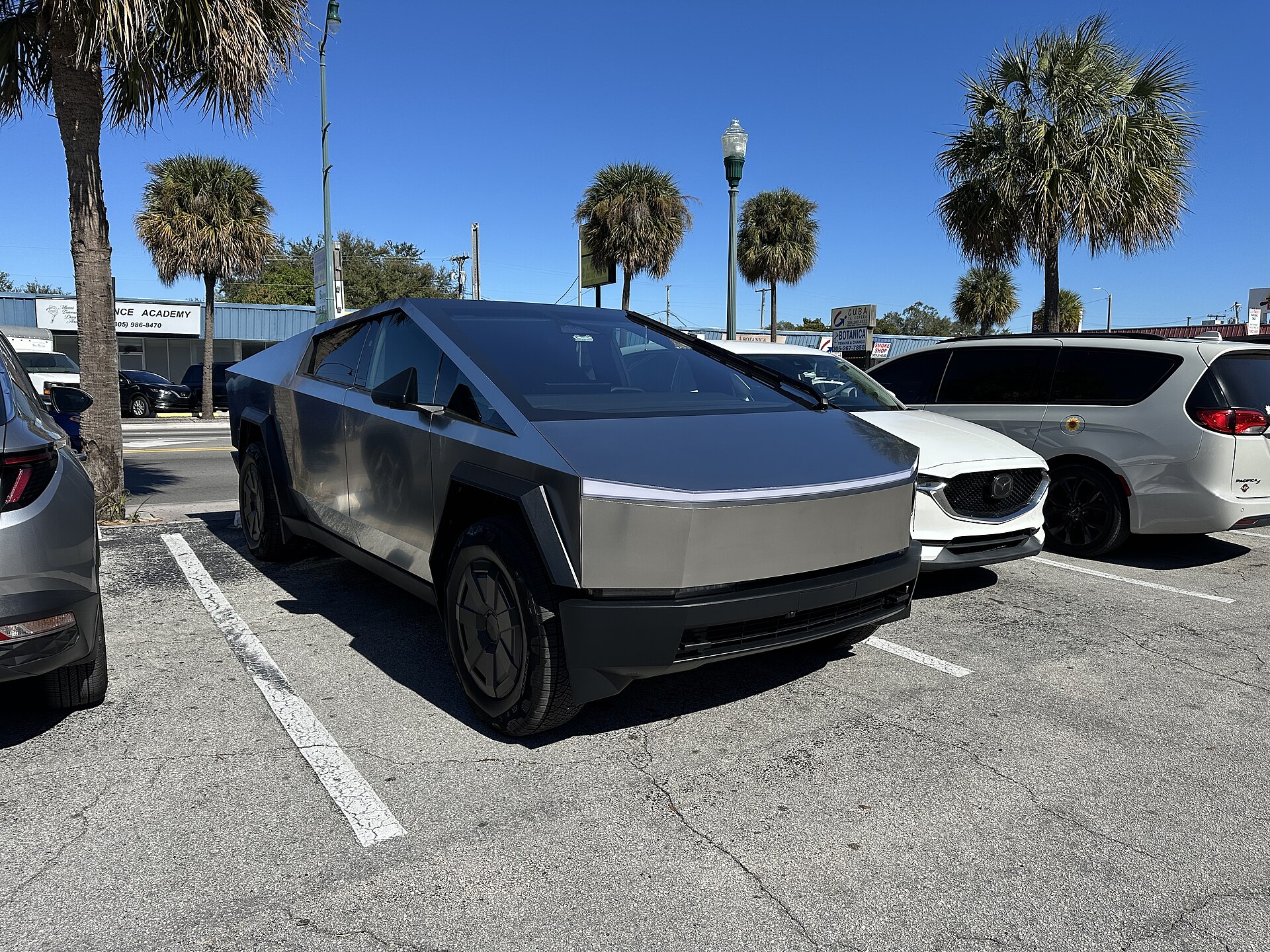
Its appearance was central to its public identity. The angular body and stainless-steel exterior made it immediately recognizable in a category where buyers are accustomed to more conventional pickups. That recognition had marketing value, but recognition alone cannot establish the number of customers willing to buy a vehicle repeatedly, recommend it to others or absorb the costs of ownership.
The manufacturing decision invites a more grounded assessment of the experiment. A product can be technologically ambitious and still face a difficult commercial fit. The relevant questions concern the buyer’s intended use, the price and operating costs, the convenience of charging and service, and how the vehicle compares with alternatives. The strength of a product’s visual identity can draw people into that comparison, while the everyday experience determines whether the interest becomes a lasting market.
The truck also serves uses that are quite different from a passenger shuttle. Tesla’s product description emphasizes a cargo bed with a motorized cover, towing and the ability to supply power to other equipment. Those functions help explain why an owner might choose the vehicle despite its unconventional appearance. Someone carrying tools, moving outdoor equipment or organizing a trip has a different set of requirements from a passenger requesting a ride. Redirecting manufacturing capacity toward the Cybercab represents a change in the customers and uses Tesla is prioritizing at that facility.
The delivery figures require careful reading
Tesla’s third-quarter production and delivery release reported 486,532 vehicle deliveries. Model 3 and Model Y accounted for 478,237, while the company’s “Other Models” category accounted for 8,295. Tesla reported 7,004 vehicles produced in that broader category during the quarter. The release does not provide a separate Cybertruck delivery figure.
That reporting structure sets an important limit on the conclusions readers can draw. The 8,295 deliveries represent the whole category, so they cannot accurately be described as Cybertruck sales. Calculated against Tesla’s total, the category represented about 1.7 percent of quarterly deliveries. That illustrates the scale of the company’s dependence on its high-volume models, without supplying a model-specific measure of the pickup’s performance.
Production and deliveries also measure different stages of the business. A vehicle can be manufactured in one period and handed to a customer in another. Pricing, costs and the mix of vehicles affect financial results as well. Tesla makes that distinction in its release, cautioning that delivery and deployment figures alone are not a complete indicator of quarterly financial performance. A clear account of the Cybertruck’s trajectory should preserve those distinctions.
The factory decision therefore offers evidence of Tesla’s priorities, while the available delivery numbers provide broader context. Together they support a story about a shift in manufacturing emphasis. They do not establish a precise loss on each truck, a final inventory value or a future resale price. Those claims would require additional evidence beyond the announcement and the quarterly delivery table.
Why the Cybercab changes the factory calculation
The Cybercab represents a different product concept. Tesla’s rider guide describes an interior with two seats and no steering wheel, accelerator pedal or brake pedal. The design centers on passengers using a transport service, rather than a driver buying a pickup for personal or business use. Expanding production for that purpose changes the kinds of operations, demand and utilization the company is trying to support.
Manufacturing capacity is only part of the challenge. A passenger service also needs dependable vehicle availability, charging, maintenance, cleaning and a way to handle interruptions. The business must bring those elements together with the technology that operates the vehicle. More units can support growth, but a larger fleet also creates more work to coordinate. The economics depend on how the vehicles are used and maintained after leaving the factory.
Readers should also keep different forms of vehicle automation separate. The National Highway Traffic Safety Administration’s automation guidance distinguishes driver-assistance systems from automated driving systems. An existing consumer vehicle’s assistance features should be understood according to their actual operating requirements. A company’s plans for a passenger-focused robotaxi do not change the responsibilities of someone driving a different vehicle today.
What existing Cybertruck owners should check
A production announcement and a vehicle warranty address separate matters. Tesla’s current warranty overview lists basic coverage of four years or 50,000 miles, whichever comes first, and Cybertruck battery and drive-unit coverage of eight years or 150,000 miles, subject to the stated conditions. The company directs owners to the warranty supplied with their vehicle for authoritative terms. Owners should use that document when assessing coverage for a particular repair.
Recall information is another practical part of ownership. In March 2025, NHTSA acknowledged a Cybertruck recall concerning an exterior stainless-steel trim panel that could detach. The campaign covered certain 2024 and 2025 vehicles and specified replacement of the affected assembly without charge. It provides a documented example of the truck’s service history, rather than evidence that every vehicle has an unresolved defect.
The most useful check is specific to the vehicle. NHTSA’s recall search allows owners to look up open safety recalls using a vehicle identification number. A model-wide headline and an individual vehicle’s repair status can differ. Keeping service records, confirming completed recall work and obtaining written information about a proposed repair are practical steps that remain relevant throughout the life of a vehicle.
Prospective buyers should give the same attention to insurance quotations, charging arrangements and expected maintenance as to the manufacturing news. The decision should fit the intended use and the actual ownership costs. A shorter production run can attract speculation about collectibility or depreciation, but neither outcome follows automatically. Condition, demand, support and the availability of comparable vehicles will help determine what a truck is worth when an owner eventually decides to sell it.
The next measure of the strategy
Tesla has provided a direction and an approximate timetable. The next meaningful evidence will concern how the factory transition proceeds, what the company says about customer support and how the Cybercab operation develops. Investors and buyers will be looking for execution that can be measured in deliveries, reliable service and disclosed financial results, rather than attention alone.
The Cybertruck’s striking design ensured that it became part of the conversation about the future of motoring. Friday’s announcement moves that conversation back to a familiar industrial question: how a manufacturer allocates space, money and effort among competing products. Tesla’s answer is to make more room in Texas for the Cybercab. The success of that decision will be judged by what the next operation delivers.
A Tesla Cybertruck in West Miami, Florida, photographed on January 9, 2025. Archival photograph by Phillip Pessar; CC BY 2.0. Source: Wikimedia Commons. Image license.