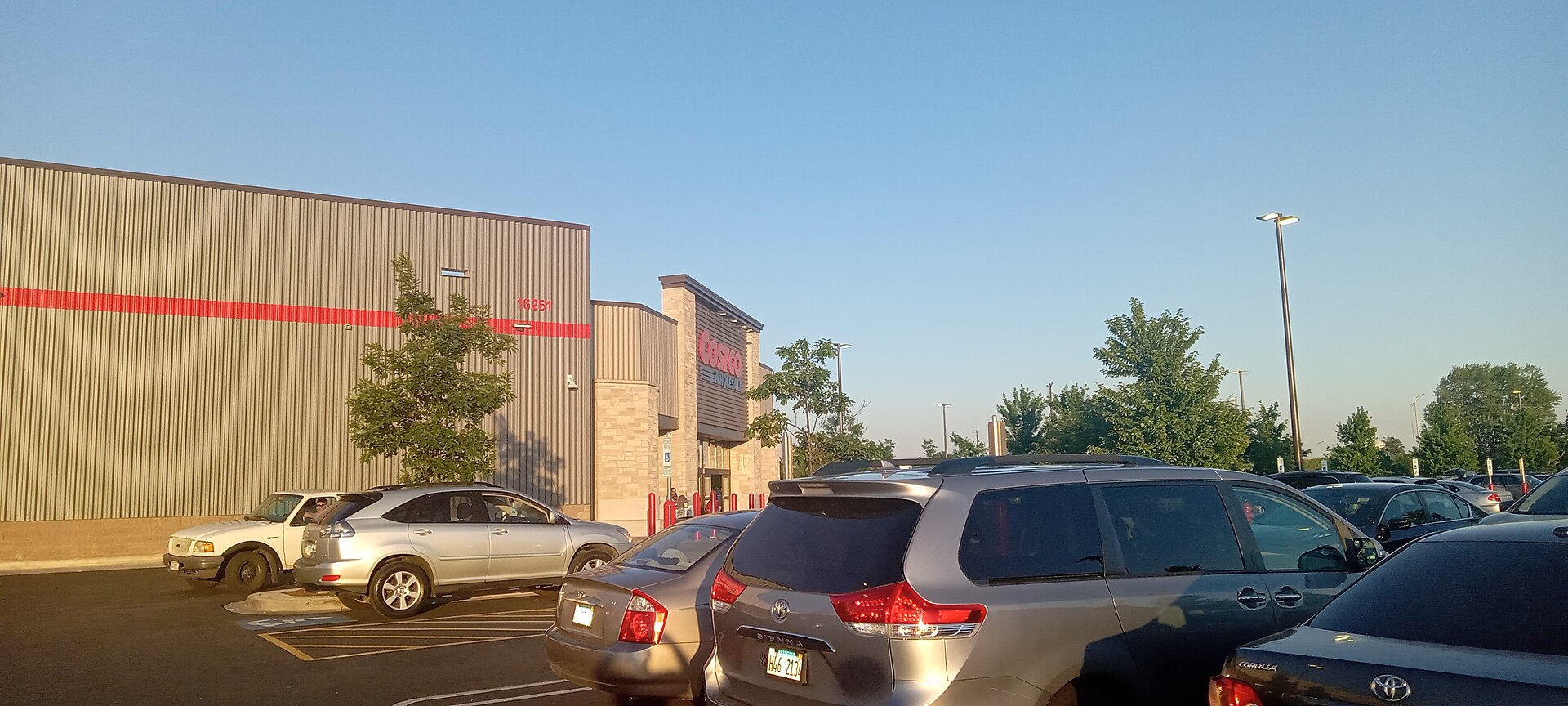
A Costco warehouse in Plainfield, Illinois, on June 14, 2024. This archive image illustrates the retailer; it does not show recalled cans. Archive photo by Retail Thriller (CC BY-SA 4.0).
A Costco whipped cream recall is giving shoppers a specific reason to check their refrigerators before serving dessert: a limited production batch of Kirkland Signature Real Heavy Whipped Cream may contain a small amount of a cleaning chemical. The important detail is on the can. A familiar label or a purchase at Costco, by itself, does not identify a recalled unit.
The supplier, Alamance Foods, issued its member notice on November 7. As of November 13, the notice remains listed on Costco’s product recall page. It directs customers with the affected product to stop using it and return it to their local Costco for a full refund. The action is voluntary, but that does not make the instruction optional for someone holding an identified can.
For households preparing for Thanksgiving, the timing makes this a useful refrigerator check. Whipped cream may be bought ahead, separated from its outer packaging and used a little at a time. A can already opened for coffee can still be around when pies arrive. Checking now is easier than discovering a questionable container while food is being served to guests.
The exact whipped cream covered by the recall
The supplier’s notice published by Costco identifies 15-ounce cans of Kirkland Signature Real Heavy Whipped Cream, Costco item 1777000. The affected best-if-used-by marking is APR/02/27, with printed production times from 00:35 through 02:45. The purchase window is October 11–31, 2026. These identifiers should be read together; the best-by date alone is not the complete recall description.
| Check | Affected identifier |
|---|---|
| Brand and product | Kirkland Signature Real Heavy Whipped Cream |
| Can size | 15 oz / 425 g |
| Costco item | 1777000 |
| Best-if-used-by date | APR/02/27 |
| Printed time | 00:35–02:45 |
| Supplier item code | AC50 |
The notice lists distribution in Alabama, Florida, Georgia, Iowa, Illinois, Indiana, Missouri, Mississippi, North Carolina, South Carolina, Tennessee and Wisconsin. It says members reported an unusual chemical smell or taste. No serious adverse effects requiring medical care had been reported as of the letter’s date. That is a dated reporting statement, rather than a finding that every affected can is harmless.
A practical first step is to put the notice beside the individual container and compare each field. An item number usually identifies a product sold by a retailer; a production marking narrows that product to a particular run. Reading only the large brand name can lead a household either to overlook an affected can or to discard food that the notice does not identify.
Pay particular attention when a multipack has already been split. The receipt and outer wrapper may stay in one home while a can goes to a relative, workplace refrigerator or holiday gathering. The person holding the can needs its production information, not just an assurance that the package was purchased recently. If a marking cannot be read, ask the supplier or warehouse for help before using the uncertain container.
What a cleaning-chemical recall establishes
The published letter does not identify the chemical or quantify anyone’s exposure. It therefore does not support a diagnosis, a prediction of symptoms or an assumption about the concentration in a particular serving. It also does not establish the precise manufacturing failure that allowed the problem. Those unanswered questions matter, especially when brief social posts turn a narrowly described recall into a much broader claim.
There is a straightforward distinction between identifying a product hazard and establishing what happened to an individual consumer. A recall can justify removing food before a complete investigation is public. An exposure assessment, however, requires information about the substance, amount and person involved. A news report should not fill those gaps by guessing which cleaning product was used in a factory.
The Food and Drug Administration’s consumer guide to food recalls explains that manufacturers and distributors commonly initiate recalls voluntarily. Its guidance tells consumers to follow the product-specific instructions and avoid passing recalled food to other people or animals. The useful question is whether a container matches the notice and what action the notice requires, rather than whether the word “voluntary” sounds reassuring.
Nothing in the available supplier letter announces a recall of all Kirkland dairy products or every whipped cream can sold nationally. Shoppers should also avoid treating an unrelated online photograph as proof that their container is covered. A product image can help recognize packaging, but the printed identifiers supply the precision. Keep the source notice available while doing the comparison instead of relying on an abbreviated headline.
How to trace a purchase and arrange a return
For a household that shops frequently, remembering the purchase date may be difficult. Costco provides a way to review eligible warehouse receipts online. According to its warehouse receipt instructions, a member with a verified membership can sign in, select Orders & Returns and open the In-Warehouse purchase history. Records appear in six-month periods covering up to two years.
Use that history as a second piece of information alongside the can. A receipt can establish that the relevant product was purchased during a particular shopping trip. It generally cannot replace the production code on an individual container. Buying another pack of the same item on a different date is exactly the situation in which keeping purchase information and product information separate becomes useful.
The retailer notes that some transactions, including Instacart orders, are not available in that warehouse purchase history. If an order came through a delivery service, consult the order record associated with that service. The absence of a receipt in one Costco account should not be taken as evidence that a can is safe, particularly when another household member made the purchase.
The recall letter offers a refund through a local Costco. For a question about a damaged code, a partial multipack or what to bring to the warehouse, contact the store or the supplier rather than inventing a return requirement. Photographing the label and printed markings before the trip can make that conversation more efficient. Keep the physical container identifiable so it cannot accidentally return to normal use.
A useful household routine is to finish the check in one sitting: inspect the cans, separate any affected product from food intended for serving, tell anyone who uses the refrigerator and decide how to complete the return. Leaving a recalled container in its usual place with an intention to deal with it later creates an avoidable chance that someone else will use it.
If someone has already eaten the product
If you think a recalled food has made you ill, FDA advises contacting a health care provider. When the concern involves a possible chemical exposure, the federal Poison Help service connects callers in the United States with a local poison center at 1-800-222-1222. Its guidance says not to wait for signs of poisoning before calling about a suspected exposure.
Have the product and notice available during that conversation. Useful information includes the person’s age, when the food was consumed, the approximate amount and any symptoms. A photograph of the code can prevent confusion when reading a small marking aloud. If several foods were served together, describe what is known rather than assuming the whipped cream explains every symptom.
Follow the advice of the professional assessing the situation. Poison Control’s first-aid guidance says not to induce vomiting. It also identifies collapse, seizures, trouble breathing or an inability to awaken as reasons to call 911 immediately. An article cannot evaluate a particular exposure from the brand name, and improvised treatments can complicate the situation.
Do not sample a questionable can to see whether it smells or tastes normal. A household inspection should involve reading the packaging, not conducting an experiment. Similarly, changing the way the product is served does not supply evidence that the recalled batch has become suitable to eat. When a manufacturer directs consumers to stop using an affected food, follow that direction.
Keeping a useful record without spreading a false alarm
If a can was shared, send the recipient the actual recall notice and the identifiers needed to check it. A message saying that “Costco whipped cream is recalled” leaves out the most useful information. A clear photo of the relevant code, paired with the supplier’s document, can help the recipient reach the right conclusion without circulating a sweeping claim about every store or product.
Consumers can also report product concerns to the supplier and FDA. The agency’s explanation of the recall process describes how product notices, enforcement information and consumer reports fit together. Preserve the date of your purchase and any communication about a return or possible illness. Records are more helpful than a recollection reconstructed after a container has been thrown away.
For hosts, there is a separate communication question when dessert has already been served. First establish whether the can used actually matches the recall. If it does, tell the people who ate it which product was involved, when it was served and where they can read the supplier’s notice. That gives each person information to discuss with a health professional without suggesting that everyone must have experienced the same exposure or outcome.
Keep checking the original recall listing if you are waiting for an answer about an unreadable code or a possible exposure. A dated supplier letter is the starting point, and a later notice could add detail. Save the document you consulted so that an update can be compared with it. This is particularly helpful when an older screenshot continues circulating after the underlying retailer page has changed.
For this recall, the conclusion is direct: inspect the actual can, compare the complete production information and return an affected unit. The available evidence supports a focused product withdrawal and a practical household response. It does not support diagnosing an unknown chemical exposure from a headline or declaring unrelated food unsafe. Precision makes the warning more useful to the people who need to act on it.